Tsuchiya Kenji J, Hakoshima Shuji, Hara Takeshi, Ninomiya Masaru, Saito Manabu, Fujioka Toru, Kosaka Hirotaka, Hirano Yoshiyuki, Matsuo Muneaki, Kikuchi Mitsuru, Maegaki Yoshihiro, Harada Taeko, Nishimura Tomoko, Katayama Taiichi
Research Center for Child Mental Development, Hamamatsu University School of Medicine, Hamamatsu, Japan.
Department of Child Development, United Graduate School of Child Development, Osaka University, Kanazawa University, Hamamatsu University School of Medicine, Chiba University, and University of Fukui, Suita, Japan.
Front Neurol. 2021 Jan 28;11:603085. doi: 10.3389/fneur.2020.603085. eCollection 2020.
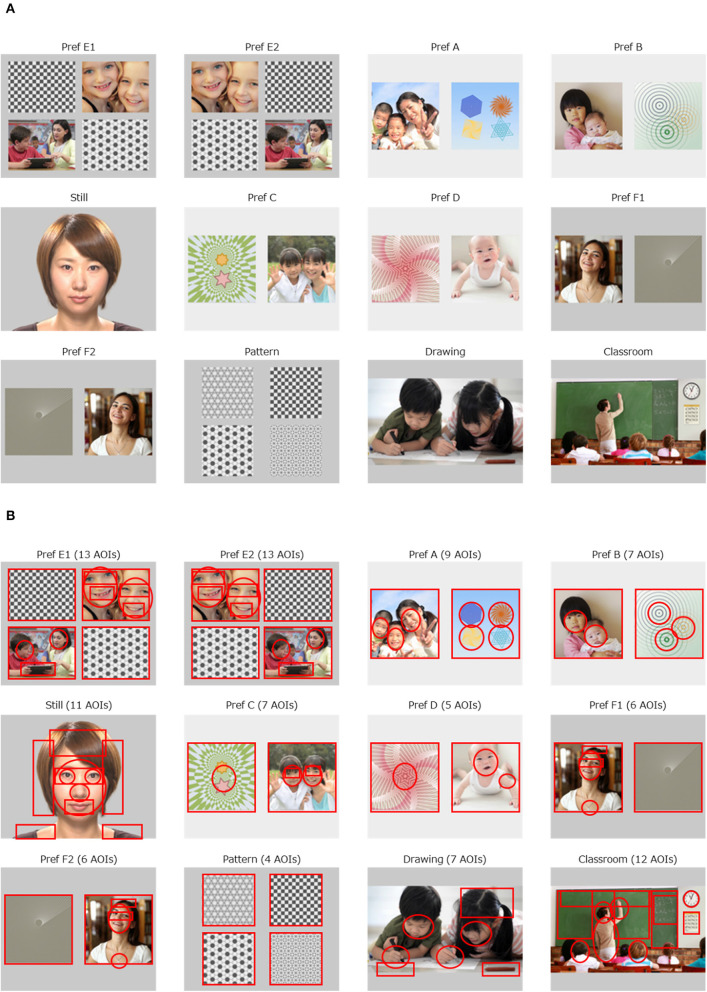
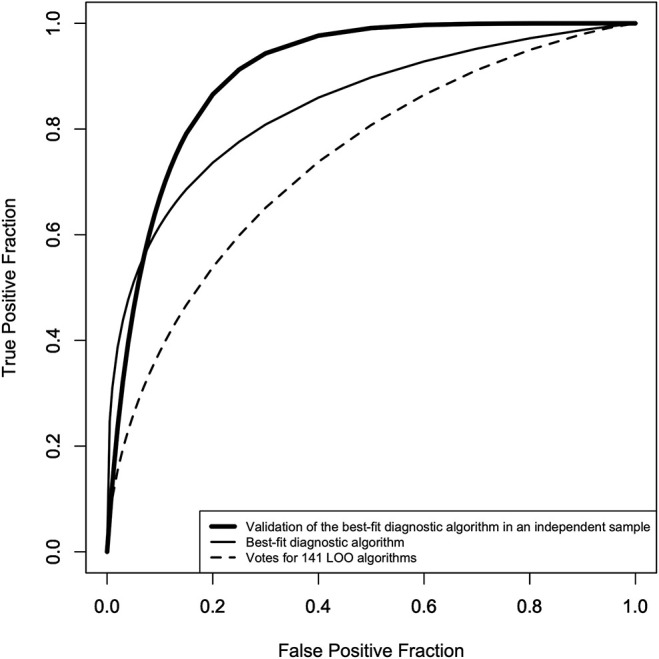
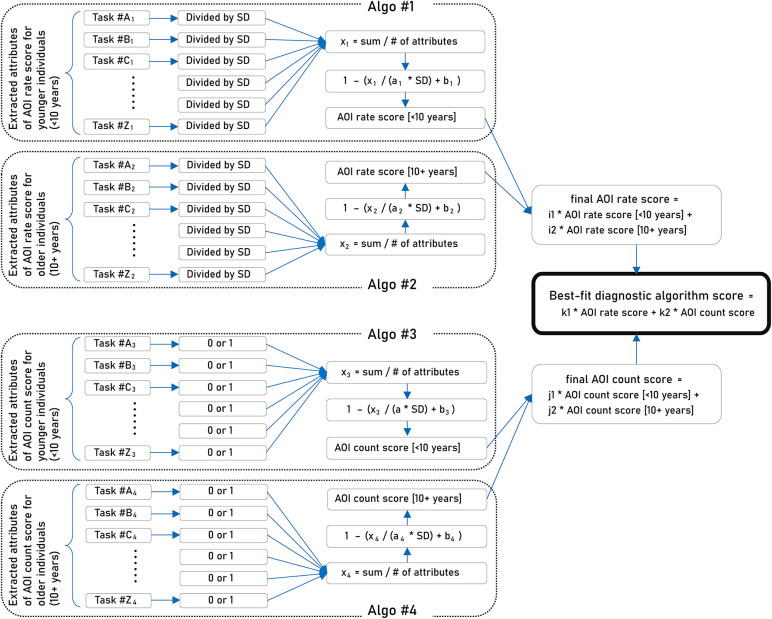
Atypical eye gaze is an established clinical sign in the diagnosis of autism spectrum disorder (ASD). We propose a computerized diagnostic algorithm for ASD, applicable to children and adolescents aged between 5 and 17 years using Gazefinder, a system where a set of devices to capture eye gaze patterns and stimulus movie clips are equipped in a personal computer with a monitor. We enrolled 222 individuals aged 5-17 years at seven research facilities in Japan. Among them, we extracted 39 individuals with ASD without any comorbid neurodevelopmental abnormalities (ASD group), 102 typically developing individuals (TD group), and an independent sample of 24 individuals (the second control group). All participants underwent psychoneurological and diagnostic assessments, including the Autism Diagnostic Observation Schedule, second edition, and an examination with Gazefinder (2 min). To enhance the predictive validity, a best-fit diagnostic algorithm of computationally selected attributes originally extracted from Gazefinder was proposed. The inputs were classified automatically into either ASD or TD groups, based on the attribute values. We cross-validated the algorithm using the leave-one-out method in the ASD and TD groups and tested the predictability in the second control group. The best-fit algorithm showed an area under curve (AUC) of 0.84, and the sensitivity, specificity, and accuracy were 74, 80, and 78%, respectively. The AUC for the cross-validation was 0.74 and that for validation in the second control group was 0.91. We confirmed that the diagnostic performance of the best-fit algorithm is comparable to the diagnostic assessment tools for ASD.
非典型眼动注视是诊断自闭症谱系障碍(ASD)的一项既定临床体征。我们提出了一种适用于5至17岁儿童和青少年的ASD计算机诊断算法,该算法使用Gazefinder系统,即在一台配有显示器的个人计算机中配备一组用于捕捉眼动注视模式的设备和刺激电影片段。我们在日本的七个研究机构招募了222名5至17岁的个体。其中,我们选取了39名无任何合并神经发育异常的ASD个体(ASD组)、102名发育正常的个体(TD组)以及一个由24名个体组成的独立样本(第二对照组)。所有参与者均接受了心理神经学和诊断评估,包括《自闭症诊断观察量表》第二版以及使用Gazefinder进行的检查(2分钟)。为提高预测效度,我们提出了一种从Gazefinder最初提取的计算选择属性的最佳拟合诊断算法。根据属性值,输入数据会自动分类为ASD组或TD组。我们在ASD组和TD组中使用留一法对该算法进行交叉验证,并在第二对照组中测试其可预测性。最佳拟合算法的曲线下面积(AUC)为0.84,灵敏度、特异度和准确率分别为74%、80%和78%。交叉验证的AUC为0.74,在第二对照组中的验证AUC为0.91。我们证实,最佳拟合算法的诊断性能与ASD诊断评估工具相当。