Fluet Gerard, Qiu Qinyin, Patel Jigna, Mont Ashley, Cronce Amanda, Yarossi Mathew, Merians Alma, Adamovich Sergei
Rutgers Biomedical and Health Sciences, Newark, NJ, United States.
New Jersey Institute of Technology, Newark, NJ, United States.
Front Neurol. 2021 Jan 28;12:623261. doi: 10.3389/fneur.2021.623261. eCollection 2021.
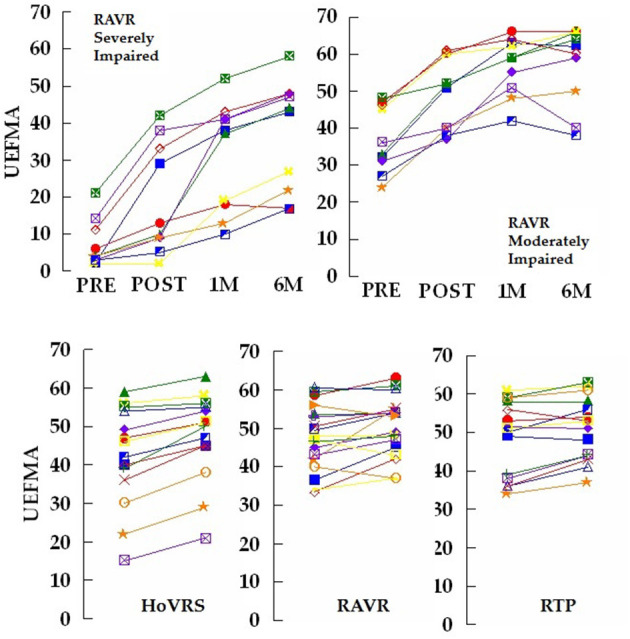
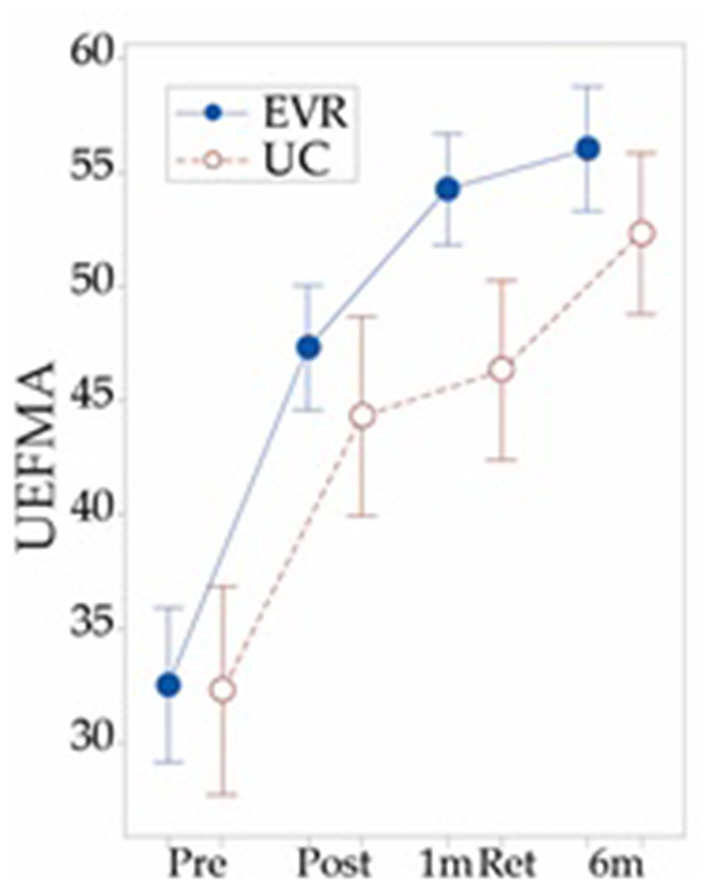
The anatomical and physiological heterogeneity of strokes and persons with stroke, along with the complexity of normal upper extremity movement make the possibility that any single treatment approach will become the definitive solution for all persons with upper extremity hemiparesis due to stroke unlikely. This situation and the non-inferiority level outcomes identified by many studies of virtual rehabilitation are considered by some to indicate that it is time to consider other treatment modalities. Our group, among others, has endeavored to build on the initial positive outcomes in studies of virtual rehabilitation by identifying patient populations, treatment settings and training schedules that will best leverage virtual rehabilitation's strengths. We feel that data generated by our lab and others suggest that (1) persons with stroke may adapt to virtual rehabilitation of hand function differently based on their level of impairment and stage of recovery and (2) that less expensive, more accessible home based equipment seems to be an effective alternative to clinic based treatment that justifies continued optimism and study.
中风及中风患者的解剖学和生理学异质性,以及正常上肢运动的复杂性,使得任何单一治疗方法都能成为所有中风后上肢偏瘫患者的最终解决方案的可能性不大。这种情况以及许多虚拟康复研究确定的非劣效性结果,被一些人认为表明是时候考虑其他治疗方式了。我们小组以及其他一些小组,都致力于通过确定最能发挥虚拟康复优势的患者群体、治疗环境和训练计划,在虚拟康复研究的初步积极成果基础上再接再厉。我们认为,我们实验室和其他机构产生的数据表明:(1)中风患者可能会根据其损伤程度和恢复阶段,以不同方式适应手部功能的虚拟康复;(2)成本较低、更容易获得的家庭设备似乎是基于诊所治疗的有效替代方案,这证明持续保持乐观态度并开展研究是合理的。