Shirley Ryan AbilityLab, Arms + Hands Lab, Chicago, IL, USA.
School of Design, University of Illinois at Chicago (UIC), Chicago, IL, USA.
J Neuroeng Rehabil. 2018 Oct 5;15(1):88. doi: 10.1186/s12984-018-0429-0.
Impairment of upper extremity function is a common outcome following stroke, to the detriment of lifestyle and employment opportunities. Yet, access to treatment may be limited due to geographical and transportation constraints, especially for those living in rural areas. While stroke rates are higher in these areas, stroke survivors in these regions of the country have substantially less access to clinical therapy. Home therapy could offer an important alternative to clinical treatment, but the inherent isolation and the monotony of self-directed training can greatly reduce compliance.
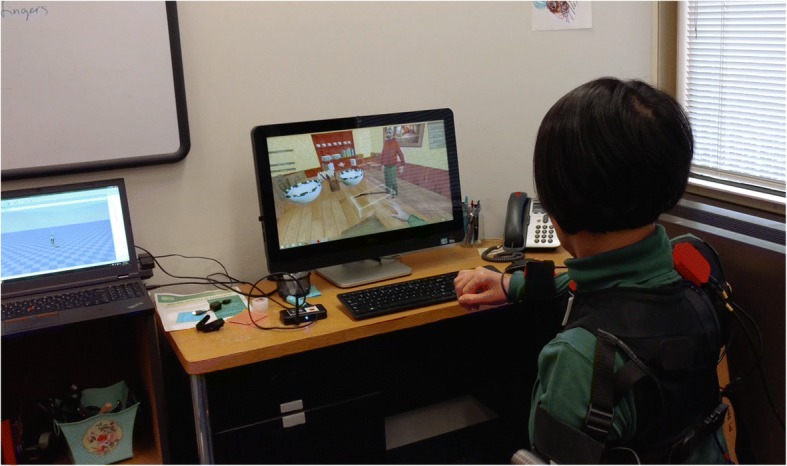
We developed a 3D, networked multi-user Virtual Environment for Rehabilitative Gaming Exercises (VERGE) system for home therapy. Within this environment, stroke survivors can interact with therapists and/or fellow stroke survivors in the same virtual space even though they may be physically remote. Each user's own movement controls an avatar through kinematic measurements made with a low-cost, Kinect™ device. The system was explicitly designed to train movements important to rehabilitation and to provide real-time feedback of performance to users and clinicians. To obtain user feedback about the system, 15 stroke survivors with chronic upper extremity hemiparesis participated in a multisession pilot evaluation study, consisting of a three-week intervention in a laboratory setting. For each week, the participant performed three one-hour training sessions with one of three modalities: 1) VERGE system, 2) an existing virtual reality environment based on Alice in Wonderland (AWVR), or 3) a home exercise program (HEP).
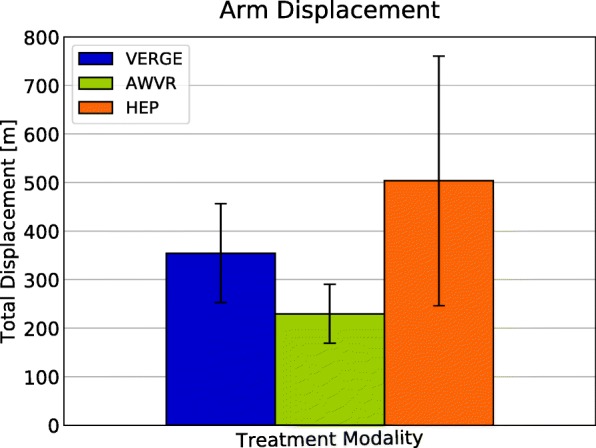
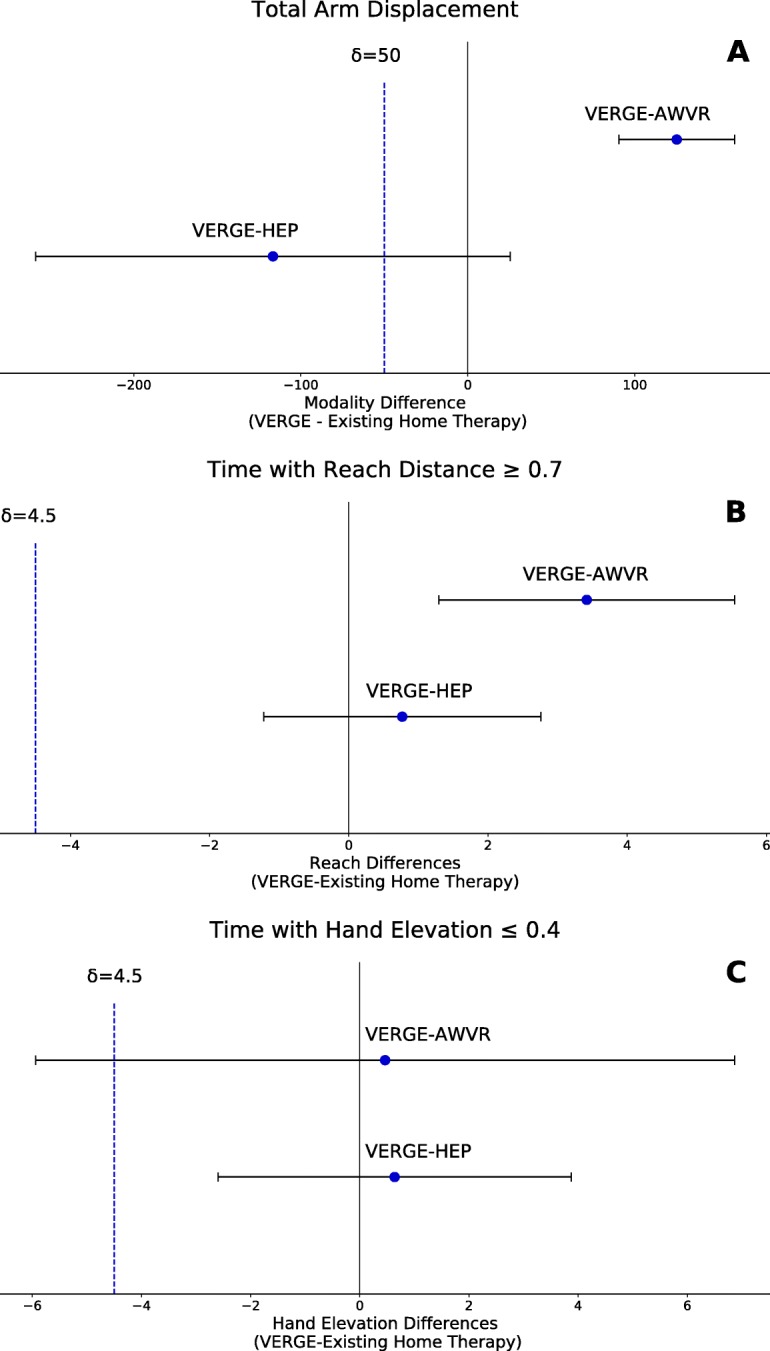
Over 85% of the subjects found the VERGE system to be an effective means of promoting repetitive practice of arm movement. Arm displacement averaged 350 m for each VERGE training session. Arm displacement was not significantly less when using VERGE than when using AWVR or HEP. Participants were split on preference for VERGE, AWVR or HEP. Importantly, almost all subjects indicated a willingness to perform the training for at least 2-3 days per week at home.
Multi-user VR environments hold promise for home therapy, although the importance of reducing complexity of operation for the user in the VR system must be emphasized. A modified version of the VERGE system is currently being used in a home therapy study.
上肢功能障碍是中风后的常见后果,这会影响生活方式和就业机会。然而,由于地理和交通限制,治疗可能会受到限制,尤其是对于那些生活在农村地区的人。尽管这些地区的中风发病率较高,但该国这些地区的中风幸存者接受临床治疗的机会要少得多。家庭治疗可能是临床治疗的重要替代方法,但由于自我指导训练的固有隔离和单调性,依从性会大大降低。
我们为家庭治疗开发了一种用于康复游戏练习的 3D 网络多用户虚拟环境(VERGE)系统。在这个环境中,中风幸存者可以与治疗师和/或其他中风幸存者在同一个虚拟空间中互动,即使他们可能在身体上相距很远。每个用户自己的运动通过使用低成本的 Kinect™设备进行运动测量来控制一个化身。该系统是专门为训练对康复很重要的运动并为用户和临床医生提供实时性能反馈而设计的。为了获得用户对系统的反馈,15 名患有慢性上肢偏瘫的中风幸存者参加了一项多阶段试点评估研究,该研究在实验室环境中进行了为期三周的干预。每周,参与者都会进行三个一小时的培训课程,其中包括三种模式之一:1)VERGE 系统,2)基于爱丽丝梦游仙境的现有虚拟现实环境(AWVR),或 3)家庭锻炼计划(HEP)。
超过 85%的受试者认为 VERGE 系统是促进手臂运动重复练习的有效手段。每次 VERGE 培训课程的手臂位移平均为 350 米。使用 VERGE 时,手臂位移并没有明显少于使用 AWVR 或 HEP。参与者对 VERGE、AWVR 或 HEP 的偏好存在分歧。重要的是,几乎所有参与者都表示愿意每周至少在家进行 2-3 天的训练。
多用户 VR 环境有望用于家庭治疗,尽管必须强调用户在 VR 系统中的操作复杂性降低的重要性。VERGE 系统的修改版本目前正在家庭治疗研究中使用。