
新生腹泻或败血症犊牛及成年牛的静脉和口服补液疗法
Intravenous and Oral Fluid Therapy in Neonatal Calves With Diarrhea or Sepsis and in Adult Cattle.
作者信息
Constable Peter D, Trefz Florian M, Sen Ismail, Berchtold Joachim, Nouri Mohammad, Smith Geoffrey, Grünberg Walter
机构信息
Department of Veterinary Clinical Medicine, College of Veterinary Medicine, University of Illinois at Urbana-Champaign, Urbana, IL, United States.
Clinic for Ruminants, Vetsuisse Faculty, University of Bern, Bern, Switzerland.
出版信息
Front Vet Sci. 2021 Jan 27;7:603358. doi: 10.3389/fvets.2020.603358. eCollection 2020.
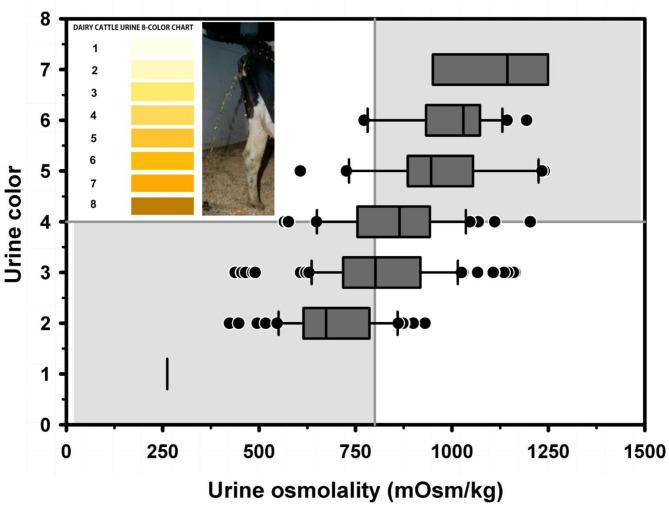
Optimal fluid therapy protocols in neonatal calves and adult cattle are based on consideration of signalment, history, and physical examination findings, and individually tailored whenever laboratory analysis is available. Measurement of the magnitude of eye recession, duration of skin tenting in the lateral neck region, and urine specific gravity by refractometry provide the best estimates of hydration status in calves and cattle. Intravenous and oral electrolyte solutions (OES) are frequently administered to critically ill calves and adult cattle. Application of physicochemical principles indicates that 0.9% NaCl, Ringer's solution, and 5% dextrose are equally acidifying, lactated Ringer's and acetated Ringer's solution are neutral to mildly acidifying, and 1.3-1.4% sodium bicarbonate solutions are strongly alkalinizing in cattle. Four different crystalloid solutions are recommended for intravenous fluid therapy in dehydrated or septic calves and dehydrated adult cattle: (1) lactated Ringer's solution and acetated Ringer's solution for dehydrated calves, although neither solution is optimized for administration to neonatal calves or adult cattle; (2) isotonic (1.3%) or hypertonic (5.0 or 8.4%) solutions of sodium bicarbonate for the treatment of calves with diarrhea and severe strong ion (metabolic) acidosis and hyponatremia, and adult cattle with acute ruminal acidosis; (3) Ringer's solution for the treatment of metabolic alkalosis in dehydrated adult cattle, particularly lactating dairy cattle; and (4) hypertonic NaCl solutions (7.2%) and an oral electrolyte solution or water load for the rapid resuscitation of dehydrated neonatal calves and adult cattle. Much progress has been made since the 1970's in identifying important attributes of an OES for diarrheic calves. Important components of an OES for neonatal calves are osmolality, sodium concentration, the effective SID that reflects the concentration of alkalinizing agents, and the energy content. The last three factors are intimately tied to the OES osmolality and the abomasal emptying rate, and therefore the rate of sodium delivery to the small intestine and ultimately the rate of resuscitation. An important need in fluid and electrolyte therapy for adult ruminants is formulation of a practical, effective, and inexpensive OES.
新生犊牛和成年牛的最佳液体治疗方案基于对动物特征、病史和体格检查结果的考量,并且只要有实验室分析结果,就应进行个体化调整。通过测量眼球凹陷程度、颈部外侧皮肤皱缩持续时间以及用折射法测定尿比重,能最好地评估犊牛和成年牛的水合状态。重症犊牛和成年牛常静脉注射和口服电解质溶液(OES)。物理化学原理表明,0.9%氯化钠、林格氏液和5%葡萄糖溶液的酸化作用相同,乳酸林格氏液和醋酸林格氏液呈中性至轻度酸化,而1.3 - 1.4%碳酸氢钠溶液在牛体内呈强碱性。对于脱水或患败血症的犊牛以及脱水的成年牛,推荐四种不同的晶体溶液用于静脉补液治疗:(1)乳酸林格氏液和醋酸林格氏液用于脱水犊牛,不过这两种溶液都未针对新生犊牛或成年牛的给药进行优化;(2)等渗(1.3%)或高渗(5.0%或8.4%)碳酸氢钠溶液,用于治疗腹泻且伴有严重强离子(代谢性)酸中毒和低钠血症的犊牛以及患有急性瘤胃酸中毒的成年牛;(3)林格氏液用于治疗脱水成年牛,尤其是泌乳奶牛的代谢性碱中毒;(4)高渗氯化钠溶液(7.2%)以及口服电解质溶液或水负荷,用于快速复苏脱水的新生犊牛和成年牛。自20世纪70年代以来,在确定腹泻犊牛OES的重要特性方面已取得很大进展。新生犊牛OES的重要成分包括渗透压、钠浓度、反映碱化剂浓度的有效SID以及能量含量。后三个因素与OES渗透压和皱胃排空率密切相关,进而与钠输送至小肠的速率以及最终的复苏速率相关。成年反刍动物液体和电解质治疗的一个重要需求是制定一种实用、有效且廉价的OES。




 Zotero 插件