Department of Pharmacology and Physiology, Drexel University College of Medicine, 245 N. 15th Street, Philadelphia, PA, 19102, USA.
Department of Microbiology and Immunology, Drexel University College of Medicine, 245 N. 15th Street, Philadelphia, PA, 19102, USA.
Cell Mol Life Sci. 2021 May;78(9):4283-4303. doi: 10.1007/s00018-021-03785-y. Epub 2021 Feb 13.
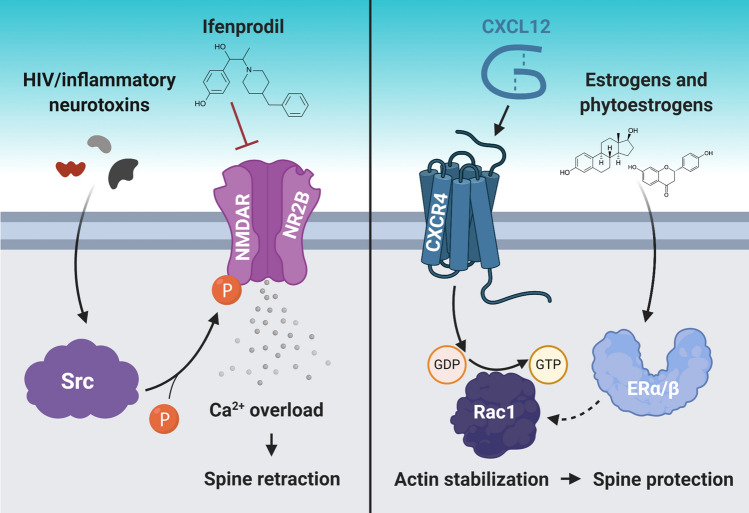
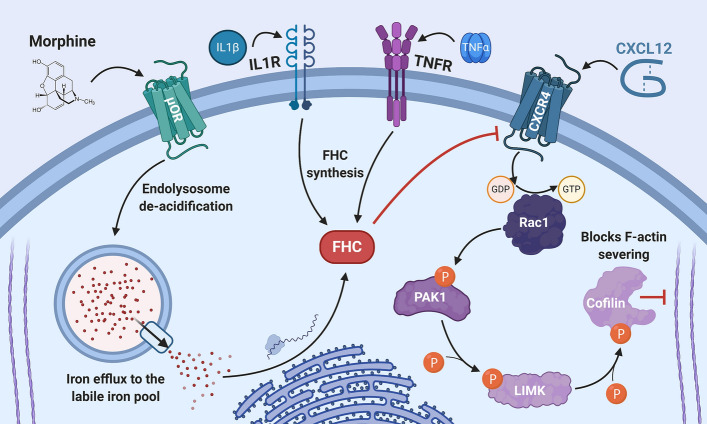
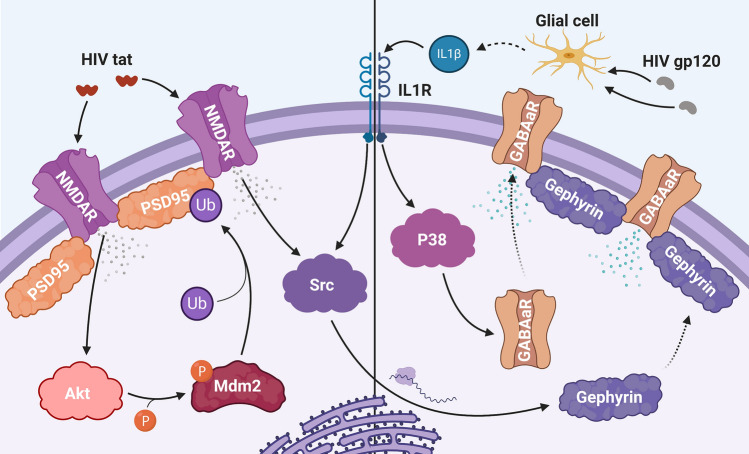
HIV-associated neurocognitive disorder (HAND) is characterized by cognitive and behavioral deficits in people living with HIV. HAND is still common in patients that take antiretroviral therapies, although they tend to present with less severe symptoms. The continued prevalence of HAND in treated patients is a major therapeutic challenge, as even minor cognitive impairment decreases patient's quality of life. Therefore, modern HAND research aims to broaden our understanding of the mechanisms that drive cognitive impairment in people with HIV and identify promising molecular pathways and targets that could be exploited therapeutically. Recent studies suggest that HAND in treated patients is at least partially induced by subtle synaptodendritic damage and disruption of neuronal networks in brain areas that mediate learning, memory, and executive functions. Although the causes of subtle neuronal dysfunction are varied, reversing synaptodendritic damage in animal models restores cognitive function and thus highlights a promising therapeutic approach. In this review, we examine evidence of synaptodendritic damage and disrupted neuronal connectivity in HAND from clinical neuroimaging and neuropathology studies and discuss studies in HAND models that define structural and functional impairment of neurotransmission. Then, we report molecular pathways, mechanisms, and comorbidities involved in this neuronal dysfunction, discuss new approaches to reverse neuronal damage, and highlight current gaps in knowledge. Continued research on the manifestation and mechanisms of synaptic injury and network dysfunction in HAND patients and experimental models will be critical if we are to develop safe and effective therapies that reverse subtle neuropathology and cognitive impairment.
HIV 相关认知障碍(HAND)的特征是 HIV 感染者的认知和行为缺陷。尽管接受抗逆转录病毒疗法的患者HAND 仍然很常见,但他们的症状往往较轻。在接受治疗的患者中,HAND 的持续流行是一个主要的治疗挑战,因为即使是轻微的认知障碍也会降低患者的生活质量。因此,现代 HAND 研究旨在加深我们对 HIV 感染者认知障碍驱动机制的理解,并确定有希望的分子途径和靶点,这些途径和靶点可能具有治疗潜力。最近的研究表明,接受治疗的患者HAND 至少部分是由大脑中介导学习、记忆和执行功能的区域的细微突触树突损伤和神经元网络破坏引起的。虽然导致细微神经元功能障碍的原因多种多样,但在动物模型中逆转突触树突损伤可以恢复认知功能,因此突出了一种很有前途的治疗方法。在这篇综述中,我们检查了临床神经影像学和神经病理学研究中 HAND 中突触树突损伤和神经元连接中断的证据,并讨论了定义 HAND 模型中神经传递结构和功能障碍的研究。然后,我们报告了涉及这种神经元功能障碍的分子途径、机制和合并症,讨论了逆转神经元损伤的新方法,并强调了目前知识上的差距。如果我们要开发安全有效的治疗方法来逆转细微的神经病理学和认知障碍,那么继续研究 HAND 患者和实验模型中突触损伤和网络功能障碍的表现和机制将是至关重要的。