Peng Miaoguan, Wei Guohong, Zhang Yunjian, Li Hai, Lai Yingrong, Guo Yan, Chen Yuxin, Liu Liehua, Xiao Haipeng, Guan Hongyu, Li Yanbing
Department of Endocrinology and Diabetes Center, The First Affiliated Hospital of Sun Yat-sen University, 58 Zhongshan Road II, Guangdong, 510080, Guangzhou, China.
Department of Thyroid and Breast Surgery, The First Affiliated Hospital of Sun Yat-sen University, 58 Zhongshan Road II, Guangdong, 510080, Guangzhou, China.
Cell Biosci. 2021 Feb 15;11(1):39. doi: 10.1186/s13578-021-00549-w.
Papillary thyroid carcinoma (PTC) is the main pathological type of thyroid carcinoma (TC). Gender is a prominent background parameter for patients with PTC. Here, we aimed to delineate the differences in cell clusters and immune microenvironment in relation to gender in PTC.
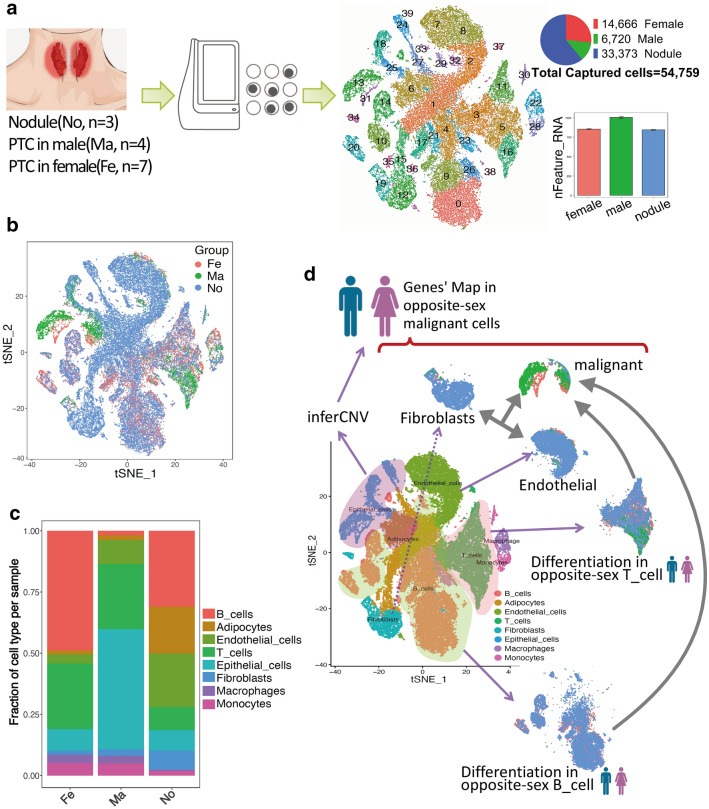
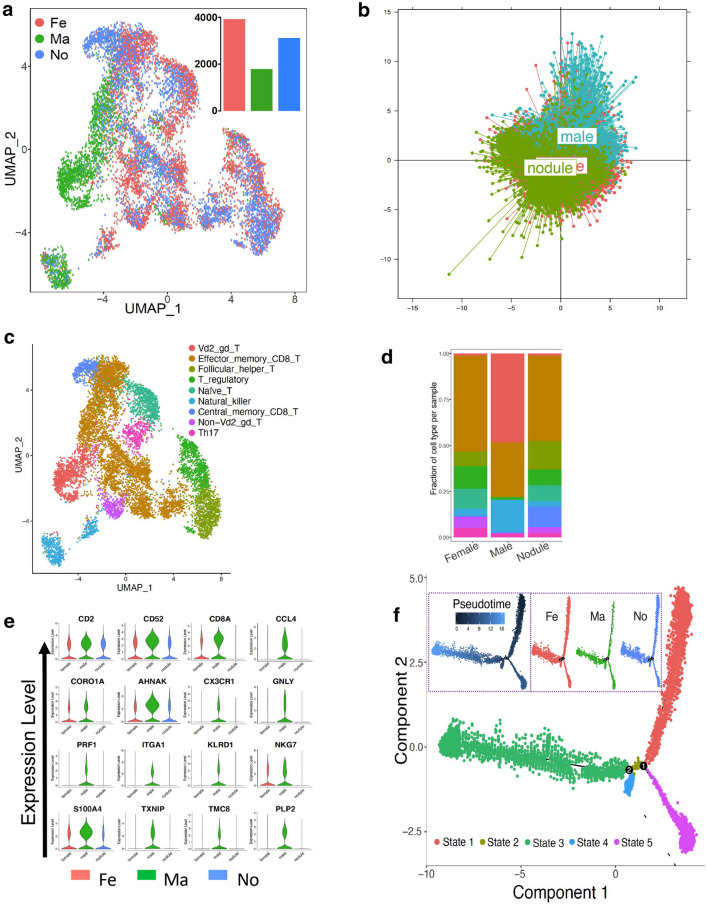
We generated 6720, 14,666, and 33,373 single-cell transcriptomes that were pooled from the tissues of four male patients with PTC, seven female patients with PTC, and three patients with nodular goiter, respectively. We performed single-cell RNA-sequencing (scRNA-seq) based on BD Rhapsody and characterized the first single-cell transcriptomic landscape of PTC involving gender. The differential cell clusters and their gene profiles were identified and analyzed via a multi-resolution network in male and female patients. The interactions of fibroblasts and endothelial cells with malignant epithelial cells and the difference in the immune infiltration of B and T lymphocytes according to gender were assessed.
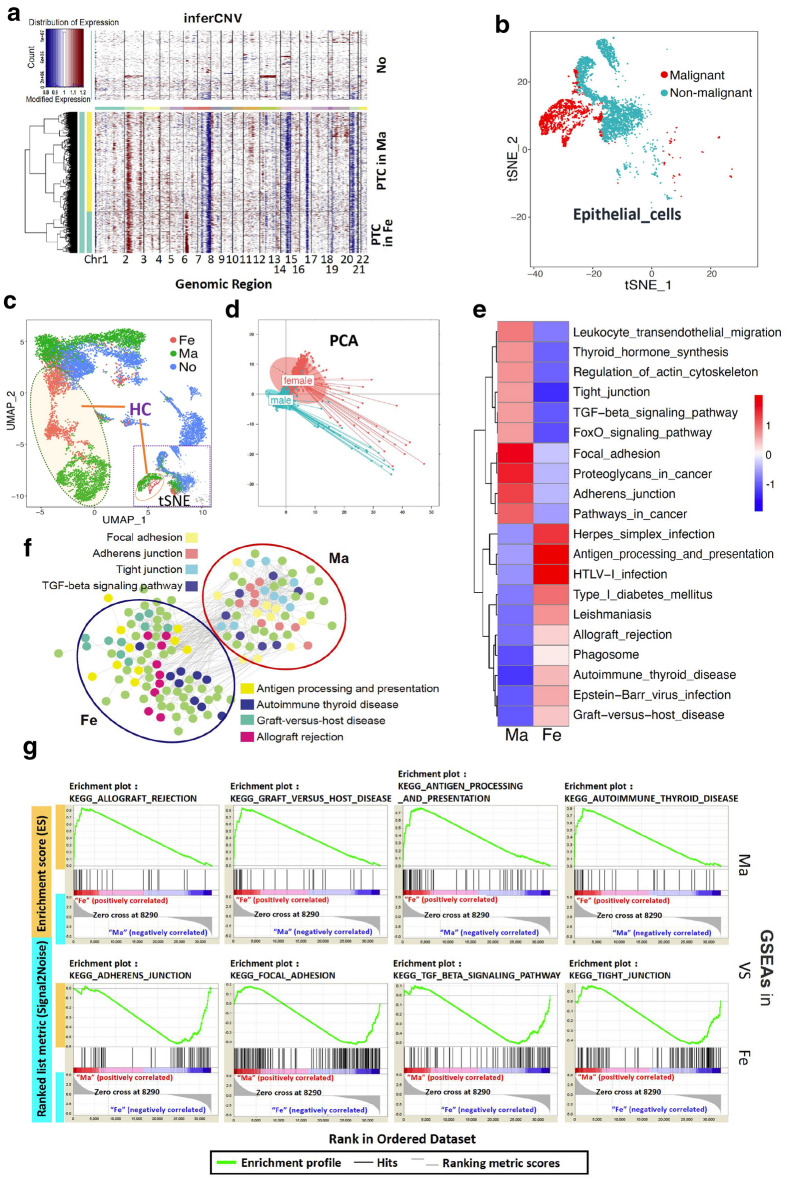
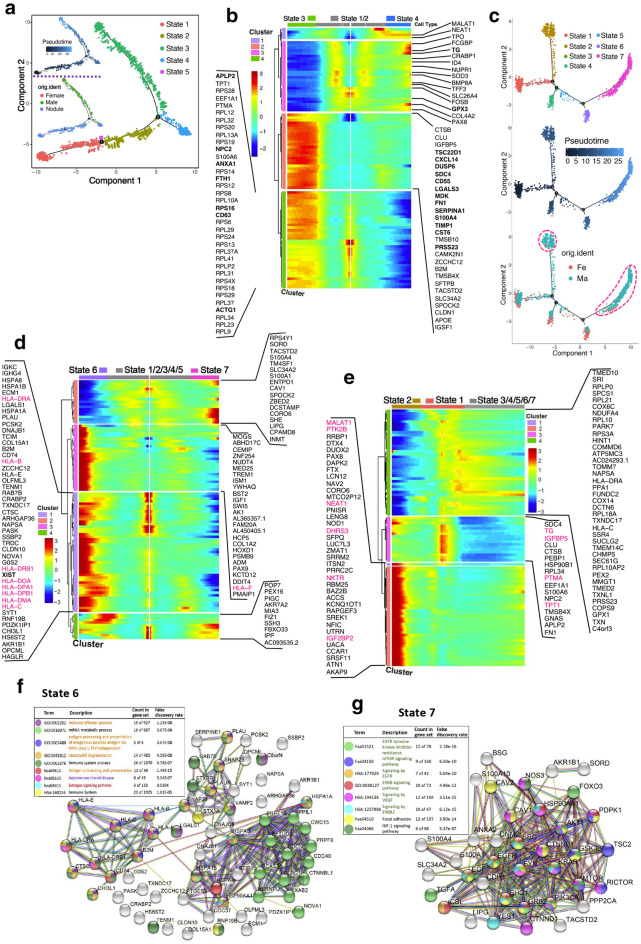
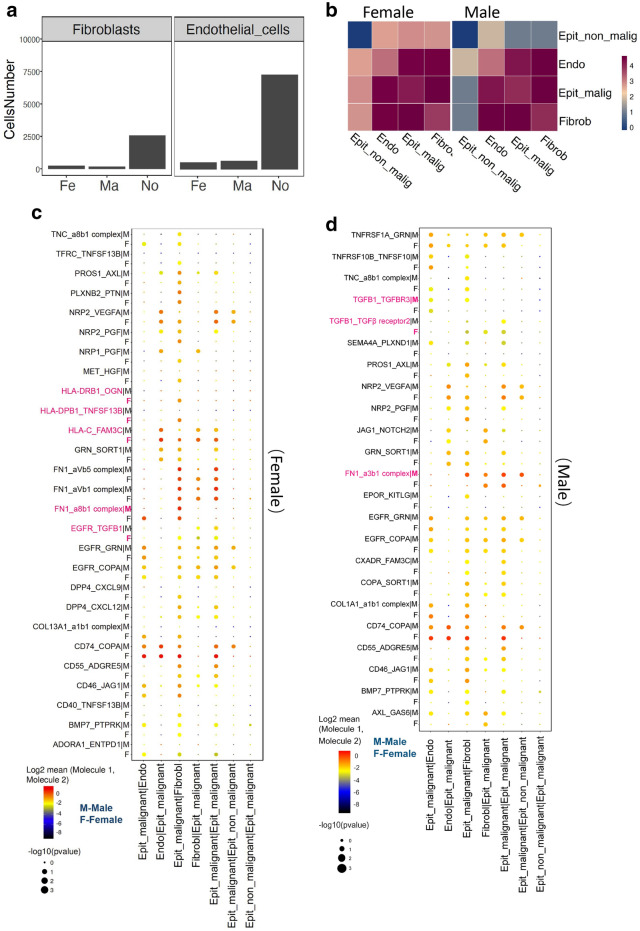
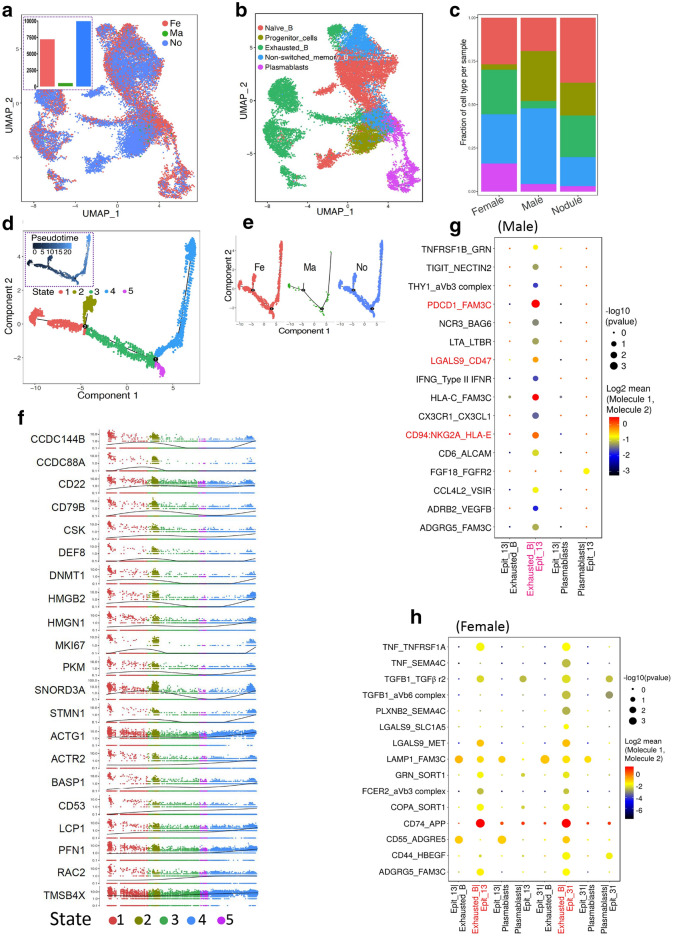
Malignant epithelial cells were divided into two distinct subsets in male and female patients with PTC. Moreover, significant differences involving inferred copy-number variations (CNVs), gene profiles, and cell differentiation were detected between male and female patients. Regarding the interactions of fibroblasts and endothelial cells with malignant epithelial cells, members of the human leukocyte antigen (HLA) family and their receptors were considered as typical in female patients with PTC, while transforming growth factor beta 1 (TGFB1) and its receptors were typical of male patients with PTC. The characteristics of B cells, including cell clusters, cell differentiation, and dominant gene sets, were significantly different between genders.
Our data revealed the detailed differences in cell clusters and immune microenvironment in PTC according to gender at the single-cell level, which provided new insights into the understanding of the impact of gender on PTC.
甲状腺乳头状癌(PTC)是甲状腺癌(TC)的主要病理类型。性别是PTC患者的一个显著背景参数。在此,我们旨在描绘PTC中与性别相关的细胞簇和免疫微环境的差异。
我们分别从4例男性PTC患者、7例女性PTC患者和3例结节性甲状腺肿患者的组织中获取了6720个、14666个和33373个单细胞转录组。我们基于BD Rhapsody进行了单细胞RNA测序(scRNA-seq),并描绘了涉及性别的PTC的首个单细胞转录组图谱。通过多分辨率网络识别并分析了男性和女性患者中差异细胞簇及其基因谱。评估了成纤维细胞和内皮细胞与恶性上皮细胞的相互作用以及B和T淋巴细胞免疫浸润在性别上的差异。
男性和女性PTC患者的恶性上皮细胞分为两个不同的亚群。此外,在男性和女性患者之间检测到了涉及推断拷贝数变异(CNV)、基因谱和细胞分化的显著差异。关于成纤维细胞和内皮细胞与恶性上皮细胞的相互作用,人类白细胞抗原(HLA)家族成员及其受体在女性PTC患者中被认为是典型的,而转化生长因子β1(TGFB1)及其受体在男性PTC患者中是典型的。B细胞的特征,包括细胞簇、细胞分化和优势基因集,在性别之间存在显著差异。
我们的数据揭示了PTC在单细胞水平上根据性别在细胞簇和免疫微环境方面的详细差异,这为理解性别对PTC的影响提供了新的见解。