• 文献检索
  • 文档翻译
  • 深度研究
  • 学术资讯
  • Suppr Zotero 插件Zotero 插件
  • 邀请有礼
  • 套餐&价格
  • 历史记录
应用&插件
Suppr Zotero 插件Zotero 插件浏览器插件Mac 客户端Windows 客户端微信小程序
定价
高级版会员购买积分包购买API积分包
服务
文献检索文档翻译深度研究API 文档MCP 服务
关于我们
关于 Suppr公司介绍联系我们用户协议隐私条款
关注我们

Suppr 超能文献

核心技术专利:CN118964589B侵权必究
粤ICP备2023148730 号-1Suppr @ 2026

文献检索

告别复杂PubMed语法,用中文像聊天一样搜索,搜遍4000万医学文献。AI智能推荐,让科研检索更轻松。

立即免费搜索

文件翻译

保留排版,准确专业,支持PDF/Word/PPT等文件格式,支持 12+语言互译。

免费翻译文档

深度研究

AI帮你快速写综述,25分钟生成高质量综述,智能提取关键信息,辅助科研写作。

立即免费体验

使用人工智能设计针对 SARS-CoV-2 的新化学实体。

design of new chemical entities for SARS-CoV-2 using artificial intelligence.

机构信息

TCS Innovation Labs-Hyderabad (Life Sciences Division), Tata Consultancy Services Limited, Hyderabad 500081, India.

出版信息

Future Med Chem. 2021 Mar;13(6):575-585. doi: 10.4155/fmc-2020-0262. Epub 2021 Feb 16.

DOI:10.4155/fmc-2020-0262
PMID:33590764
原文链接:https://pmc.ncbi.nlm.nih.gov/articles/PMC7888348/
Abstract

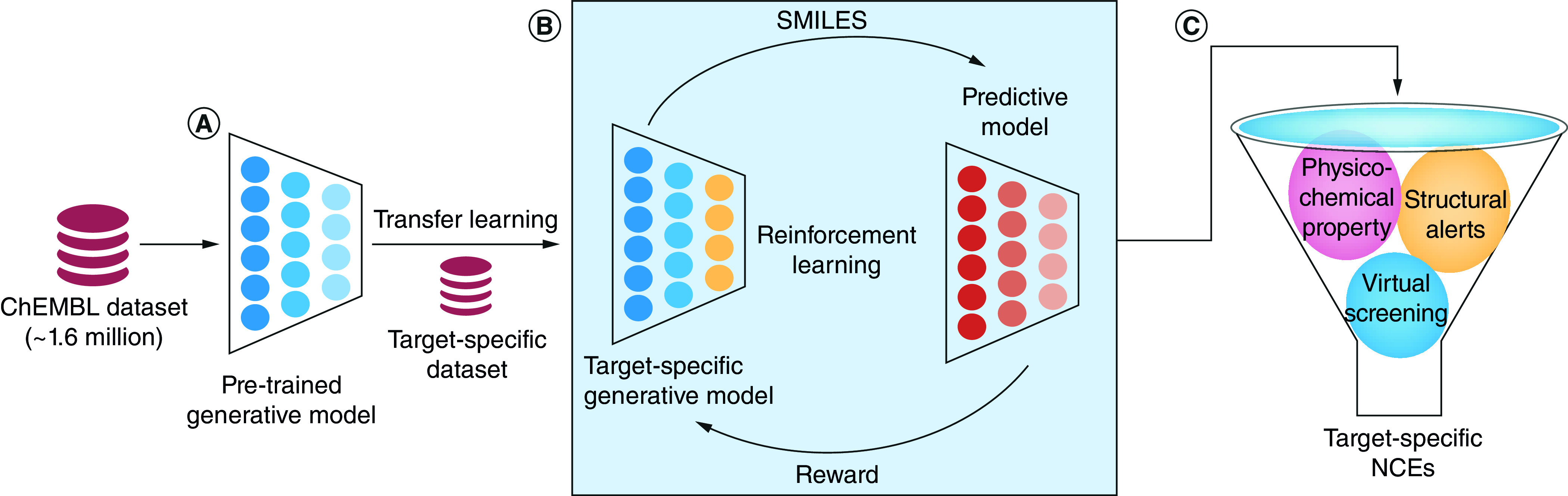
The novel coronavirus SARS-CoV-2 has severely affected the health and economy of several countries. Multiple studies are in progress to design novel therapeutics against the potential target proteins in SARS-CoV-2, including 3CL protease, an essential protein for virus replication. In this study we employed deep neural network-based generative and predictive models for design of small molecules capable of inhibiting the 3CL protease. The generative model was optimized using transfer learning and reinforcement learning to focus around the chemical space corresponding to the protease inhibitors. Multiple physicochemical property filters and virtual screening score were used for the final screening. We have identified 33 potential compounds as ideal candidates for further synthesis and testing against SARS-CoV-2.

摘要

新型冠状病毒 SARS-CoV-2 严重影响了多个国家的健康和经济。目前正在进行多项研究,以针对 SARS-CoV-2 的潜在靶标蛋白设计新型治疗药物,包括 3CL 蛋白酶,这是病毒复制的必需蛋白。在这项研究中,我们采用基于深度神经网络的生成和预测模型来设计能够抑制 3CL 蛋白酶的小分子。生成模型使用转移学习和强化学习进行了优化,重点关注与蛋白酶抑制剂相对应的化学空间。我们使用了多种物理化学性质过滤器和虚拟筛选评分进行最终筛选。我们已经确定了 33 种潜在的化合物作为进一步针对 SARS-CoV-2 进行合成和测试的理想候选物。
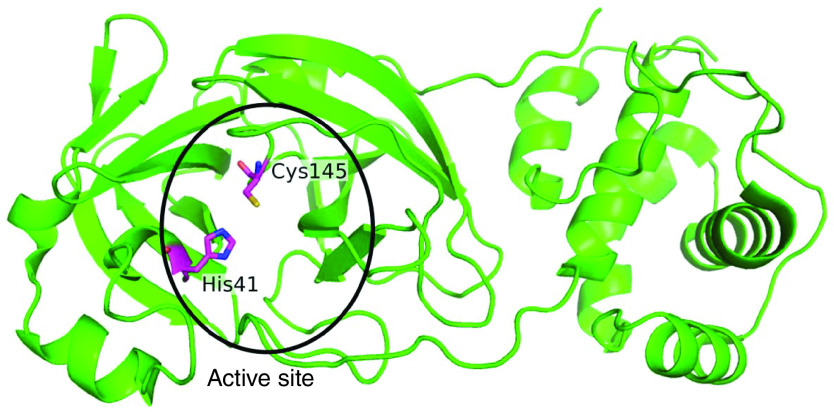
https://cdn.ncbi.nlm.nih.gov/pmc/blobs/da89/7888348/7065b0058759/figure5.jpg
https://cdn.ncbi.nlm.nih.gov/pmc/blobs/da89/7888348/55272923979c/figure1.jpg
https://cdn.ncbi.nlm.nih.gov/pmc/blobs/da89/7888348/37678ba3420a/figure2.jpg
https://cdn.ncbi.nlm.nih.gov/pmc/blobs/da89/7888348/00ff560cda0f/figure3.jpg
https://cdn.ncbi.nlm.nih.gov/pmc/blobs/da89/7888348/697833997f8d/figure4.jpg
https://cdn.ncbi.nlm.nih.gov/pmc/blobs/da89/7888348/7065b0058759/figure5.jpg
https://cdn.ncbi.nlm.nih.gov/pmc/blobs/da89/7888348/55272923979c/figure1.jpg
https://cdn.ncbi.nlm.nih.gov/pmc/blobs/da89/7888348/37678ba3420a/figure2.jpg
https://cdn.ncbi.nlm.nih.gov/pmc/blobs/da89/7888348/00ff560cda0f/figure3.jpg
https://cdn.ncbi.nlm.nih.gov/pmc/blobs/da89/7888348/697833997f8d/figure4.jpg
https://cdn.ncbi.nlm.nih.gov/pmc/blobs/da89/7888348/7065b0058759/figure5.jpg

相似文献

1
design of new chemical entities for SARS-CoV-2 using artificial intelligence.使用人工智能设计针对 SARS-CoV-2 的新化学实体。
Future Med Chem. 2021 Mar;13(6):575-585. doi: 10.4155/fmc-2020-0262. Epub 2021 Feb 16.
2
Active Learning and the Potential of Neural Networks Accelerate Molecular Screening for the Design of a New Molecule Effective against SARS-CoV-2.主动学习和神经网络的潜力加速了针对 SARS-CoV-2 的新型有效分子设计的分子筛选。
Biomed Res Int. 2021 May 25;2021:6696012. doi: 10.1155/2021/6696012. eCollection 2021.
3
Combining Different Docking Engines and Consensus Strategies to Design and Validate Optimized Virtual Screening Protocols for the SARS-CoV-2 3CL Protease.结合不同对接引擎和共识策略,设计和验证 SARS-CoV-2 3CL 蛋白酶的优化虚拟筛选方案。
Molecules. 2021 Feb 4;26(4):797. doi: 10.3390/molecules26040797.
4
Computational Screening Using a Combination of Ligand-Based Machine Learning and Molecular Docking Methods for the Repurposing of Antivirals Targeting the SARS-CoV-2 Main Protease.基于配体的机器学习和分子对接方法的组合进行计算筛选,以重新利用针对 SARS-CoV-2 主蛋白酶的抗病毒药物。
Daru. 2024 Jun;32(1):47-65. doi: 10.1007/s40199-023-00484-w. Epub 2023 Oct 31.
5
SARS-CoV-2 M: A Potential Target for Peptidomimetics and Small-Molecule Inhibitors.SARS-CoV-2 M:肽模拟物和小分子抑制剂的潜在靶标。
Biomolecules. 2021 Apr 19;11(4):607. doi: 10.3390/biom11040607.
6
Selection of SARS-CoV-2 main protease inhibitor using structure-based virtual screening.基于结构的虚拟筛选筛选 SARS-CoV-2 主要蛋白酶抑制剂。
Future Med Chem. 2022 Jan;14(2):61-79. doi: 10.4155/fmc-2020-0380. Epub 2021 Nov 24.
7
Computational Selectivity Assessment of Protease Inhibitors against SARS-CoV-2.计算评估蛋白酶抑制剂对 SARS-CoV-2 的选择性。
Int J Mol Sci. 2021 Feb 19;22(4):2065. doi: 10.3390/ijms22042065.
8
In silico Study to Evaluate the Antiviral Activity of Novel Structures against 3C-like Protease of Novel Coronavirus (COVID-19) and SARS-CoV.计算机模拟研究评估新型冠状病毒(COVID-19)和 SARS-CoV 的 3C 样蛋白酶的新型结构的抗病毒活性。
Med Chem. 2021;17(4):380-395. doi: 10.2174/1573396316999200727125522.
9
Docking Paradigm in Drug Design.药物设计中的对接范式。
Curr Top Med Chem. 2021;21(6):507-546. doi: 10.2174/1568026620666201207095626.
10
Drugs Repurposing Using QSAR, Docking and Molecular Dynamics for Possible Inhibitors of the SARS-CoV-2 M Protease.利用定量构效关系、对接和分子动力学对严重急性呼吸综合征冠状病毒2 M蛋白酶的潜在抑制剂进行药物再利用研究
Molecules. 2020 Nov 6;25(21):5172. doi: 10.3390/molecules25215172.

引用本文的文献

1
Artificial Intelligence in Natural Product Drug Discovery: Current Applications and Future Perspectives.天然产物药物发现中的人工智能:当前应用与未来展望。
J Med Chem. 2025 Feb 27;68(4):3948-3969. doi: 10.1021/acs.jmedchem.4c01257. Epub 2025 Feb 6.
2
Next-generation pediatric care: nanotechnology-based and AI-driven solutions for cardiovascular, respiratory, and gastrointestinal disorders.下一代儿科护理:基于纳米技术和人工智能驱动的心血管、呼吸和胃肠道疾病解决方案。
World J Pediatr. 2025 Jan;21(1):8-28. doi: 10.1007/s12519-024-00834-x. Epub 2024 Aug 28.
3
Innovative applications of artificial intelligence in zoonotic disease management.
人工智能在人畜共患病管理中的创新应用。
Sci One Health. 2023 Nov 3;2:100045. doi: 10.1016/j.soh.2023.100045. eCollection 2023.
4
Plausible mechanism of drug resistance and side-effects of COVID-19 therapeutics: a bottleneck for its eradication.新冠病毒治疗药物耐药性和副作用的可能机制:其根除的瓶颈。
Daru. 2024 Dec;32(2):801-823. doi: 10.1007/s40199-024-00524-z. Epub 2024 Jul 19.
5
Mining for Potent Inhibitors through Artificial Intelligence and Physics: A Unified Methodology for Ligand Based and Structure Based Drug Design.通过人工智能和物理学挖掘强效抑制剂:基于配体和基于结构的药物设计的统一方法
J Chem Inf Model. 2024 Dec 23;64(24):9082-9097. doi: 10.1021/acs.jcim.4c00634. Epub 2024 Jun 6.
6
Tribulations and future opportunities for artificial intelligence in precision medicine.人工智能在精准医学中的困境与未来机遇。
J Transl Med. 2024 Apr 30;22(1):411. doi: 10.1186/s12967-024-05067-0.
7
Advances in AI for Protein Structure Prediction: Implications for Cancer Drug Discovery and Development.人工智能在蛋白质结构预测方面的进展:对癌症药物发现和开发的影响。
Biomolecules. 2024 Mar 12;14(3):339. doi: 10.3390/biom14030339.
8
Fragment-based Drug Discovery Strategy and its Application to the Design of SARS-CoV-2 Main Protease Inhibitor.基于片段的药物发现策略及其在 SARS-CoV-2 主蛋白酶抑制剂设计中的应用。
Curr Med Chem. 2024;31(38):6204-6226. doi: 10.2174/0109298673294251240229070740.
9
Leveraging Data Science to Combat COVID-19: A Comprehensive Review.利用数据科学抗击新冠疫情:全面综述
IEEE Trans Artif Intell. 2020 Sep 2;1(1):85-103. doi: 10.1109/TAI.2020.3020521. eCollection 2020 Aug.
10
An In Silico Study for Expanding the Utility of Cannabidiol in Alzheimer's Disease Therapeutic Development.基于计算机的研究拓展大麻二酚在阿尔茨海默病治疗开发中的应用
Int J Mol Sci. 2023 Nov 6;24(21):16013. doi: 10.3390/ijms242116013.