Department of Biochemistry, Microbiology and Immunology, University of Ottawa, Ottawa, ON, Canada.
University of Ottawa Heart Institute, Ottawa, ON, Canada.
Autophagy. 2021 Nov;17(11):3671-3689. doi: 10.1080/15548627.2021.1886839. Epub 2021 Feb 26.
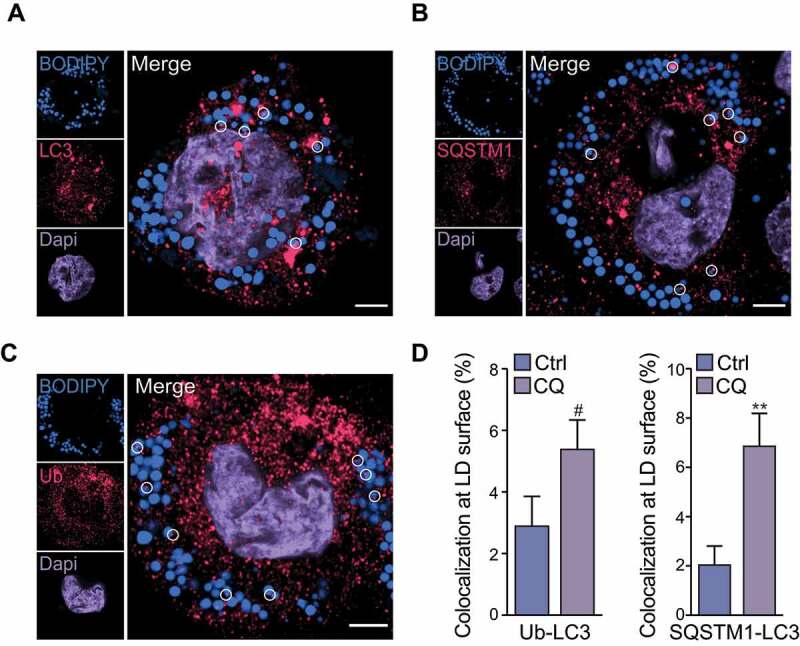
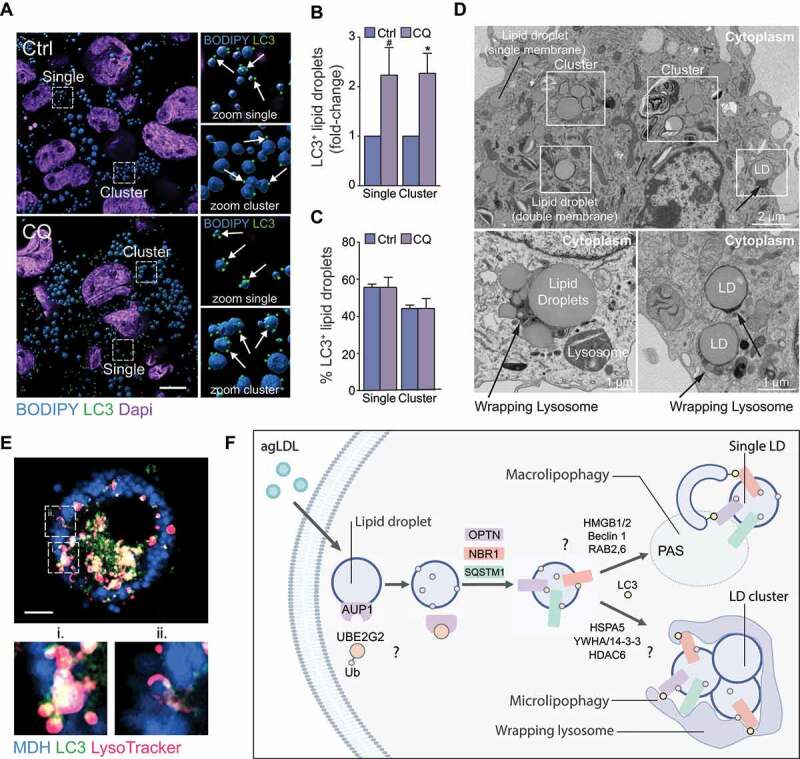
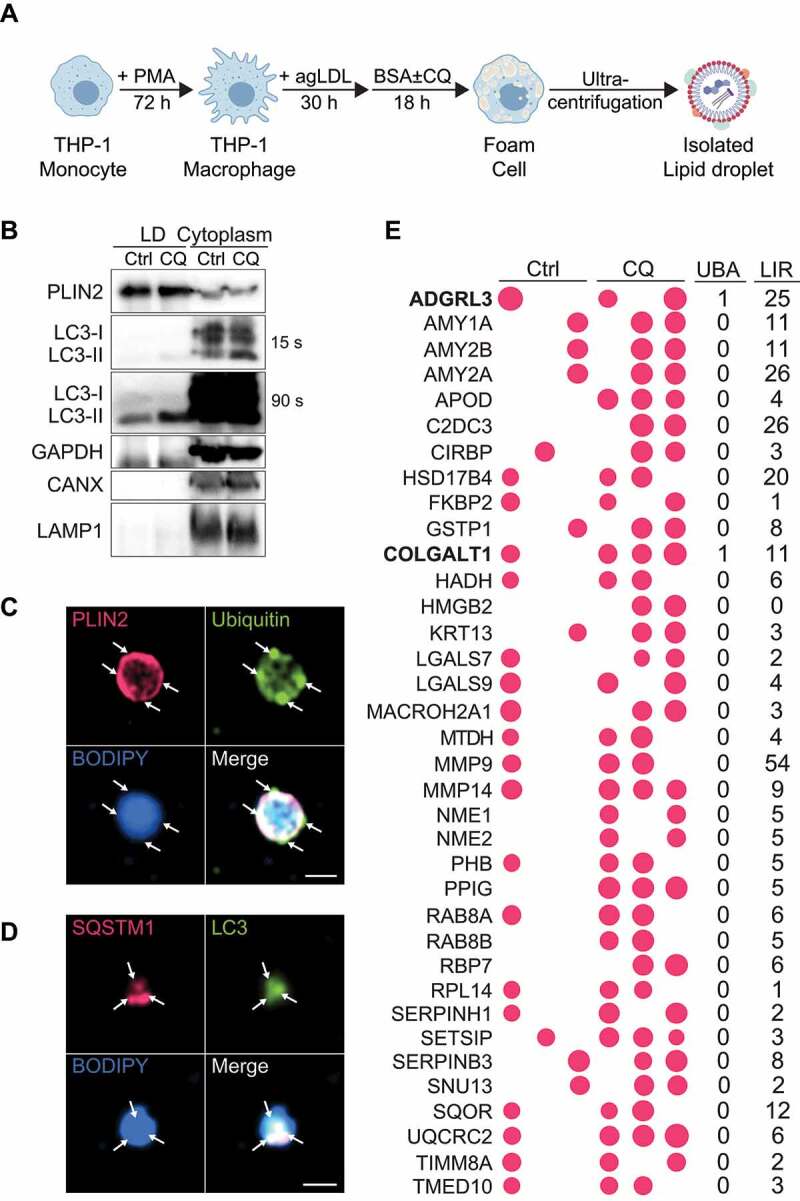
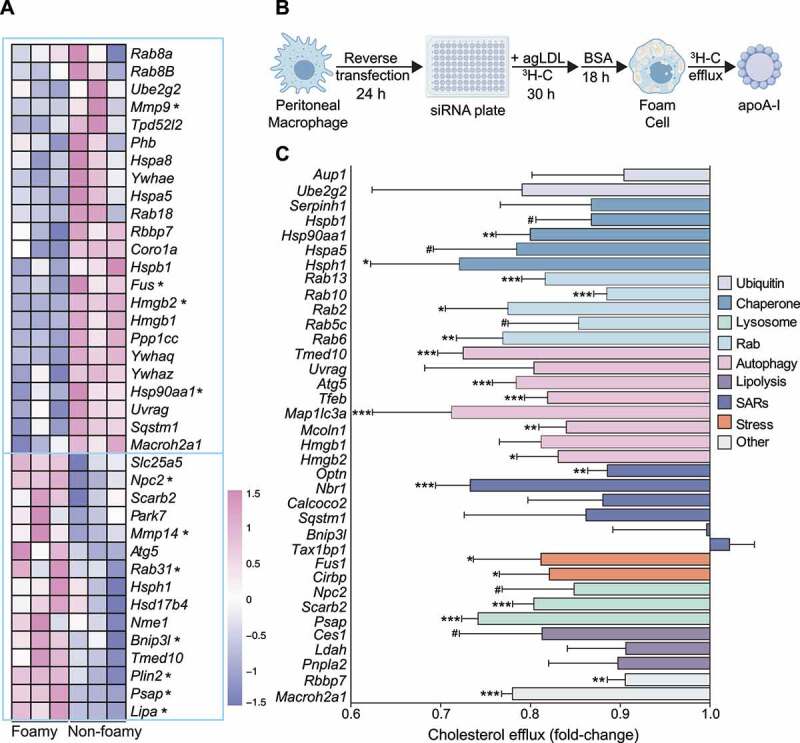
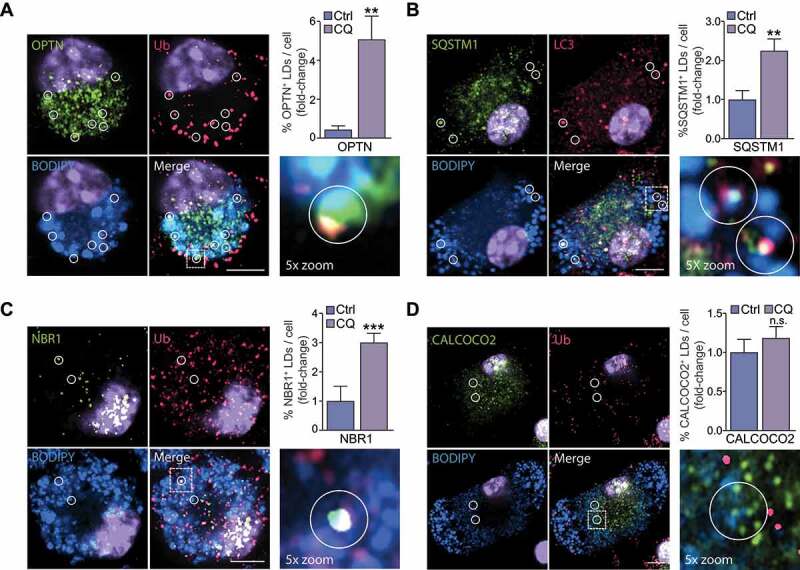
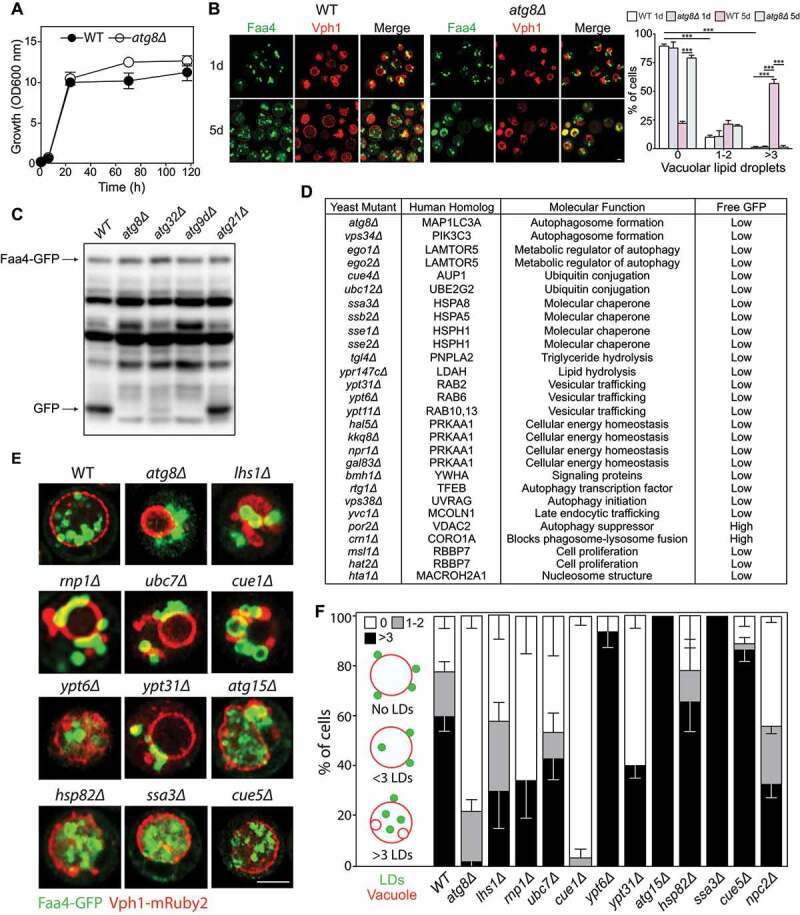
Macrophage autophagy is a highly anti-atherogenic process that promotes the catabolism of cytosolic lipid droplets (LDs) to maintain cellular lipid homeostasis. Selective autophagy relies on tags such as ubiquitin and a set of selectivity factors including selective autophagy receptors (SARs) to label specific cargo for degradation. Originally described in yeast cells, "lipophagy" refers to the degradation of LDs by autophagy. Yet, how LDs are targeted for autophagy is poorly defined. Here, we employed mass spectrometry to identify lipophagy factors within the macrophage foam cell LD proteome. In addition to structural proteins (e.g., PLIN2), metabolic enzymes (e.g., ACSL) and neutral lipases (e.g., PNPLA2), we found the association of proteins related to the ubiquitination machinery (e.g., AUP1) and autophagy (e.g., HMGB, YWHA/14-3-3 proteins). The functional role of candidate lipophagy factors (a total of 91) was tested using a custom siRNA array combined with high-content cholesterol efflux assays. We observed that knocking down several of these genes, including , and , significantly reduced cholesterol efflux, and SARs SQSTM1/p62, NBR1 and OPTN localized to LDs, suggesting a role for these in lipophagy. Using yeast lipophagy assays, we established a genetic requirement for several candidate lipophagy factors in lipophagy, including HSPA5, UBE2G2 and AUP1. Our study is the first to systematically identify several LD-associated proteins of the lipophagy machinery, a finding with important biological and therapeutic implications. Targeting these to selectively enhance lipophagy to promote cholesterol efflux in foam cells may represent a novel strategy to treat atherosclerosis. ADGRL3: adhesion G protein-coupled receptor L3; agLDL: aggregated low density lipoprotein; AMPK: AMP-activated protein kinase; APOA1: apolipoprotein A1; ATG: autophagy related; AUP1: AUP1 lipid droplet regulating VLDL assembly factor; BMDM: bone-marrow derived macrophages; BNIP3L: BCL2/adenovirus E1B interacting protein 3-like; BSA: bovine serum albumin; CALCOCO2: calcium binding and coiled-coil domain 2; CIRBP: cold inducible RNA binding protein; COLGALT1: collagen beta(1-O)galactosyltransferase 1; CORO1A: coronin 1A; DMA: deletion mutant array; Faa4: long chain fatty acyl-CoA synthetase; FBS: fetal bovine serum; FUS: fused in sarcoma; HMGB1: high mobility group box 1; HMGB2: high mobility group box 2: HSP90AA1: heat shock protein 90: alpha (cytosolic): class A member 1; HSPA5: heat shock protein family A (Hsp70) member 5; HSPA8: heat shock protein 8; HSPB1: heat shock protein 1; HSPH1: heat shock 105kDa/110kDa protein 1; LDAH: lipid droplet associated hydrolase; LIPA: lysosomal acid lipase A; LIR: LC3-interacting region; MACROH2A1: macroH2A.1 histone; MAP1LC3: microtubule-associated protein 1 light chain 3; MCOLN1: mucolipin 1; NBR1: NBR1, autophagy cargo receptor; NPC2: NPC intracellular cholesterol transporter 2; OPTN: optineurin; P/S: penicillin-streptomycin; PLIN2: perilipin 2; PLIN3: perilipin 3; PNPLA2: patatin like phospholipase domain containing 2; RAB: RAB, member RAS oncogene family; RBBP7, retinoblastoma binding protein 7, chromatin remodeling factor; SAR: selective autophagy receptor; SCARB2: scavenger receptor class B, member 2; SGA: synthetic genetic array; SQSTM1: sequestosome 1; TAX1BP1: Tax1 (human T cell leukemia virus type I) binding protein 1; TFEB: transcription factor EB; TOLLIP: toll interacting protein; UBE2G2: ubiquitin conjugating enzyme E2 G2; UVRAG: UV radiation resistance associated gene; VDAC2: voltage dependent anion channel 2; VIM: vimentin.
巨噬细胞自噬是一种高度抗动脉粥样硬化的过程,可促进细胞溶质脂滴 (LD) 的分解代谢,以维持细胞脂质稳态。选择性自噬依赖于泛素和一组选择性因子,包括选择性自噬受体 (SARs),以标记特定的货物进行降解。最初在酵母细胞中描述的“脂噬”是指自噬对 LD 的降解。然而,LD 如何被自噬靶向仍不清楚。在这里,我们使用质谱法在巨噬细胞泡沫细胞 LD 蛋白质组中鉴定脂噬因子。除了结构蛋白(如 PLIN2)、代谢酶(如 ACSL)和中性脂肪酶(如 PNPLA2)外,我们还发现与泛素化机制(如 AUP1)和自噬(如 HMGB、YWHA/14-3-3 蛋白)相关的蛋白质的关联。使用定制的 siRNA 阵列结合高内涵胆固醇流出测定法测试候选脂噬因子(共 91 种)的功能作用。我们观察到敲低其中几种基因,包括、和,明显降低胆固醇流出,SARs SQSTM1/p62、NBR1 和 OPTN 定位于 LD,表明它们在脂噬中起作用。使用酵母脂噬测定法,我们在脂噬中建立了几个候选脂噬因子(包括 HSPA5、UBE2G2 和 AUP1)的遗传要求。我们的研究首次系统地鉴定了脂噬机制中几种与 LD 相关的蛋白质,这一发现具有重要的生物学和治疗意义。靶向这些蛋白质以选择性地增强脂噬,促进泡沫细胞中的胆固醇流出,可能代表治疗动脉粥样硬化的一种新策略。ADGRL3:粘附 G 蛋白偶联受体 L3;agLDL:聚集低密度脂蛋白;AMPK:AMP 激活的蛋白激酶;ATG:自噬相关;AUP1:AUP1 脂质滴调节 VLDL 组装因子;BMDM:骨髓来源的巨噬细胞;BNIP3L:BCL2/腺病毒 E1B 相互作用蛋白 3 样;BSA:牛血清白蛋白;CALCOCO2:钙结合和卷曲螺旋结构域 2;CIRBP:冷诱导 RNA 结合蛋白;COLGALT1:胶原 β(1-O)半乳糖基转移酶 1;CORO1A:冠蛋白 1A;DMA:缺失突变体阵列;Faa4:长链脂肪酸 CoA 合成酶;FBS:胎牛血清;FUS:融合肉瘤;HMGB1:高迁移率族蛋白 1;HMGB2:高迁移率族蛋白 2:HSP90AA1:热休克蛋白 90:α(细胞质):A 类成员 1;HSPA5:热休克蛋白家族 A(Hsp70)成员 5;HSPA8:热休克蛋白 8;HSPB1:热休克蛋白 1;HSPH1:热休克 105kDa/110kDa 蛋白 1;LDAH:脂滴相关水解酶;LIPA:溶酶体酸性脂肪酶 A;LIR:LC3 相互作用区域;MACROH2A1:macroH2A.1 组蛋白;MAP1LC3:微管相关蛋白 1 轻链 3;MCOLN1:粘蛋白 1;NBR1:NBR1,自噬货物受体;NPC2:NPC 细胞内胆固醇转运蛋白 2;OPTN:optineurin;P/S:青霉素-链霉素;PLIN2:围脂滴蛋白 2;PLIN3:围脂滴蛋白 3;PNPLA2:patatin 样磷脂酶结构域包含 2;RAB:RAB,RAS 癌基因家族成员;RBBP7:视网膜母细胞瘤结合蛋白 7,染色质重塑因子;SAR:选择性自噬受体;SCARB2:清道夫受体 B,成员 2;SGA:合成遗传阵列;SQSTM1:自噬体相关 1;TAX1BP1:Tax1(人类 T 细胞白血病病毒 I 型)结合蛋白 1;TFEB:转录因子 EB;TOLLIP: Toll 相互作用蛋白;UBE2G2:泛素结合酶 E2 G2;UVRAG:UV 辐射抗性相关基因;VDAC2:电压依赖性阴离子通道 2;VIM:波形蛋白。