MaBouDi HaDi, Barron Andrew B, Li Sun, Honkanen Maria, Loukola Olli J, Peng Fei, Li Wenfeng, Marshall James A R, Cope Alex, Vasilaki Eleni, Solvi Cwyn
Department of Computer Science, University of Sheffield, Sheffield S1 4DP, UK.
Department of Biological Sciences, Macquarie University, North Ryde, New South Wales 2109, Australia.
Proc Biol Sci. 2021 Feb 24;288(1945):20202711. doi: 10.1098/rspb.2020.2711. Epub 2021 Feb 17.
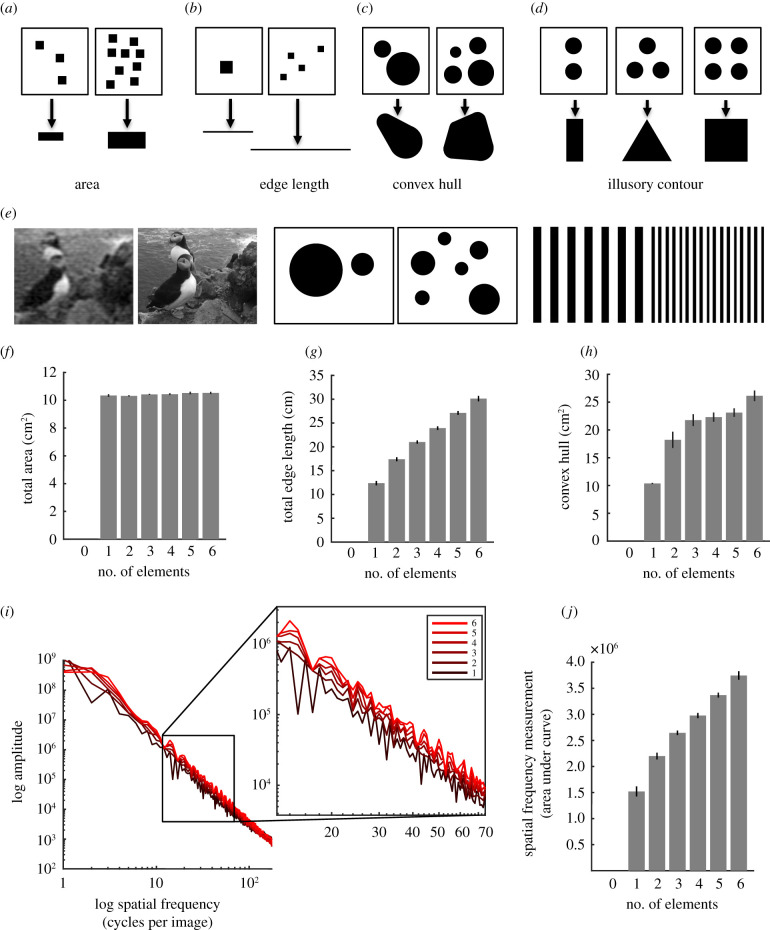
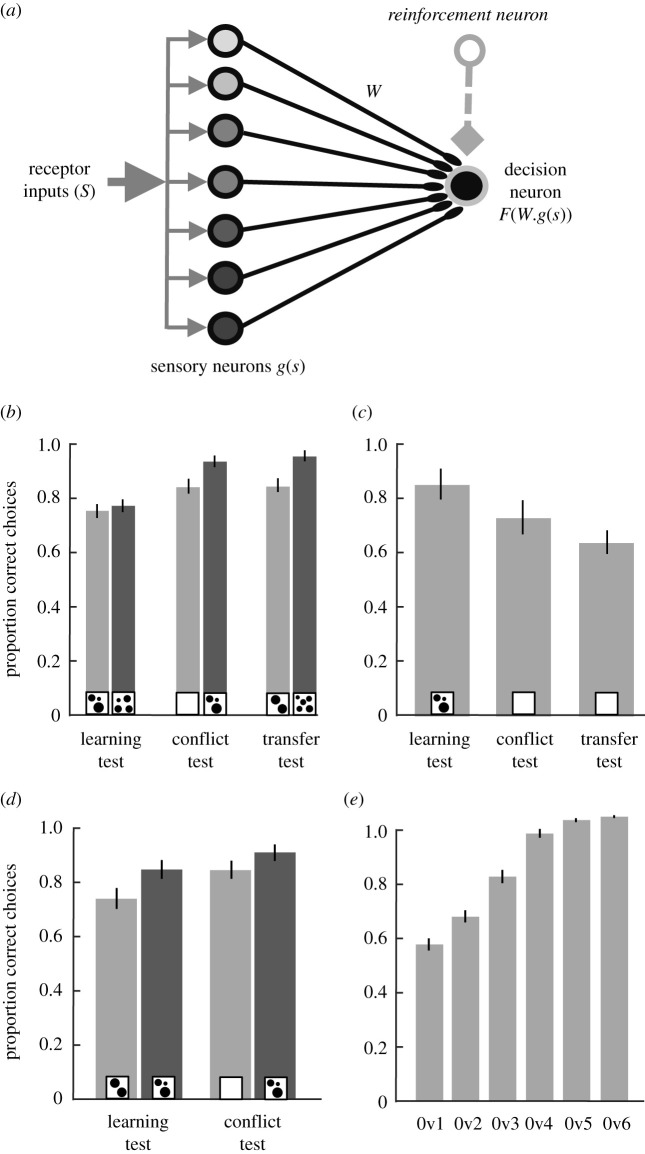
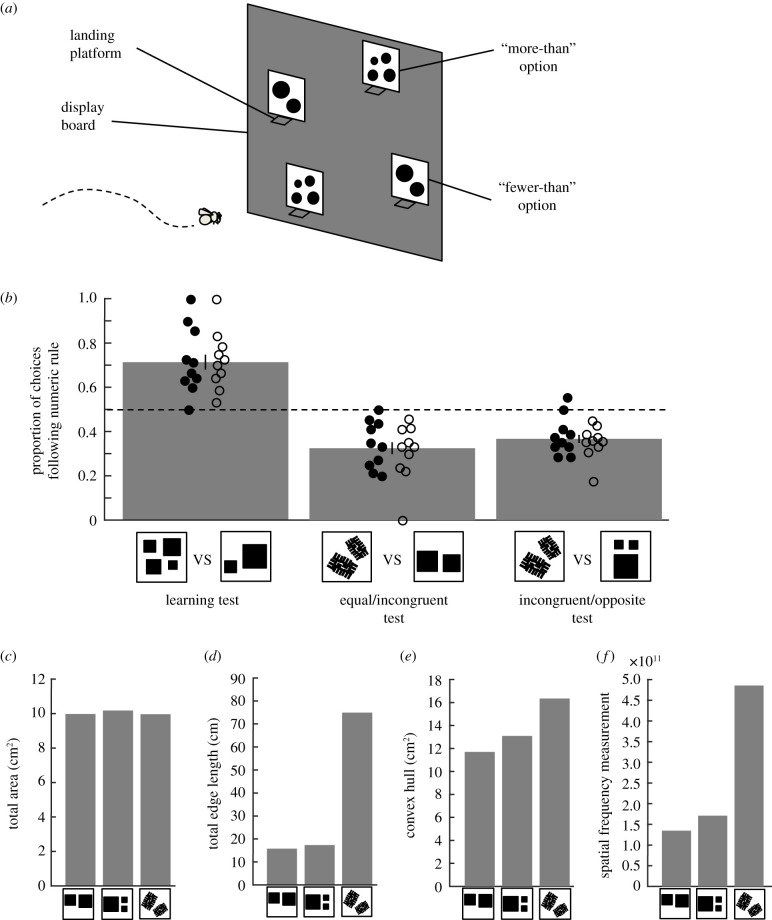
We examined how bees solve a visual discrimination task with stimuli commonly used in numerical cognition studies. Bees performed well on the task, but additional tests showed that they had learned continuous (non-numerical) cues. A network model using biologically plausible visual feature filtering and a simple associative rule was capable of learning the task using only continuous cues inherent in the training stimuli, with no numerical processing. This model was also able to reproduce behaviours that have been considered in other studies indicative of numerical cognition. Our results support the idea that a sense of magnitude may be more primitive and basic than a sense of number. Our findings highlight how problematic inadvertent continuous cues can be for studies of numerical cognition. This remains a deep issue within the field that requires increased vigilance and cleverness from the experimenter. We suggest ways of better assessing numerical cognition in non-speaking animals, including assessing the use of all alternative cues in one test, using cross-modal cues, analysing behavioural responses to detect underlying strategies, and finding the neural substrate.
我们研究了蜜蜂如何通过数值认知研究中常用的刺激来解决视觉辨别任务。蜜蜂在该任务中表现良好,但额外的测试表明它们学会了连续(非数值)线索。一个使用具有生物学合理性的视觉特征过滤和简单关联规则的网络模型,仅利用训练刺激中固有的连续线索就能学习该任务,而无需进行数值处理。该模型还能够重现其他研究中被认为表明数值认知的行为。我们的结果支持这样一种观点,即量级感可能比数字感更原始、更基础。我们的发现凸显了无意的连续线索对于数值认知研究可能造成的问题。这仍然是该领域内的一个深层次问题,需要实验者提高警惕并更加机智。我们提出了一些更好地评估非语言动物数值认知的方法,包括在一次测试中评估所有替代线索的使用情况、使用跨模态线索、分析行为反应以检测潜在策略,以及找到神经基质。