Neaman Center for Personalized Medicine, NorthShore University HealthSystem, Evanston, Illinois, USA.
Division of Medical Genetics, University of Washington, Seattle, Washington, USA.
Genet Test Mol Biomarkers. 2021 Feb;25(2):152-160. doi: 10.1089/gtmb.2020.0275.
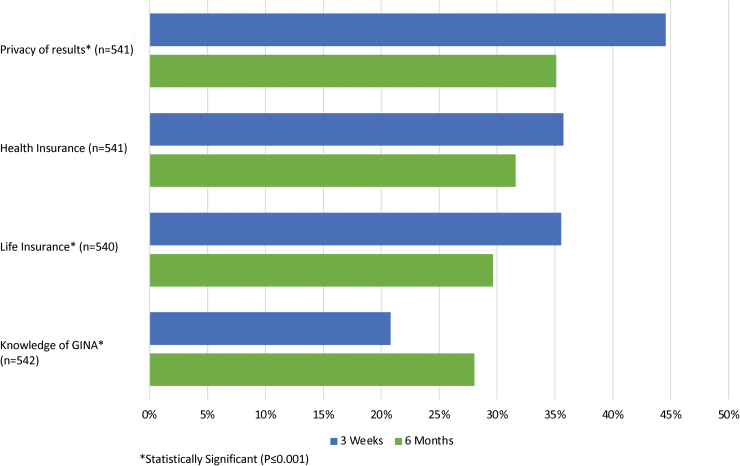
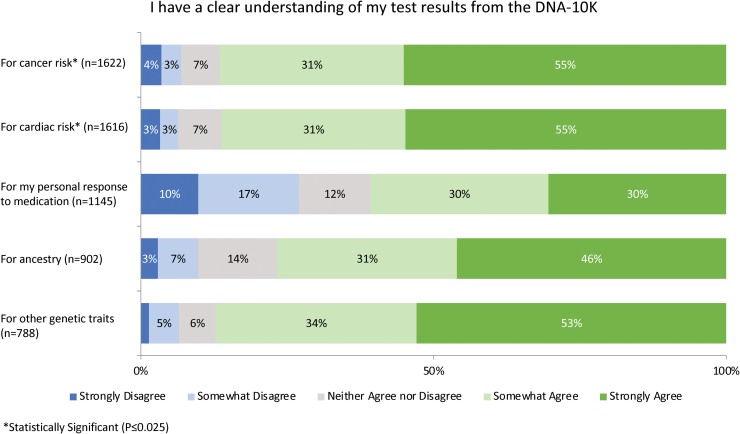
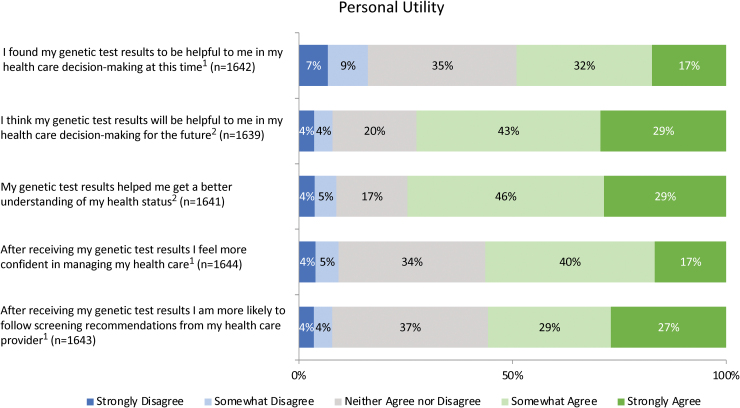
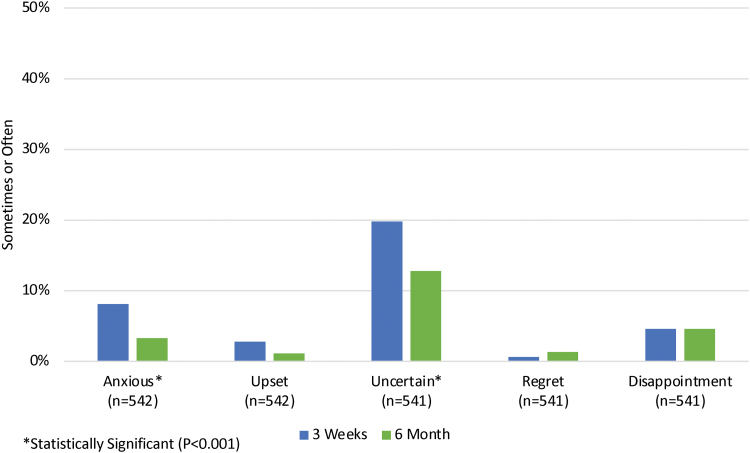
To explore patient experiences in a large-scale primary care-based, preemptive genetic testing program. Patients who received genetic results from the initiative were invited to participate in an online survey 3 weeks postresult disclosure. A 6-month follow-up survey was sent to assess changes over time. The initial survey was completed by 1646 patients, with 544 completing the 6-month follow-up survey. The following outcomes were high overall: patient-reported understanding of results (cancer: 87%; cardiac: 86%); perceived utility (75%); positive emotions (relieved: 66.8%; happy: 62.0%); family result sharing (67.6%); and satisfaction (87%), although analysis by demographic factors identified groups who may benefit from additional education and emotional support. Results-related health behaviors and discussions with providers increased over time (screening procedures 6.1% to 14.2% < 0.001; provider discussion 10.3% to 25.3%, < 0.001), and were more likely to take place for patients with positive cancer and/or cardiac results (39.8% vs. 7.6%, < 0.001). Forty-seven percent of patients reported insurance discrimination concerns, and most (79.4%) were not familiar with privacy and nondiscrimination laws. Concerns regarding discrimination and negative emotions decreased between the two survey time points (privacy issues 44.6% to 35.1% < 0.001; life insurance discrimination concerns 35.5% to 29.6%, = 0.001; anxiety 8.1% to 3.3%, < 0.001; and uncertainty 19.8% to 12.8%, < 0.001). These findings led to the development and integration of additional patient resources to improve program implementation. Our findings highlight patient experiences with and areas of need in a community-based genomic screening pilot initiative using a mixed primary care/genetics provider model to deliver precision medicine.
探索在大规模基于初级保健的预防性基因检测计划中患者的体验。 从该计划中获得基因检测结果的患者被邀请参与在线调查,调查在结果披露后 3 周进行。在 6 个月时进行后续调查,以评估随时间的变化。 初始调查完成了 1646 名患者,其中 544 名完成了 6 个月的后续调查。以下结果总体较高:患者对结果的报告理解(癌症:87%;心脏:86%);感知效用(75%);积极情绪(缓解:66.8%;高兴:62.0%);家庭结果分享(67.6%);满意度(87%),尽管按人口统计学因素进行分析发现,一些患者可能需要额外的教育和情感支持。与结果相关的健康行为和与提供者的讨论随时间增加(筛查程序从 6.1%增加到 14.2%, <0.001;提供者讨论从 10.3%增加到 25.3%, <0.001),并且更有可能发生在癌症和/或心脏阳性结果的患者中(39.8%对 7.6%, <0.001)。47%的患者报告存在保险歧视问题,并且大多数(79.4%)不了解隐私和非歧视法律。在两次调查时间点之间,对歧视和负面情绪的担忧有所减少(隐私问题从 44.6%降至 35.1%, <0.001;人寿保险歧视问题从 35.5%降至 29.6%, =0.001;焦虑从 8.1%降至 3.3%, <0.001;和不确定性从 19.8%降至 12.8%, <0.001)。这些发现导致开发和整合了更多的患者资源,以改善计划的实施。 我们的研究结果突出了在使用初级保健/遗传学提供者混合模式提供精准医学的基于社区的基因组筛查试点计划中患者的体验和需求领域。