National Institute for Infectious Diseases, INMI "Lazzaro Spallanzani", IRCCS, Rome, Italy.
Division of Gastroenterology, Fondazione-IRCCS "Casa Sollievo della Sofferenza" Hospital, S. Giovanni Rotondo (FG), Italy.
PLoS One. 2021 Feb 17;16(2):e0247041. doi: 10.1371/journal.pone.0247041. eCollection 2021.
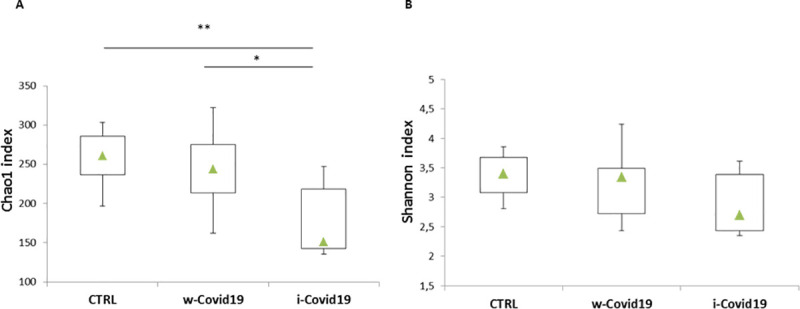
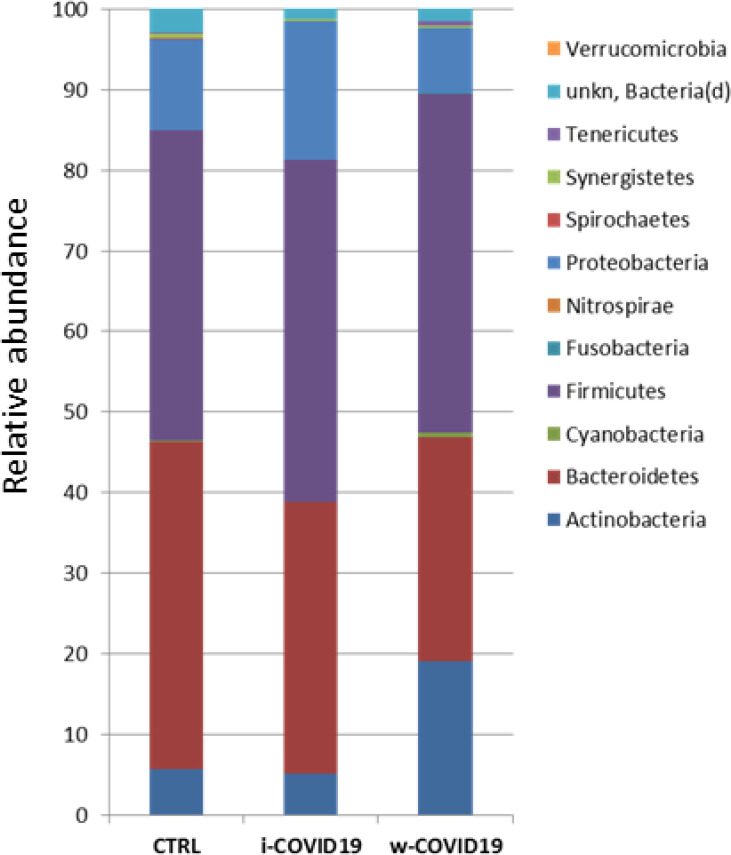
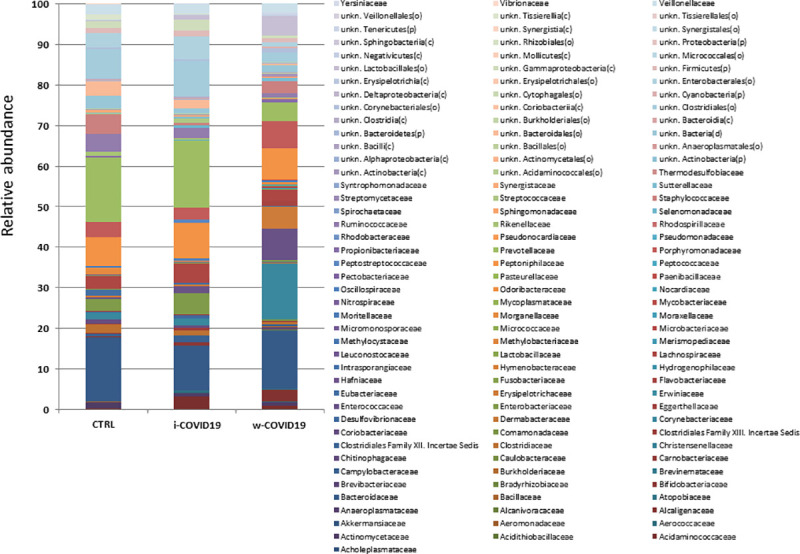
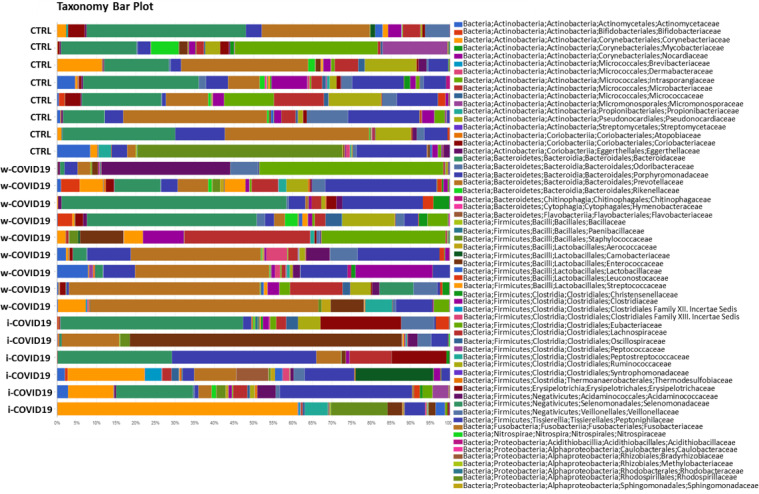
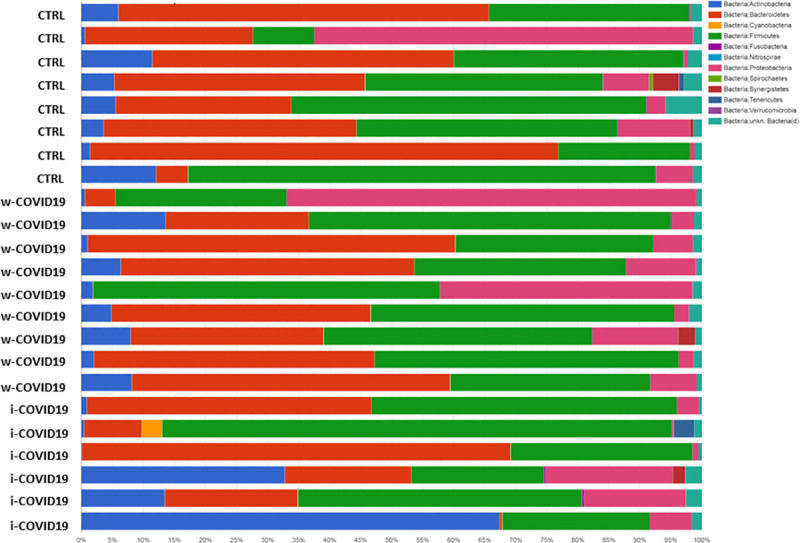
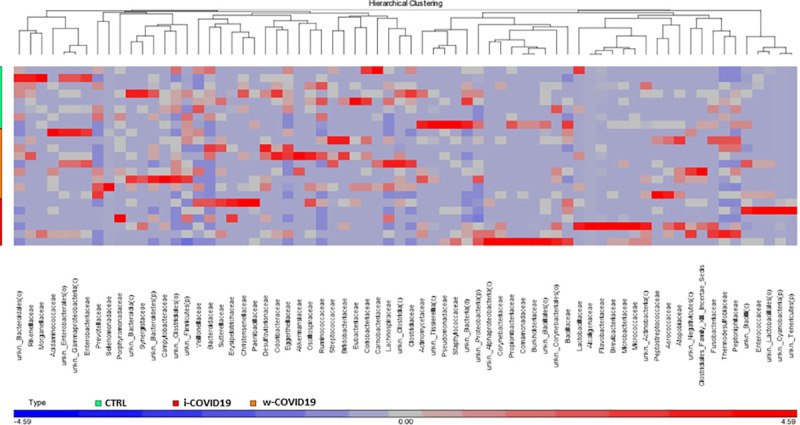
COronaVIrus Disease-2019 (COVID-19) is a pandemic respiratory infection caused by a new betacoronavirus, the Severe Acute Respiratory Syndrome-CoronaVirus-2 (SARS-CoV-2). Few data are reported on the gut microbiota in COVID-19 patients. 16S rRNA gene sequencing was performed to reveal an altered composition of the gut microbiota in patients with COVID-19 pneumonia admitted in intensive care unit (ICU) (i-COVID19), or in infectious disease wards (w-COVID19) as compared to controls (CTRL). i-COVID19 patients showed a decrease of Chao1 index as compared to CTRL and w-COVID19 patients indicating that patients in ICU displayed a lower microbial richness while no change was observed as for Shannon Index. At the phylum level, an increase of Proteobacteria was detected in w-COVID19 patients as compared to CTRL. A decrease of Fusobacteria and Spirochetes has been found, with the latter decreased in i-COVID19 patients as compared to CTRL. Significant changes in gut microbial communities in patients with COVID-19 pneumonia with different disease severity compared to CTRL have been identified. Our preliminary data may provide valuable information and promising biomarkers for the diagnosis of the disease and, when validated in larger cohort, it could facilitate the stratification of patients based on the microbial signature.
新型冠状病毒病(COVID-19)是由一种新型β冠状病毒,即严重急性呼吸系统综合征冠状病毒 2(SARS-CoV-2)引起的大流行呼吸道感染。关于 COVID-19 患者的肠道微生物组的数据很少。本研究通过 16S rRNA 基因测序来揭示 COVID-19 肺炎患者(重症监护病房(ICU)的 i-COVID19 患者和传染病病房(w-COVID19)患者)与对照组(CTRL)相比,肠道微生物组的组成发生了改变。与 CTRL 和 w-COVID19 患者相比,i-COVID19 患者的 Chao1 指数降低,表明 ICU 患者的微生物丰富度较低,而 Shannon 指数没有变化。在门水平上,与 CTRL 相比,w-COVID19 患者的变形菌门增加。还发现厚壁菌门和螺旋体门减少,与 CTRL 相比,i-COVID19 患者的螺旋体门减少。与 CTRL 相比,不同疾病严重程度的 COVID-19 肺炎患者的肠道微生物群落发生了显著变化。我们的初步数据可能为该疾病的诊断提供有价值的信息和有前景的生物标志物,并且当在更大的队列中验证时,它可以根据微生物特征对患者进行分层。