Department of Pharmacy, University of Naples Federico II, Naples, Italy.
Department of Pharmacology and Pharmacotherapy, National University of Pharmacy of the Ministry of Health of Ukraine, Kharkiv, Ukraine.
Curr Neuropharmacol. 2021;19(11):1966-1983. doi: 10.2174/1570159X19666210217084827.
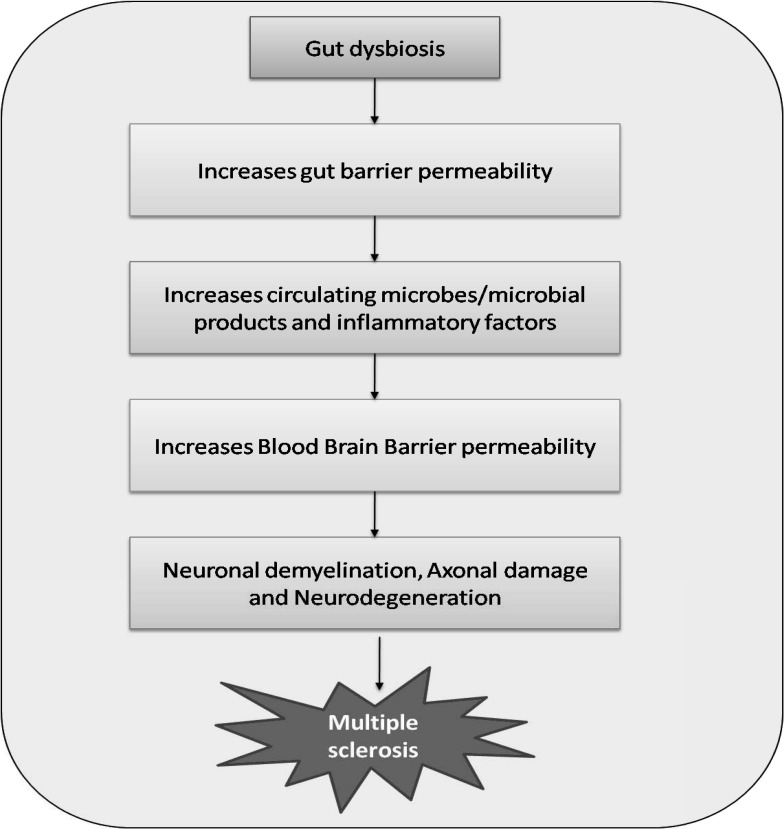
Multiple sclerosis (MS) is a progressive neuromuscular disorder characterized by demyelination of neurons of the central nervous system (CNS). The pathogenesis of the disorder is described as an autoimmune attack targeting the myelin sheath of nerve cell axons in the CNS. Available treatments only reduce the risk of relapse, prolonging the remissions of neurological symptoms and halt the progression of the disorder. Among the new ways of targeting neurological disorders, including MS, there is modulation of gut microbiota since the link between gut microbiota has been rethought within the term gut-brain axis. Gut microbiota is known to help the body with essential functions such as vitamin production and positive regulation of immune, inflammatory, and metabolic pathways. High consumption of saturated fatty acids, gluten, salt, alcohol, artificial sweeteners, or antibiotics is the responsible factor for causing gut dysbiosis. The latter can lead to dysregulation of immune and inflammatory pathways, which eventually results in leaky gut syndrome, systemic inflammation, autoimmune reactions, and increased susceptibility to infections. In modern medicine, scientists have mostly focused on the modulation of gut microbiota in the development of novel and effective therapeutic strategies for numerous disorders, with probiotics and prebiotics being the most widely studied in this regard. Several pieces of evidence from preclinical and clinical studies have supported the positive impact of probiotic and/or prebiotic intake on gut microbiota and MS. This review aims to link gut dysbiosis with the development/progression of MS, and the potential of modulation of gut microbiota in the therapeutics of the disease.
多发性硬化症(MS)是一种进行性神经肌肉疾病,其特征是中枢神经系统(CNS)神经元脱髓鞘。该疾病的发病机制被描述为针对中枢神经系统神经细胞轴突髓鞘的自身免疫攻击。现有的治疗方法只能降低复发风险,延长神经系统症状的缓解期,并阻止疾病的进展。在针对包括多发性硬化症在内的神经紊乱的新方法中,有一种是调节肠道微生物群,因为在肠-脑轴这一术语中,肠道微生物群之间的联系被重新思考。众所周知,肠道微生物群有助于身体完成重要功能,如维生素的产生,以及对免疫、炎症和代谢途径的积极调节。大量摄入饱和脂肪酸、麸质、盐、酒精、人工甜味剂或抗生素是导致肠道菌群失调的原因。后者可导致免疫和炎症途径失调,最终导致肠道渗漏综合征、全身炎症、自身免疫反应和增加感染易感性。在现代医学中,科学家主要专注于调节肠道微生物群,以开发针对多种疾病的新型有效治疗策略,其中益生菌和益生元在这方面的研究最为广泛。来自临床前和临床研究的一些证据支持了益生菌和/或益生元摄入对肠道微生物群和多发性硬化症的积极影响。本综述旨在将肠道菌群失调与多发性硬化症的发生/进展联系起来,并探讨调节肠道微生物群在治疗该疾病中的潜力。