Nutrition and Microbiome Laboratory, Institut du cancer de Montréal, Centre de recherche du Centre hospitalier de l'Université de Montréal (CRCHUM), 900 Rue Saint Denis, Montreal, QC, H2X 0A9, Canada.
Department of Medicine, Faculty of Medicine, Université de Montréal, 2900 boulevard Édouard-Montpetit, Montréal, QC, H3T 1J4, Canada.
BMC Cancer. 2021 Feb 17;21(1):172. doi: 10.1186/s12885-021-07876-8.
Colibactin is a genotoxin that induces DNA double-strand breaks that may lead to carcinogenesis and is produced by Escherichia coli strains harboring the pks island. Human and animal studies have shown that colibactin-producing gut bacteria promote carcinogenesis and enhance the progression of colorectal cancer through cellular senescence and chromosomal abnormalities. In this study, we investigated the impact of prebiotics on the genotoxicity of colibactin-producing E. coli strains Nissle 1917 and NC101.
Bacteria were grown in medium supplemented with 20, 30 and 40 mg/mL of prebiotics inulin or galacto-oligosaccharide, and with or without 5 μM, 25 μM and 125 μM of ferrous sulfate. Colibactin expression was assessed by luciferase reporter assay for the clbA gene, essential for colibactin production, in E. coli Nissle 1917 and by RT-PCR in E. coli NC101. The human epithelial colorectal adenocarcinoma cell line, Caco-2, was used to assess colibactin-induced megalocytosis by methylene blue binding assay and genotoxicity by γ-H2AX immunofluorescence analysis.
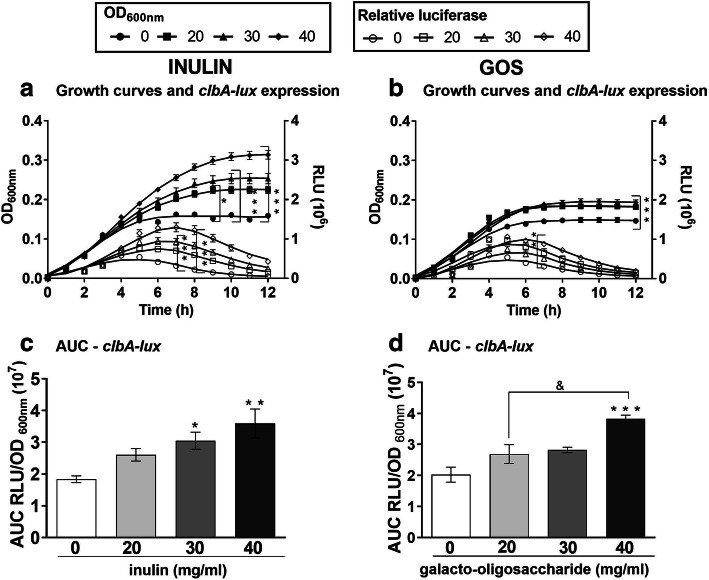
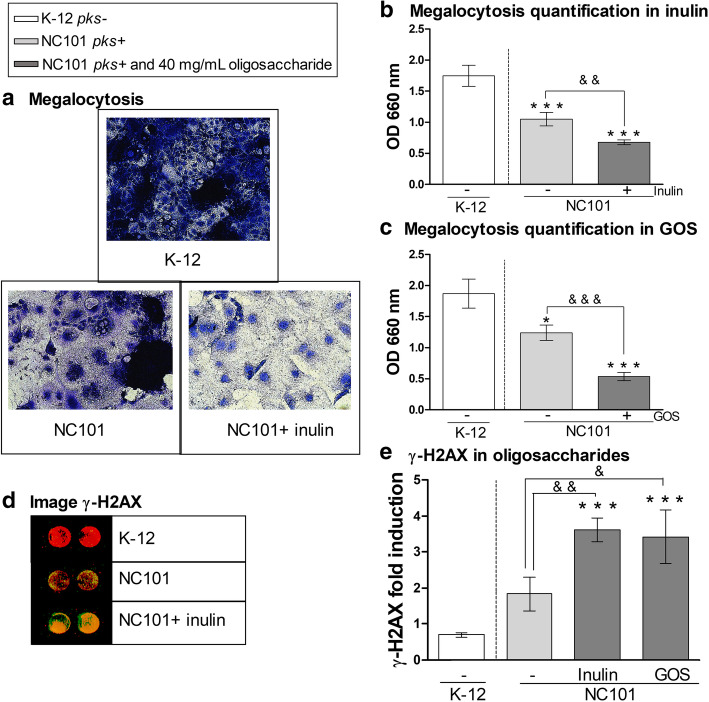
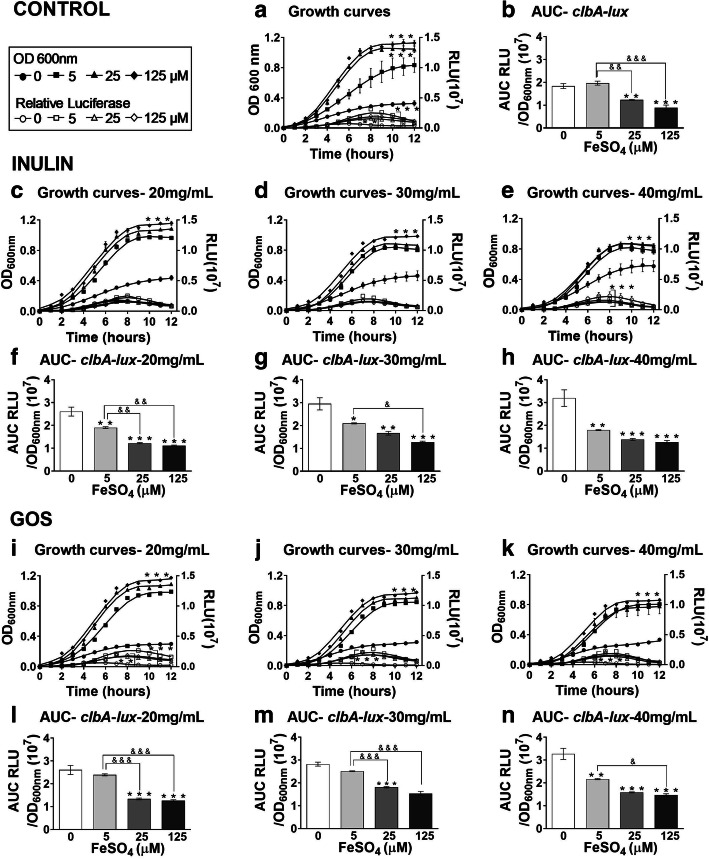
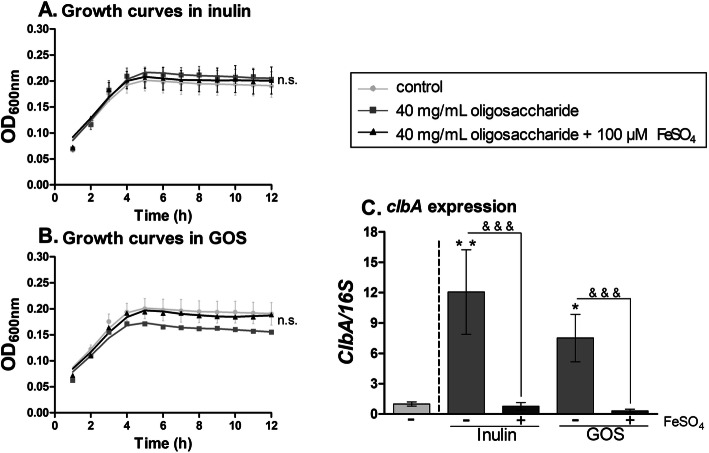
Inulin and galacto-oligosaccharide enhanced the expression of clbA in pks+ E. coli. However, the addition of 125 μM of ferrous sulfate inhibited the expression of clbA triggered by oligosaccharides. In the presence of either oligosaccharide, E. coli NC101 increased dysplasia and DNA double-strand breaks in Caco-2 cells compared to untreated cells.
Our results suggest that, in vitro, prebiotic oligosaccharides exacerbate DNA damage induced by colibactin-producing bacteria. Further studies are necessary to establish whether oligosaccharide supplementation may lead to increased colorectal tumorigenesis in animal models colonized with pks+ E. coli.
肠菌素是一种诱导 DNA 双链断裂的基因毒素,可能导致癌变,由携带 pks 岛的大肠杆菌菌株产生。人体和动物研究表明,产生肠菌素的肠道细菌通过细胞衰老和染色体异常促进癌变,并促进结直肠癌的进展。在这项研究中,我们研究了益生菌对产肠菌素大肠杆菌菌株 Nissle 1917 和 NC101 的基因毒性的影响。
将细菌在补充有 20、30 和 40mg/ml 益生菌菊粉或半乳糖-低聚糖的培养基中培养,同时添加或不添加 5μM、25μM 和 125μM 硫酸亚铁。通过荧光素酶报告基因测定 clbA 基因(产肠菌素所必需)在大肠杆菌 Nissle 1917 中的表达,通过 RT-PCR 在大肠杆菌 NC101 中的表达,评估产肠菌素的表达。用人结肠直肠腺癌细胞系 Caco-2 通过亚甲蓝结合测定评估产肠菌素诱导的巨细胞症,通过 γ-H2AX 免疫荧光分析评估基因毒性。
菊粉和半乳糖-低聚糖增强了 pks+大肠杆菌中 clbA 的表达。然而,添加 125μM 硫酸亚铁抑制了低聚糖触发的 clbA 表达。与未处理的细胞相比,在添加或不添加低聚糖的情况下,大肠杆菌 NC101 增加了 Caco-2 细胞的发育不良和 DNA 双链断裂。
我们的研究结果表明,在体外,益生菌低聚糖加剧了产肠菌素细菌诱导的 DNA 损伤。需要进一步的研究来确定低聚糖补充是否会导致动物模型中 pks+大肠杆菌定植后结直肠肿瘤发生增加。