Department for Health, University of Bath, Bath, United Kingdom.
Department of Oncology and Haematology, Royal United Hospitals Bath NHS Trust, Bath, United Kingdom.
Front Immunol. 2021 Feb 1;11:616188. doi: 10.3389/fimmu.2020.616188. eCollection 2020.
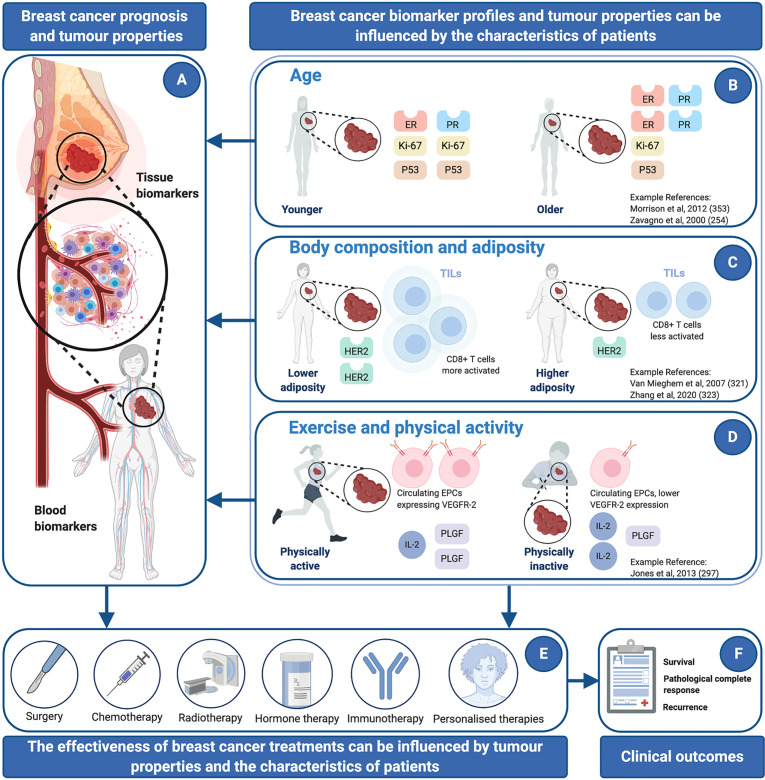
Breast cancer is the most common malignancy among women worldwide. Over the last four decades, diagnostic and therapeutic procedures have improved substantially, giving patients with localized disease a better chance of cure, and those with more advanced cancer, longer periods of disease control and survival. However, understanding and managing heterogeneity in the clinical response exhibited by patients remains a challenge. For some treatments, biomarkers are available to inform therapeutic options, assess pathological response and predict clinical outcomes. Nevertheless, some measurements are not employed universally and lack sensitivity and specificity, which might be influenced by tissue-specific alterations associated with aging and lifestyle. The first part of this article summarizes available and emerging biomarkers for clinical use, such as measurements that can be made in tumor biopsies or blood samples, including so-called liquid biopsies. The second part of this article outlines underappreciated factors that could influence the interpretation of these clinical measurements and affect treatment outcomes. For example, it has been shown that both adiposity and physical activity can modify the characteristics of tumors and surrounding tissues. In addition, evidence shows that inflammaging and immunosenescence interact with treatment and clinical outcomes and could be considered prognostic and predictive factors independently. In summary, changes to blood and tissues that reflect aging and patient characteristics, including lifestyle, are not commonly considered clinically or in research, either for practical reasons or because the supporting evidence base is developing. Thus, an aim of this article is to encourage an integrative phenomic approach in oncology research and clinical management.
乳腺癌是全世界女性中最常见的恶性肿瘤。在过去的四十年中,诊断和治疗程序有了很大的改进,使局部疾病患者有更好的治愈机会,使更晚期癌症患者有更长的疾病控制和生存时间。然而,理解和管理患者临床反应的异质性仍然是一个挑战。对于一些治疗方法,有生物标志物可用于提供治疗选择、评估病理反应和预测临床结果。尽管如此,一些测量方法并未普遍采用,且缺乏敏感性和特异性,这些可能会受到与衰老和生活方式相关的组织特异性改变的影响。本文第一部分总结了可用于临床的现有和新兴生物标志物,例如可以在肿瘤活检或血液样本中进行的测量,包括所谓的液体活检。本文第二部分概述了一些被低估的因素,这些因素可能会影响这些临床测量的解释,并影响治疗结果。例如,已经表明肥胖和身体活动可以改变肿瘤和周围组织的特征。此外,有证据表明,炎症和免疫衰老与治疗和临床结果相互作用,可以作为独立的预后和预测因素。总之,反映衰老和患者特征(包括生活方式)的血液和组织的变化在临床上或研究中通常没有得到考虑,无论是出于实际原因还是因为支持性证据基础正在发展。因此,本文的目的之一是鼓励肿瘤学研究和临床管理中的综合表型方法。