Ghosh-Jerath Suparna, Kapoor Ridhima, Barman Satabdi, Singh Geetanjali, Singh Archna, Downs Shauna, Fanzo Jessica
Indian Institute of Public Health-Delhi, Public Health Foundation of India, Gurgaon, India.
Department of Botany, Dr. Shyama Prasad Mukherjee University Ranchi, Jharkhand, India.
Front Nutr. 2021 Feb 1;7:600470. doi: 10.3389/fnut.2020.600470. eCollection 2020.
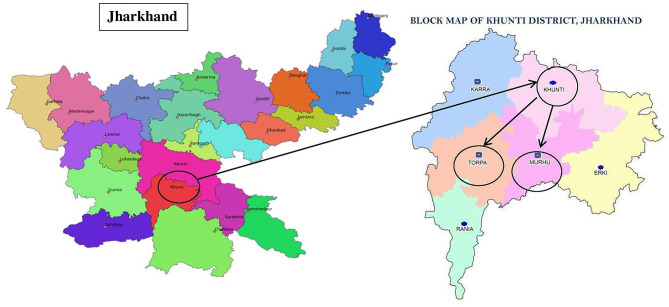
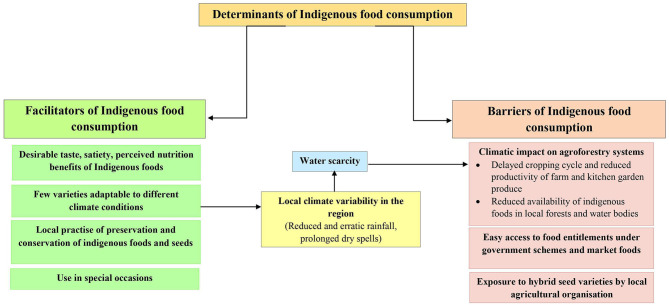
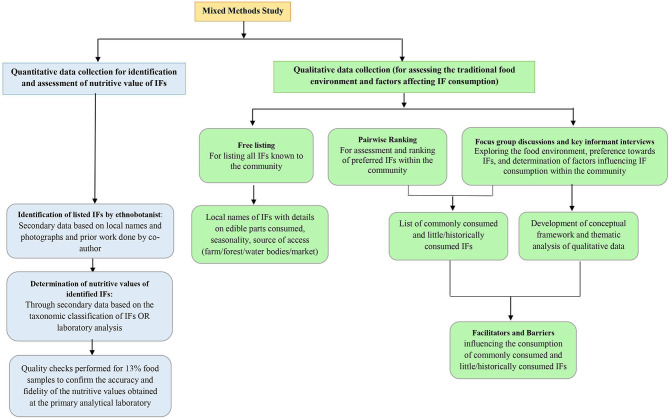
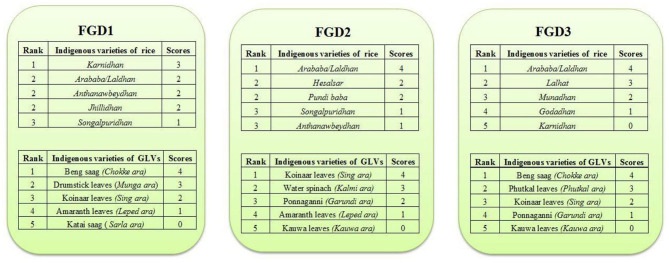
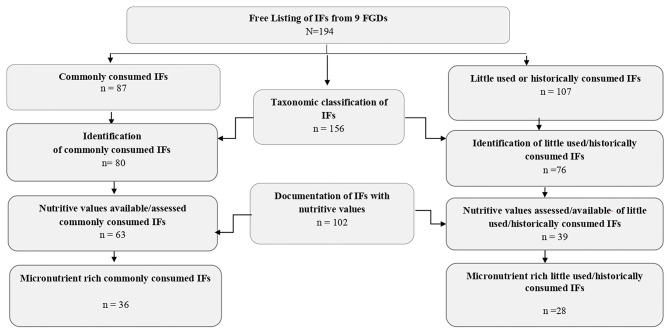
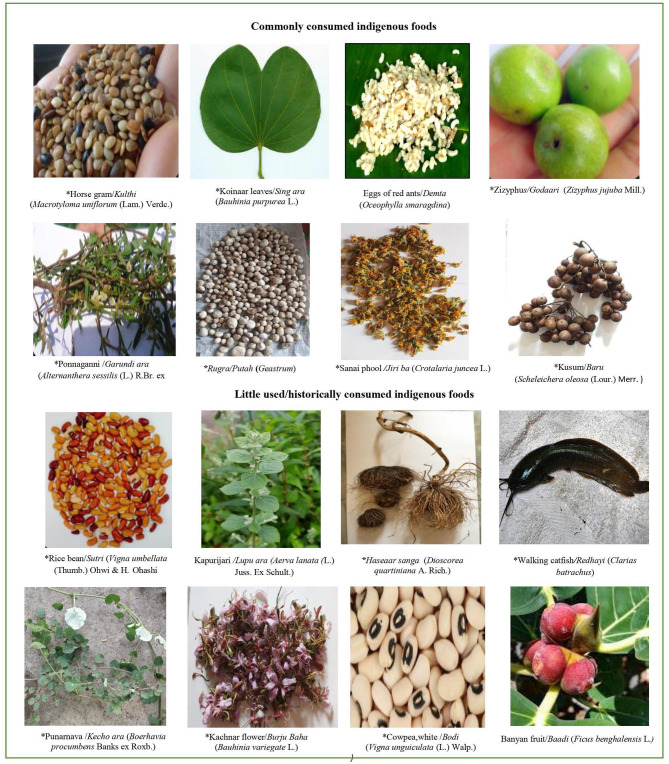
Indigenous food (IF) systems, derived from natural ecosystems are perceived to be sustainable and nutritionally adequate. Mundas, an indigenous tribal community in Jharkhand India, are surrounded by rich agroforestry resources, yet display high levels of malnutrition. Our study explored the food environment of Munda community, different IFs they accessed, levels of utilization of IFs in routine diets, their nutritional attributes and factors influencing IF consumption. A cross-sectional mixed-methods study was conducted in nine villages of Murhu and Torpa blocks in Khunti district, Jharkhand. Using focus group discussions and key informant interviews, we did free-listing of IFs known to the community. This was followed by enumerating preferred and little used/historically consumed IFs, along with reasons. Qualitative enquiries were recorded and transcribed verbatim; data were coded and analyzed using thematic framework approach. The listed IFs were identified through common names and photographs, and verified by ethnobotanist in the team. The nutritive values of identified IFs were searched in literature or nutritional analysis of specific plant based foods were undertaken in an accredited laboratory. The community demonstrated traditional ecological knowledge of several IFs ( = 194), which are accessed from wild, cultivated and built food environments. Taxonomic classification was available for 80% ( = 156) IFs, out of which 60 foods had nutritive values in secondary literature and 42 foods were analyzed in laboratory. Many IFs were rich in micronutrients like calcium, iron, folate, vitamin A and C. Among the listed IFs, only 45% were commonly consumed, while rest were little used/historically consumed. Factors like desirable taste, satiety, perceived nutrition benefits, adaptability to climate variability, traditional practice of food preservation and their cultural importance promoted IF consumption. However, local climatic impacts on agroforestry systems, easy access to foods bought from markets or distributed under government food security schemes, and promotion of hybrid seeds by local agricultural organizations, emerged as potential barriers. Thus, reinforcement of traditional ecological knowledge and informal food literacy, along with promotion of climate resilient attributes of IFs, can contribute to sustainable food systems in Munda community.
源自自然生态系统的本土食物(IF)体系被认为具有可持续性且营养充足。蒙达人是印度恰尔肯德邦的一个本土部落社区,周围环绕着丰富的农林业资源,但仍存在高度营养不良的情况。我们的研究探索了蒙达社区的食物环境、他们获取的不同本土食物、本土食物在日常饮食中的利用水平、其营养属性以及影响本土食物消费的因素。在恰尔肯德邦孔蒂区穆尔胡和托尔帕街区的9个村庄开展了一项横断面混合方法研究。通过焦点小组讨论和关键信息人访谈,我们对社区已知的本土食物进行了自由列举。随后列举出优先食用和很少食用/历史上食用过的本土食物,并说明原因。定性调查进行了记录并逐字转录;数据使用主题框架法进行编码和分析。列出的本土食物通过通用名称和照片进行识别,并由团队中的民族植物学家进行核实。通过在文献中查找已识别本土食物的营养价值,或在一家认可实验室对特定植物性食物进行营养分析。该社区展示了对多种本土食物(=194种)的传统生态知识,这些食物来自野生、种植和人工构建的食物环境。80%(=156种)的本土食物有分类学分类,其中60种食物在二手文献中有营养价值,42种食物在实验室进行了分析。许多本土食物富含钙、铁、叶酸、维生素A和C等微量营养素。在列出的本土食物中,只有45%被普遍食用,其余则很少食用/历史上食用过。理想的口味、饱腹感、感知到的营养益处、对气候多变性的适应性、传统的食物保存方法及其文化重要性等因素促进了本土食物的消费。然而,当地气候对农林业系统的影响、容易获得从市场购买或在政府粮食安全计划下分发的食物,以及当地农业组织对杂交种子的推广,成为了潜在障碍。因此,强化传统生态知识和非正式食物素养,以及推广本土食物的气候适应属性,有助于蒙达社区实现可持续食物体系。