Hemida Manal, Vuori Kristiina A, Moore Robin, Anturaniemi Johanna, Hielm-Björkman Anna
Department of Equine and Small Animal Medicine, Faculty of Veterinary Medicine, University of Helsinki, Helsinki, Finland.
Department of Nutrition and Clinical Nutrition, Faculty of Veterinary Medicine, Beni-Suef University, Beni-Suef, Egypt.
Front Vet Sci. 2021 Feb 1;8:552350. doi: 10.3389/fvets.2021.552350. eCollection 2021.
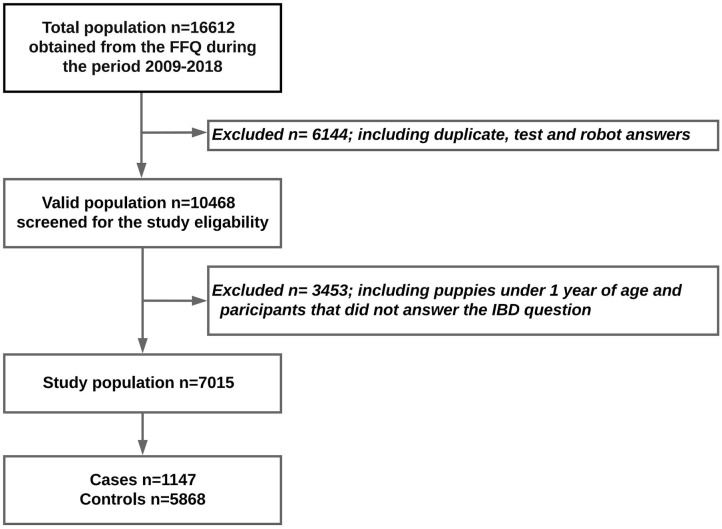
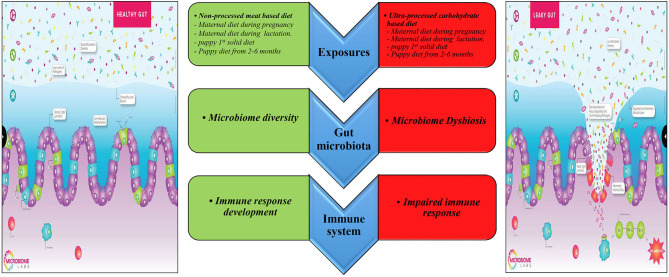
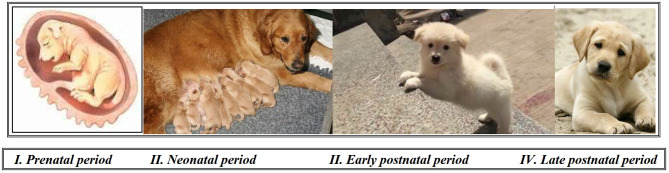
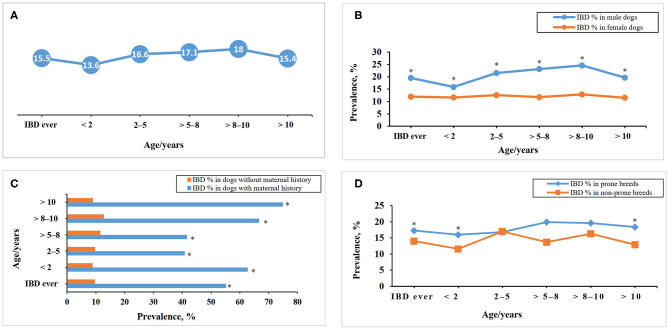
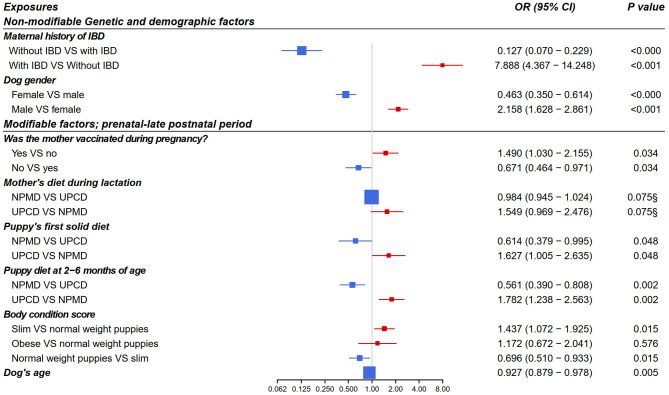
Inflammatory bowel disease (IBD) is an idiopathic multifactorial disease in humans and dogs, usually assigned to the interactions between genes, gut microbiota, diet, environment, and the immune system. We aimed to investigate the modifiable early life exposures associated with IBD in dogs. The study data was extracted from the validated owner-reported DogRisk food frequency questionnaire. This was a cross-sectional questionnaire-based study that tested 21 different early life dietary and environmental, demographic and genetic variables for their association with IBD or not, in adult dogs. A total of 7,015 dogs participated in this study. The study covered early life periods; prenatal, neonatal, early, and late postnatal periods. Two feeding patterns, a non-processed meat-based diet (NPMD) and an ultra-processed carbohydrate-based diet (UPCD) were studied. Data was analyzed using logistic regression analysis with a backward stepwise deletion. From the final models we found that the NPMD during early and late postnatal periods were significantly associated with lower IBD risk later in life. The UPCD during the same periods was associated with a higher risk of IBD incidence. Also, the maternal diet during the neonatal period showed a non-significant trend of lower IBD risk in the offspring with the NPMD and a higher IBD risk with the UPCD. Additionally, the normal body weight of puppies during the first 6 months of age was associated with a lower risk of IBD in adulthood while, slim puppies associated significantly with IBD in adulthood. From the non-modifiable background variables, we identified the maternal history of IBD as the strongest risk factor for later incidence of IBD. Furthermore, male dogs were twice as likely to develop IBD as female dogs were. It is reassuring for owners to know that they themselves can have an impact on their dog's health. A high-fat, low-carbohydrate NPMD exposure during early life, and a normal body condition in puppyhood were significantly associated with less IBD in adult dogs. The opposite was true for UPCD exposure and abnormal body condition score in 6 month old puppies.
炎症性肠病(IBD)是人和犬类的一种特发性多因素疾病,通常归因于基因、肠道微生物群、饮食、环境和免疫系统之间的相互作用。我们旨在调查与犬类IBD相关的可改变的早期生活暴露因素。研究数据来自经过验证的由主人报告的犬类风险食物频率问卷。这是一项基于问卷的横断面研究,测试了21种不同的早期生活饮食、环境、人口统计学和基因变量与成年犬IBD的相关性。共有7015只犬参与了本研究。该研究涵盖了早期生活阶段,包括产前、新生儿期、早期和晚期产后阶段。研究了两种喂养模式,即未加工的肉类为主的饮食(NPMD)和超加工的碳水化合物为主的饮食(UPCD)。使用逻辑回归分析和向后逐步删除法对数据进行分析。从最终模型中我们发现,产后早期和晚期的NPMD与成年后较低的IBD风险显著相关。同期的UPCD与IBD发病风险较高相关。此外,新生儿期的母体饮食显示,后代食用NPMD时IBD风险较低但不显著,食用UPCD时IBD风险较高。此外,幼犬在6个月大时体重正常与成年后IBD风险较低相关,而体型瘦小的幼犬与成年后IBD显著相关。从不可改变的背景变量中,我们确定母体IBD病史是后期IBD发病的最强风险因素。此外,公犬患IBD的可能性是母犬的两倍。让主人放心的是,他们自己可以对狗狗的健康产生影响。早期生活中高脂肪、低碳水化合物的NPMD暴露以及幼犬期正常的身体状况与成年犬较少患IBD显著相关。6个月大的幼犬中,UPCD暴露和异常身体状况评分则情况相反。