Al-Bahar Ophthalmology Center, Ibn Sina Hospital, Kuwait, Kuwait.
PLoS One. 2021 Feb 18;16(2):e0247126. doi: 10.1371/journal.pone.0247126. eCollection 2021.
Non-arteritic ischemic optic neuropathy (NAION) is the most common acute optic neuropathy over the age of 50 years. NAION is commonly associated with systemic vascular risk factors (diabetes, hypertension, hyperlipidemia) and small cup-to-disc-ratio. We have assessed the prevalence risk factors of NAION and the visual outcome in patients referred to a tertiary ophthalmology center in Kuwait.
A retrospective review of new cases of NAION presenting within 2 weeks of onset were included and baseline clinical and demographics characteristic were determined. The prevalence of risk factors and the visual outcome (change in logMAR visual acuity, mean deviation of visual field) was compared between young NAION patients (below 50 years of age) and older NAION patients (over 50 years of age). The odds ratio of a final favorable visual outcome (visual acuity 20/40 or better) by age category was determined.
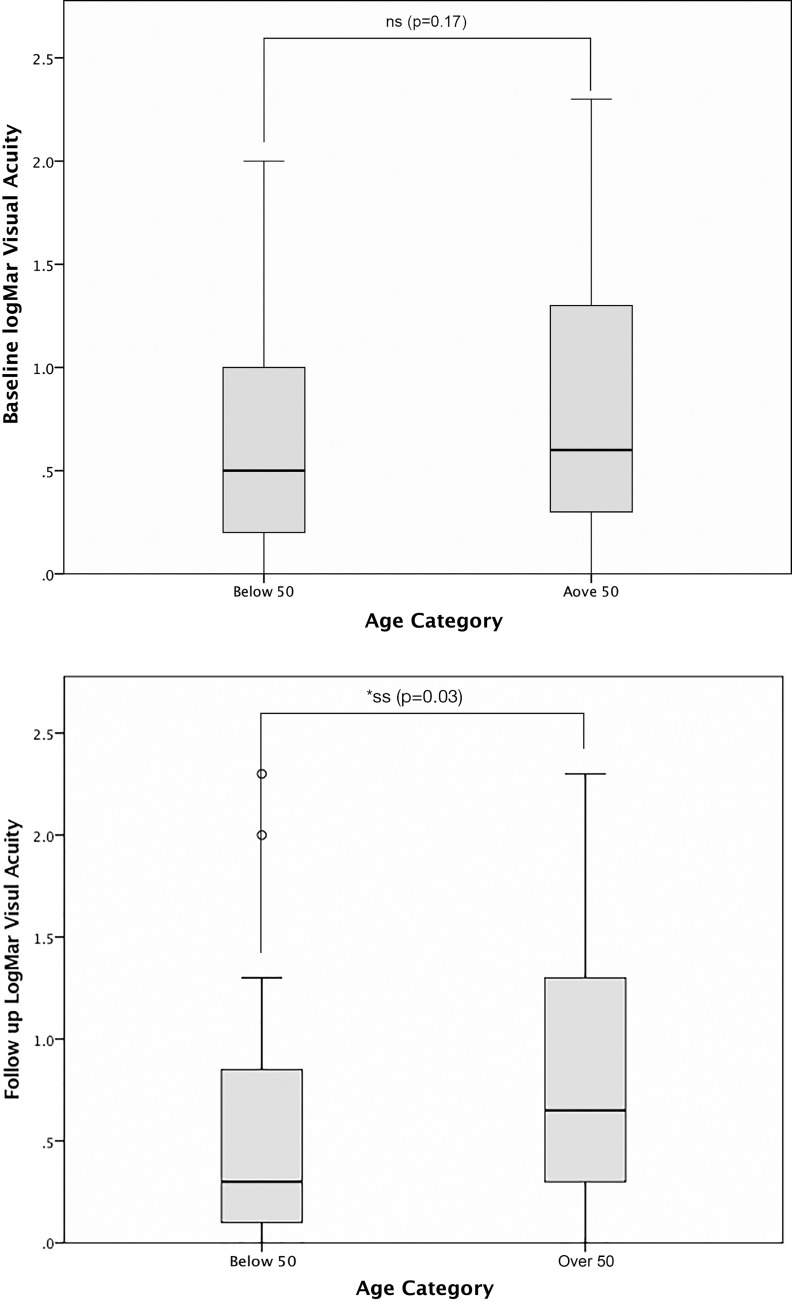
Seventy-eight eyes of 78 patients with recent onset NAION were included in the study. The most prevalent risk factors for NAION in our subjects were diabetes (64.1%), small cup-to-disc ratio (61.5%), hyperlipidemia (51.3%) and hypertension (38.5%). Young NAION patients had better final logMAR visual acuity (0.55 +- 0.57) then older NAION patients (0.9 +- 0.73), (p = 0.03). Furthermore, young NAION patients were 2.8 times more likely to have a final visual acuity of 20/40 or better than older NAION patients, odds ratio (OR), 2.87; 95% confidence interval (CI), 1.12-7.40, Chi-square p-value = 0.03).
There is a high prevalence of systemic vascular risk factors and small cup-to-disc ratio in NAION patients referred to our center across different age groups (below and above 50 years). Patients below the age of 50 years with NAION are more likely to have a final visual acuity of 20/40 or better than NAION patients above the age of 50 years.
非动脉炎性缺血性视神经病变(NAION)是 50 岁以上人群中最常见的急性视神经病变。NAION 通常与系统性血管危险因素(糖尿病、高血压、高血脂)和小杯盘比相关。我们评估了科威特一家三级眼科中心就诊的 NAION 患者的患病率、危险因素和视力结果。
本研究纳入了发病后两周内新发的 NAION 患者,并确定了基线临床和人口统计学特征。比较了年轻 NAION 患者(<50 岁)和老年 NAION 患者(>50 岁)的危险因素患病率和视力结果(对数视力矫正视力变化、视野平均偏差)。按年龄类别确定最终视力良好结局(视力>20/40)的优势比。
本研究共纳入 78 例 78 只眼近期发病的 NAION 患者。在我们的研究对象中,NAION 最常见的危险因素是糖尿病(64.1%)、小杯盘比(61.5%)、高血脂(51.3%)和高血压(38.5%)。年轻 NAION 患者的最终 logMAR 视力更好(0.55±0.57),而老年 NAION 患者的视力更差(0.9±0.73),差异具有统计学意义(p=0.03)。此外,年轻 NAION 患者最终视力>20/40 的可能性是老年 NAION 患者的 2.8 倍,优势比(OR)为 2.87;95%置信区间(CI)为 1.12-7.40,卡方检验 p 值=0.03)。
在我们的中心,不同年龄组(<50 岁和>50 岁)的 NAION 患者均存在较高的系统性血管危险因素和小杯盘比患病率。<50 岁的 NAION 患者比>50 岁的 NAION 患者更有可能最终视力>20/40。