Kemchoknatee Parinee, Arjkongharn Niracha, Pongpirul Krit
Department of Ophthalmology, Rajavithi Hospital, Bangkok, Thailand.
Faculty of Medicine, Chulalongkorn University, Bangkok, Thailand.
Clin Ophthalmol. 2024 Dec 16;18:3791-3800. doi: 10.2147/OPTH.S500368. eCollection 2024.
To assess the potential influence of serum biochemical factors, specifically lipid profile parameters, on visual outcomes in patients with non-arteritic anterior ischemic optic neuropathy (NAION).
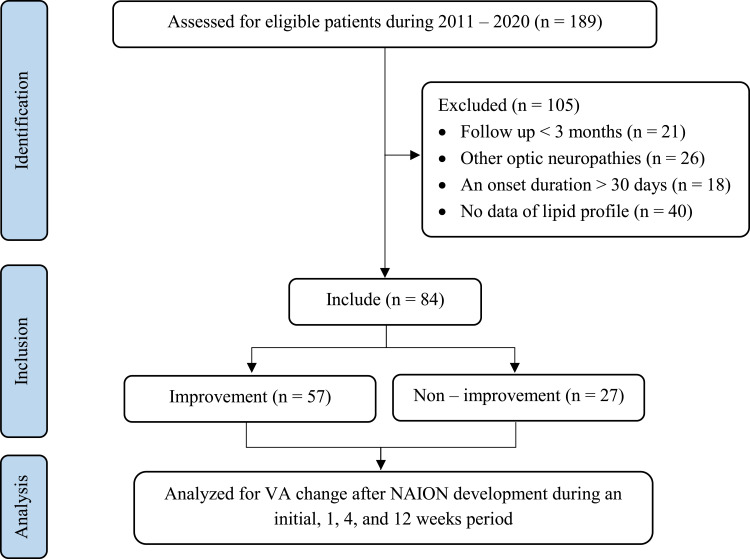
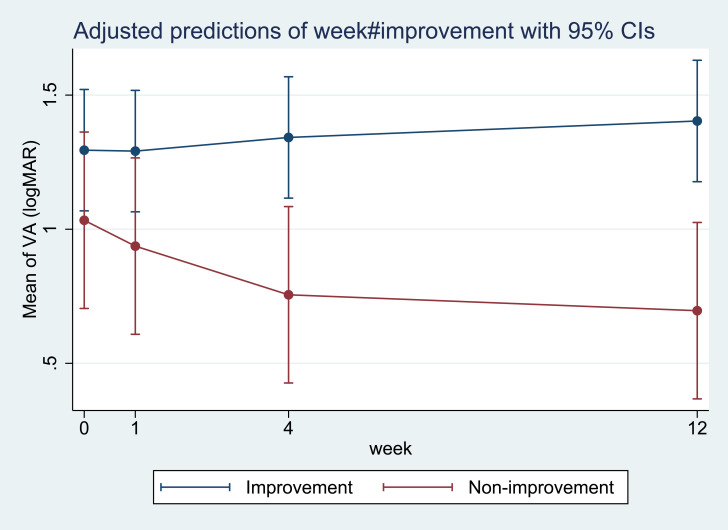
All patients diagnosed with NAION at Rajavithi Hospital between 1 January 2011 and 31 December 2020 were retrospectively reviewed. The primary outcome was defined as visual recovery, measured by an improvement of at least 0.2 logarithm of the minimal angle of resolution (logMAR) in their best-corrected visual acuity (BCVA) at the 12-weeks follow-up visit compared to the initial visit and determine whether those lipid profiles parameters are predictive of 12 weeks-visual outcomes. Factors of an initial poor VA were evaluated using logistic regression analysis.
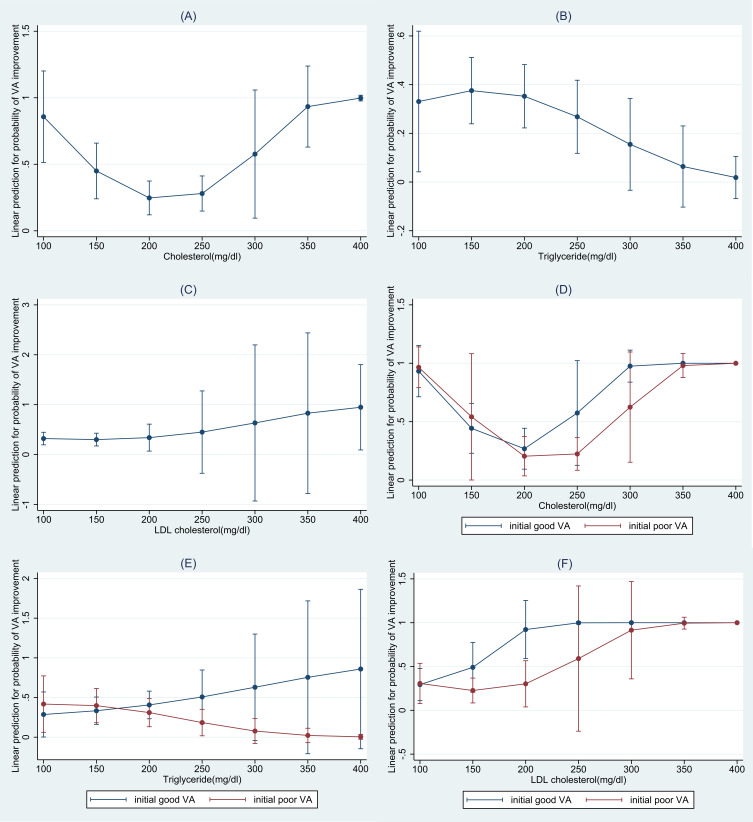
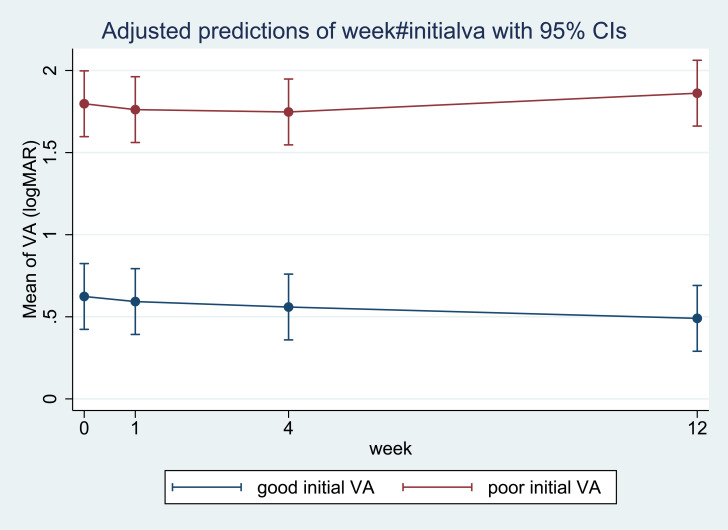
In this study, 84 patients with NAION were included to assess the impact of lipid parameters on visual outcomes. Majority of participants were male. The group with initial VA worse than 20/200 had significantly higher mean age of 58.3±7.6 years and levels of total cholesterol (TC), triglycerides (TG), and low-density lipoprotein cholesterol (LDL) (all p < 0.05 respectively). Throughout 12 weeks, a significant difference in change of BCVA between the two groups of initial VA was observed (p<0.001). Regarding lipid parameters on visual prognosis, lipid profile between the two groups of VA improvement of 0.2 logMAR was comparable different. The probability of VA improvement showed a weak association with TC levels. A gradual increase in probability slightly related to LDL parameter, while TG showed an inverse relationship. At elevated lipid levels, there was a greater degree of uncertainty in predicting visual outcomes.
While older age and elevated lipid levels, specifically TC, TGs, and LDL, were correlated with poorer initial visual acuity in NAION patients, no significant associations were identified between lipid parameters and long-term visual recovery. Early detection for individuals with dyslipidemia (DLP) and advanced age merit attention.
评估血清生化因素,特别是血脂谱参数,对非动脉炎性前部缺血性视神经病变(NAION)患者视力预后的潜在影响。
回顾性分析2011年1月1日至2020年12月31日期间在拉贾维提医院诊断为NAION的所有患者。主要结局定义为视力恢复,通过12周随访时最佳矫正视力(BCVA)的最小分辨角对数(logMAR)至少提高0.2来衡量,并确定这些血脂谱参数是否可预测12周时的视力预后。使用逻辑回归分析评估初始视力差的因素。
本研究纳入84例NAION患者,以评估血脂参数对视力预后的影响。大多数参与者为男性。初始视力差于20/200的组平均年龄显著更高,为58.3±7.6岁,总胆固醇(TC)、甘油三酯(TG)和低密度脂蛋白胆固醇(LDL)水平也更高(均p<0.05)。在整个12周期间,观察到两组初始视力患者的BCVA变化存在显著差异(p<0.001)。关于血脂参数对视力预后的影响,两组视力提高0.2 logMAR的血脂谱存在相当差异。视力提高的可能性与TC水平呈弱关联。可能性逐渐增加与LDL参数略有相关,而TG呈负相关。在血脂水平升高时,预测视力预后的不确定性更大。
虽然年龄较大和血脂水平升高,特别是TC、TG和LDL,与NAION患者较差的初始视力相关,但未发现血脂参数与长期视力恢复之间存在显著关联。对于血脂异常(DLP)和高龄个体的早期检测值得关注。