Oncology Department of Hospital, Arnau de Vilanova de Lleida, Avenida Rovira Roure 80, 25198, Lleida, Spain.
Breast Unit of Hospital, Arnau de Vilanova de Lleida, Spain.
Breast. 2021 Apr;56:35-41. doi: 10.1016/j.breast.2021.01.001. Epub 2021 Jan 15.
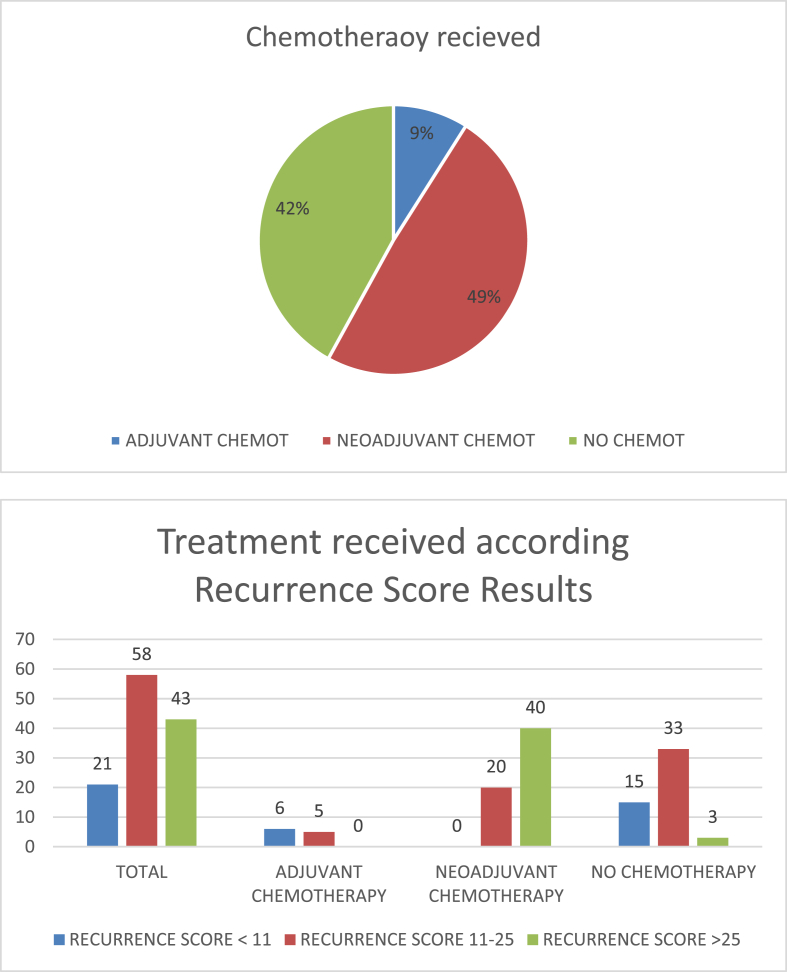
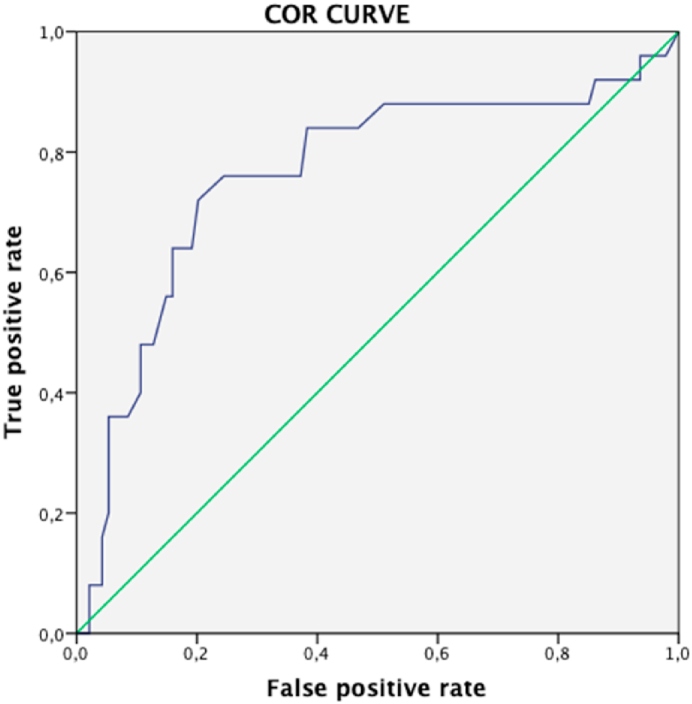
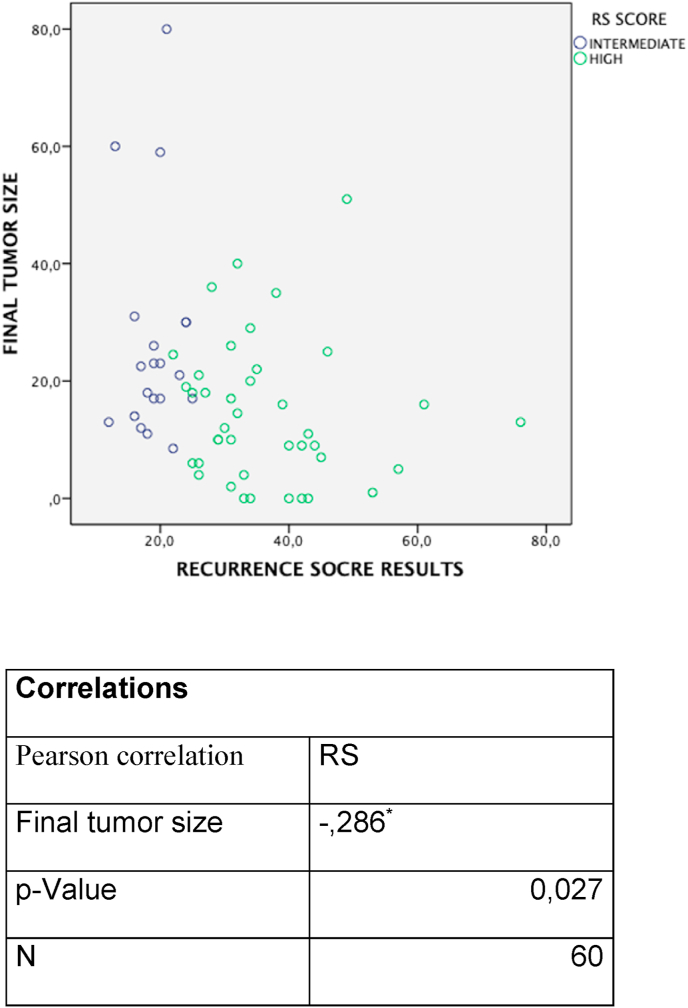
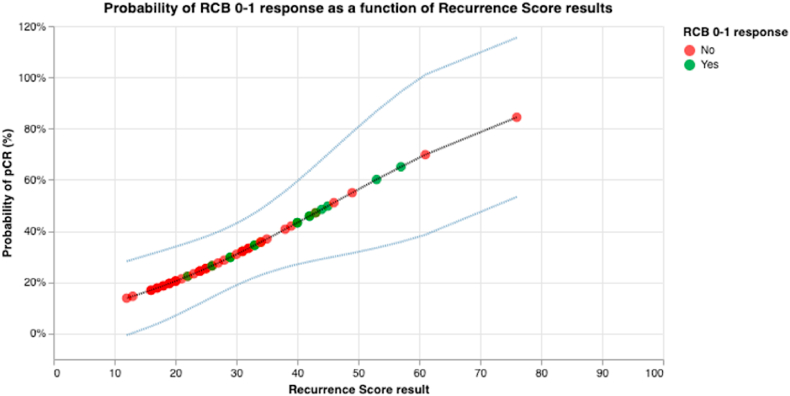
Neoadjuvant chemotherapy (NAC) is an optimal option in early breast cancer, but in ER-positive/HER2-negative (luminal) is still controversial, although a survival benefit has recently been observed when a histological response by Symmans' method type 0 or I is achieved. The 21-gene Oncotype DX Breast Recurrence Score® assay (Oncotype DX®) is a validated test to assess the survival benefit of adjuvant chemotherapy in these patients but its role in the neoadjuvant setting is less established. We analyzed the results of the Oncotype DX® test in a cohort of 122 consecutive patients selected to receive NAC based on classical clinicopathological parameters and the correlation between the Oncotype DX® results and the pathological response assessed by Symmans' method. Median age was 56.5 (range 31-84) years. Initial tumor size was T1 (<20 mm) in 46 patients (37.7%), 57 (46.7%) had a T2 tumor (20-50 mm), and 19 (15.6%) had a tumor size more than 50 mm. 59 (48.4%) had axillary node involvement. The median expression estrogen and progesteron receptors by immunohistochemistry was 280 and 120 respectively and median Ki67 index was 28%. The Recurrence Score (RS) results were <11 in 21 patients (17.2%) patients, RS 11 to 25 in 58 (47.5%), and RS > 25 in 43 (35.2%). Considering the Oncotype DX test results, neoadjuvant chemotherapy was administered to 60 patients (49%), 11 (9%) received adjuvant chemotherapy and 51 (42%) no chemotherapy. Testing with the assay has therefore led to 42% fewer chemotherapy treatments. Among 60 patients receiving NAC, pathologic response was achieved for 5 patients (8.3%) with RCB-0 and 15 RCB-1 (25%). We did not find any pathological response RCB-0 and RCB-I in the 20 patients who received NAC and had a Recurrence Score result <21 for the premenopausal group, or a RS result <25 for the postmenopausal group. For patients with highest Recurrence Score results (RS > 21 or 25 according to menopausal status) it was 12% (5/40) RCB-0 and 40% (16/40) RCB-I. CONCLUSIONS: The Oncotype DX test could be a useful tool to select patients candidates for neoadjuvant chemotherapy in luminal breast cancer. Neoadjuvant chemotherapy could be avoided in 42% of patients. We found a correlation between Recurrence Score results and pathological response with 14% of RCB-0 and a total of 47% of significant pathological response type RCB-0 and RCB-I in patients with highest Recurrence Score results. Interestingly, patients with a Recurrence Score result inferior to 32 did not get any histological response type 0 and only 5% RCB-I.
新辅助化疗(NAC)是早期乳腺癌的最佳选择,但在 ER 阳性/HER2 阴性(管腔)中仍然存在争议,尽管最近观察到当通过 Symmans 方法达到 0 型或 I 型组织学反应时,生存获益。21 基因 Oncotype DX®乳腺癌复发评分(Oncotype DX®)是一种经验证的测试,可以评估这些患者接受辅助化疗的生存获益,但在新辅助环境中的作用尚未确定。我们分析了 122 例连续患者的 Oncotype DX®检测结果,这些患者根据经典临床病理参数选择接受 NAC,并且分析了 Oncotype DX®结果与 Symmans 方法评估的病理反应之间的相关性。中位年龄为 56.5 岁(范围 31-84 岁)。初始肿瘤大小 T1(<20mm)为 46 例(37.7%),57 例(46.7%)为 T2 肿瘤(20-50mm),19 例(15.6%)肿瘤大小超过 50mm。59 例(48.4%)有腋窝淋巴结受累。免疫组化法检测到的雌激素和孕激素受体的中位表达分别为 280 和 120,Ki67 指数的中位值为 28%。复发评分(RS)结果<11 的有 21 例(17.2%)患者,RS 为 11-25 的有 58 例(47.5%),RS>25 的有 43 例(35.2%)。考虑到 Oncotype DX 测试结果,60 例(49%)患者接受了新辅助化疗,11 例(9%)患者接受了辅助化疗,51 例(42%)患者未接受化疗。因此,该检测使化疗治疗减少了 42%。在接受 NAC 的 60 例患者中,有 5 例(8.3%)达到了 RCB-0 和 15 例 RCB-1(25%)的病理缓解。我们没有发现接受 NAC 的 20 例患者中有任何病理缓解 RCB-0 和 RCB-I,这些患者的绝经前组的复发评分<21,绝经后组的复发评分<25。对于复发评分最高(根据绝经状态为 RS>21 或 25)的患者,有 12%(5/40)为 RCB-0,40%(16/40)为 RCB-I。结论:Oncotype DX 检测可能是选择管腔型乳腺癌患者接受新辅助化疗的有用工具。42%的患者可以避免新辅助化疗。我们发现复发评分结果与病理反应之间存在相关性,在复发评分最高的患者中,有 14%为 RCB-0,总共有 47%为显著的病理反应 RCB-0 和 RCB-I。有趣的是,复发评分结果低于 32 的患者没有任何组织学反应类型 0,只有 5%为 RCB-I。