Llombart-Cussac Antonio, Anton-Torres Antonio, Rojas Beatriz, Andrés Raquel, Martinez Noelia, Rodríguez César A, Marin Sara, Puértolas Teresa, González Alejandro Falcón, Fernández-Murga María Leonor, Hagen Carlos, Ruiz-Borrego Manuel
Oncology Department, Hospital Arnau de Vilanova, Fundación para el Fomento de la Investigación Sanitaria y Biomédica de la Comunitat Valenciana (FISABIO), 46020 Valencia, Spain.
Oncology Department, Universidad Católica, 46900 Valencia, Spain.
Cancers (Basel). 2023 Feb 28;15(5):1529. doi: 10.3390/cancers15051529.
The 21-gene Oncotype DX Breast Recurrence Score assay is prognostic and predictive of chemotherapy benefit for patients with estrogen receptor-positive, HER2- early breast cancer (EBC). The KARMA Dx study evaluated the impact of the Recurrence Score results (RS) on the treatment decision for patients with EBC and high-risk clinicopathological characteristics for whom chemotherapy (CT) was considered.
Eligible patients with EBC were candidates for the study if CT was considered standard recommendation by local guidelines. Three high-risk EBC cohorts were predefined: (A) pT1-2, pN0/N1mi, and grade 3; (B) pT1-2, pN1, and grades 1-2; and (C) neoadjuvant cT2-3, cN0, and Ki67 ≤ 30%. Treatment recommendations before and after 21-gene testing were registered, as well as treatment received and physicians' confidence levels in their final recommendations.
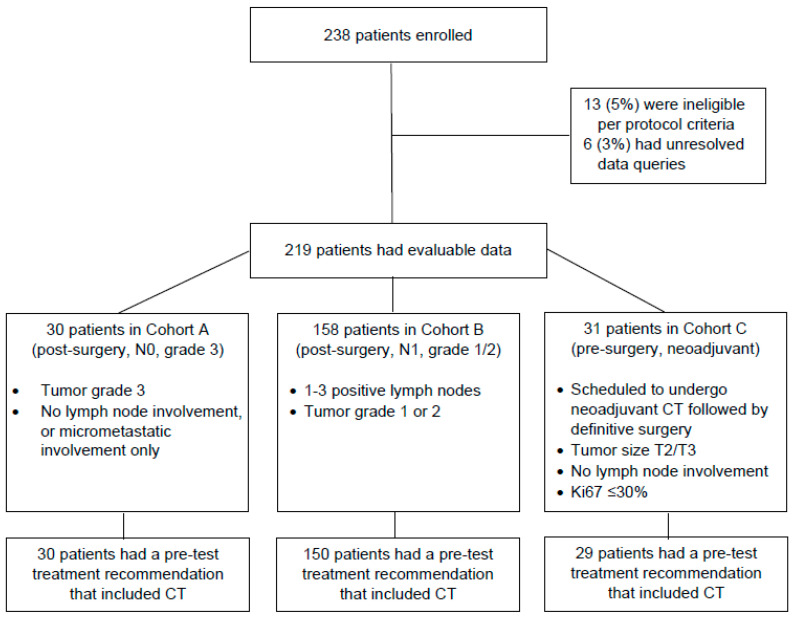
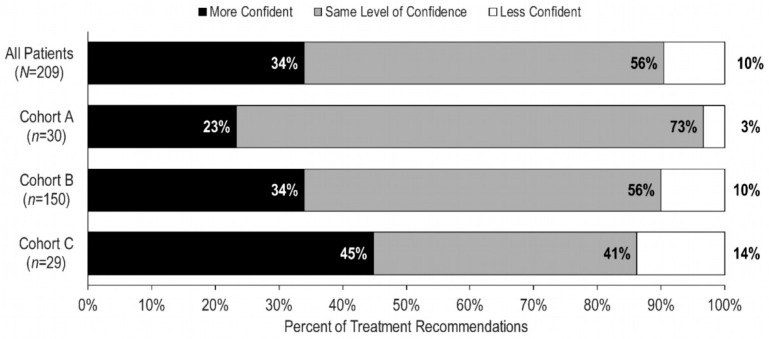
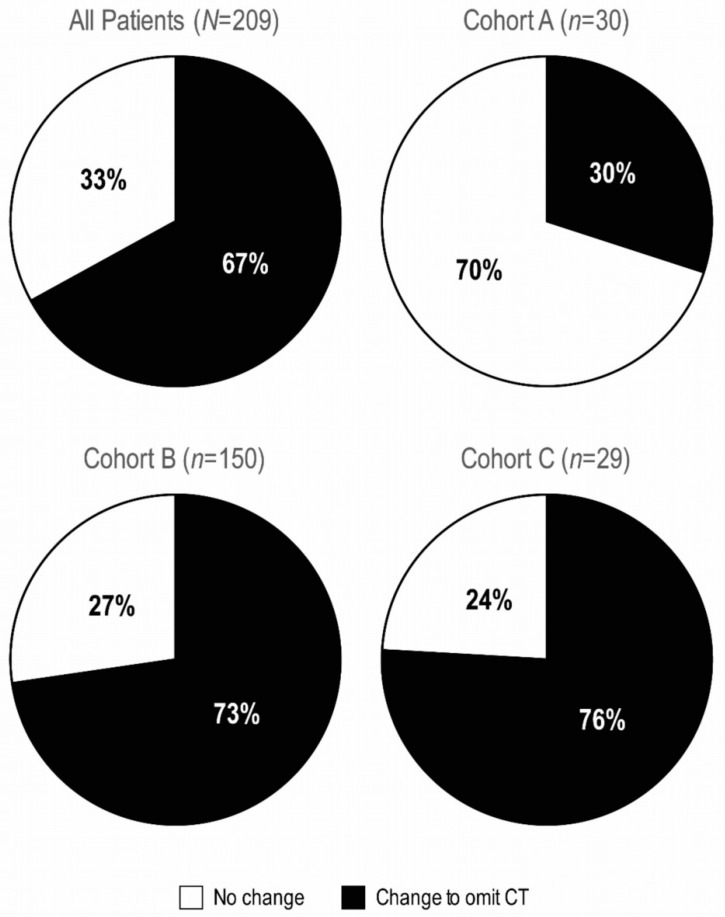
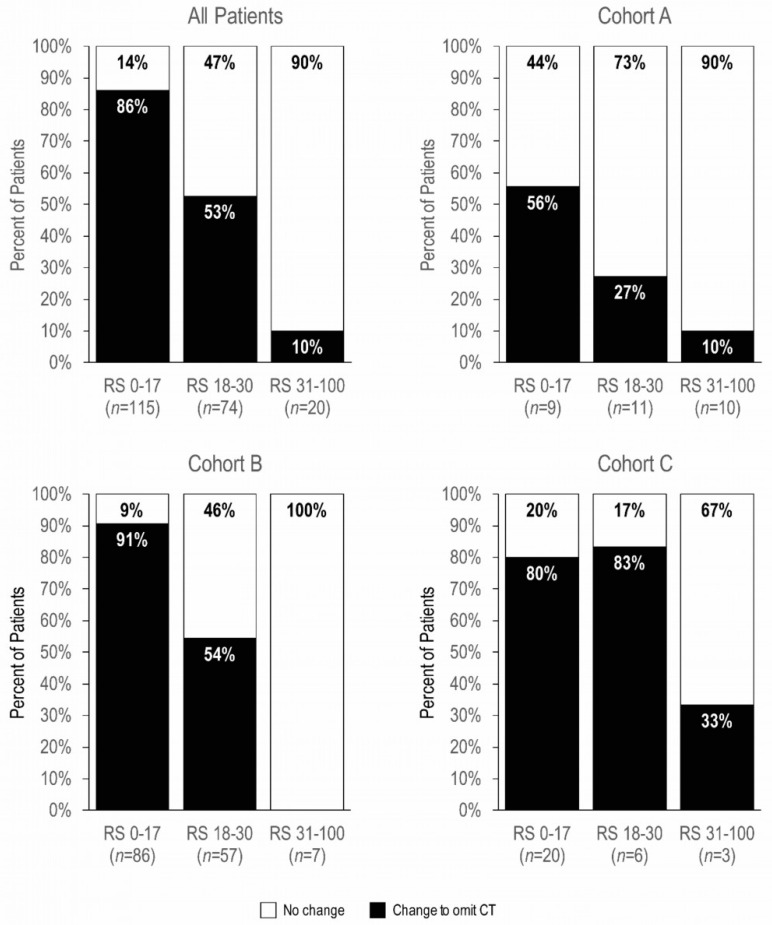
A total of 219 consecutive patients were included from eight Spanish centers: 30 in cohort A, 158 in cohort B, and 31 in cohort C. Ten patients were excluded from the final analysis as CT was not initially recommended. After 21-gene testing, treatment decisions changed from CT + endocrine therapy (ET) to ET alone for 67% of the whole group. In total, 30% (95% confidence interval [CI] 15% to 49%), 73% (95% CI 65% to 80%), and 76% (95% CI 56% to 90%) of patients ultimately received ET alone in cohorts A, B, and C, respectively. Physicians' confidence in their final recommendations increased in 34% of cases.
Use of the 21-gene test resulted in an overall 67% reduction in CT recommendation in patients considered candidates for CT. Our findings indicate the substantial potential of the 21-gene test to guide CT recommendations in patients with EBC considered to be at high risk of recurrence based on clinicopathological parameters, regardless of nodal status or treatment setting.
21基因Oncotype DX乳腺复发评分检测对雌激素受体阳性、人表皮生长因子受体2阴性早期乳腺癌(EBC)患者具有预后价值,并能预测化疗获益情况。KARMA Dx研究评估了复发评分结果(RS)对EBC且具有高风险临床病理特征、考虑进行化疗(CT)的患者治疗决策的影响。
若当地指南将CT视为标准推荐,则符合条件的EBC患者可作为本研究对象。预先定义了三个高危EBC队列:(A)pT1-2、pN0/N1mi且为3级;(B)pT1-2、pN1且为1-2级;(C)新辅助治疗cT2-3、cN0且Ki67≤30%。记录21基因检测前后的治疗建议,以及实际接受的治疗和医生对其最终建议的信心水平。
来自八个西班牙中心的219例连续患者纳入研究:队列A有30例,队列B有158例,队列C有31例。10例患者因最初未推荐CT而被排除在最终分析之外。21基因检测后,全组67%的患者治疗决策从CT联合内分泌治疗(ET)改为单纯ET。队列A、B、C中最终分别有30%(95%置信区间[CI]15%至49%)、73%(95%CI 65%至80%)和76%(95%CI 56%至90%)的患者接受了单纯ET。34%的病例中医生对其最终建议的信心增加。
对于被视为CT候选患者,使用21基因检测使CT推荐总体减少了67%。我们的研究结果表明,21基因检测在指导基于临床病理参数被认为有高复发风险的EBC患者的CT推荐方面具有巨大潜力,无论其淋巴结状态或治疗方式如何。