Wu Chaohui, Yang Jiansheng, Li Rongbin, Lin Xianbin, Wu Jiayun, Wu Jingyang
Department of Thoracic and Cardiovascular Surgery, The Second Affiliated Hospital of Fujian Medical University, Quanzhou, Fujian Province, 362000, People's Republic of China.
Onco Targets Ther. 2021 Feb 9;14:891-904. doi: 10.2147/OTT.S278233. eCollection 2021.
Non-small cell lung cancer (NSCLC) is one of the most common malignancies with the highest morbidity and mortality worldwide. Long non-coding RNAs (lncRNAs) are recently recognized as noteworthy regulators of different tumors, counting NSCLC. However, the biological functions and regulatory mechanism of lncRNA WT1-AS in NSCLC progression still stay uninvestigated.
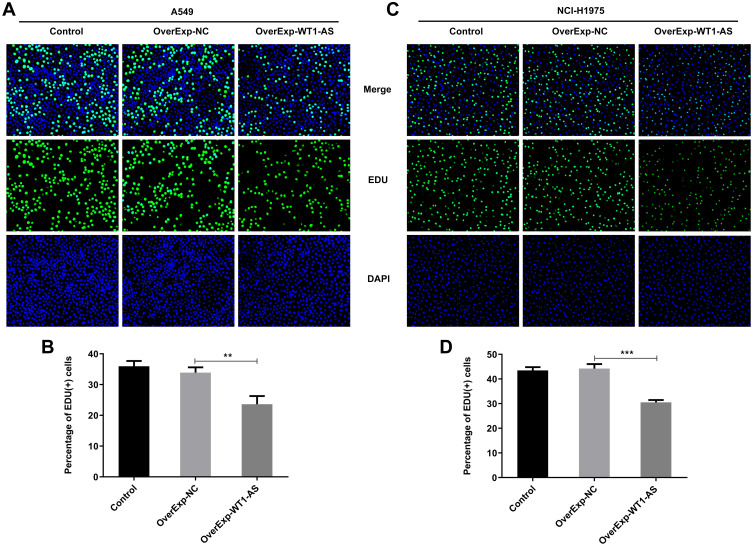
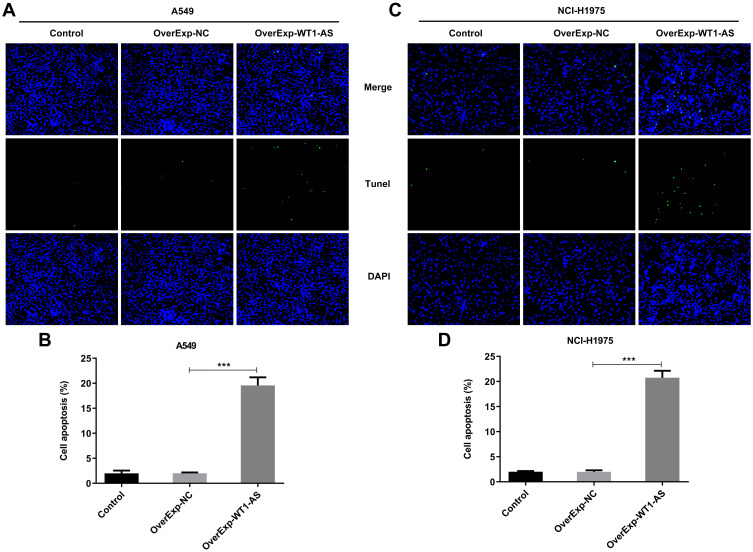
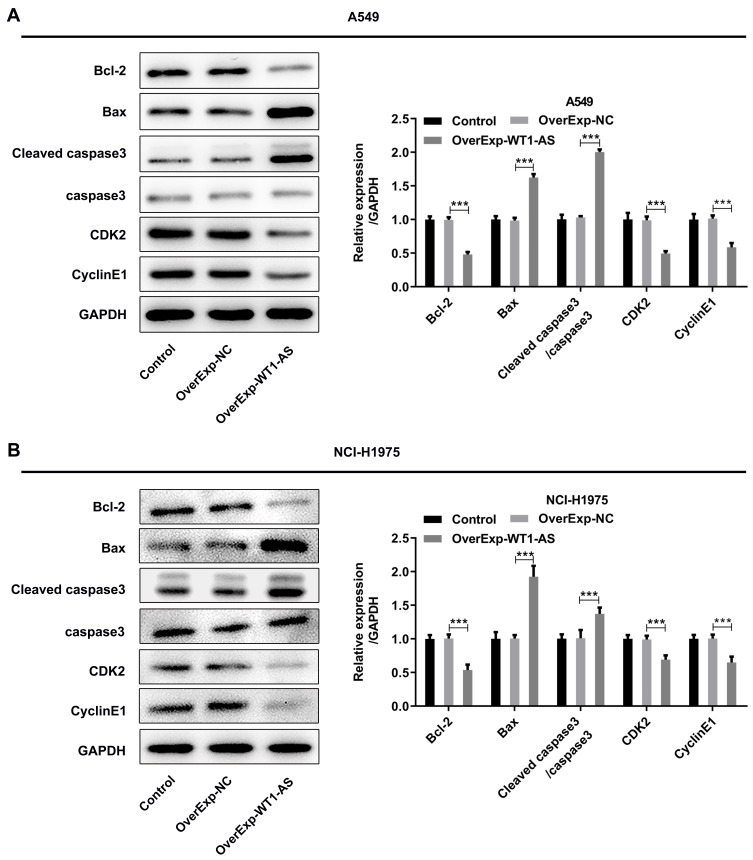
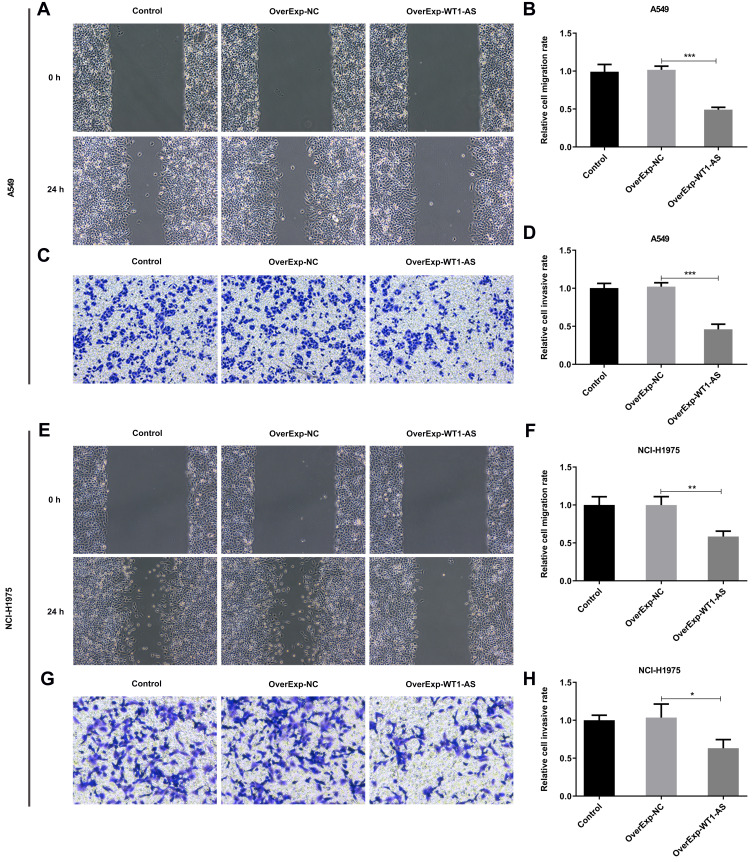
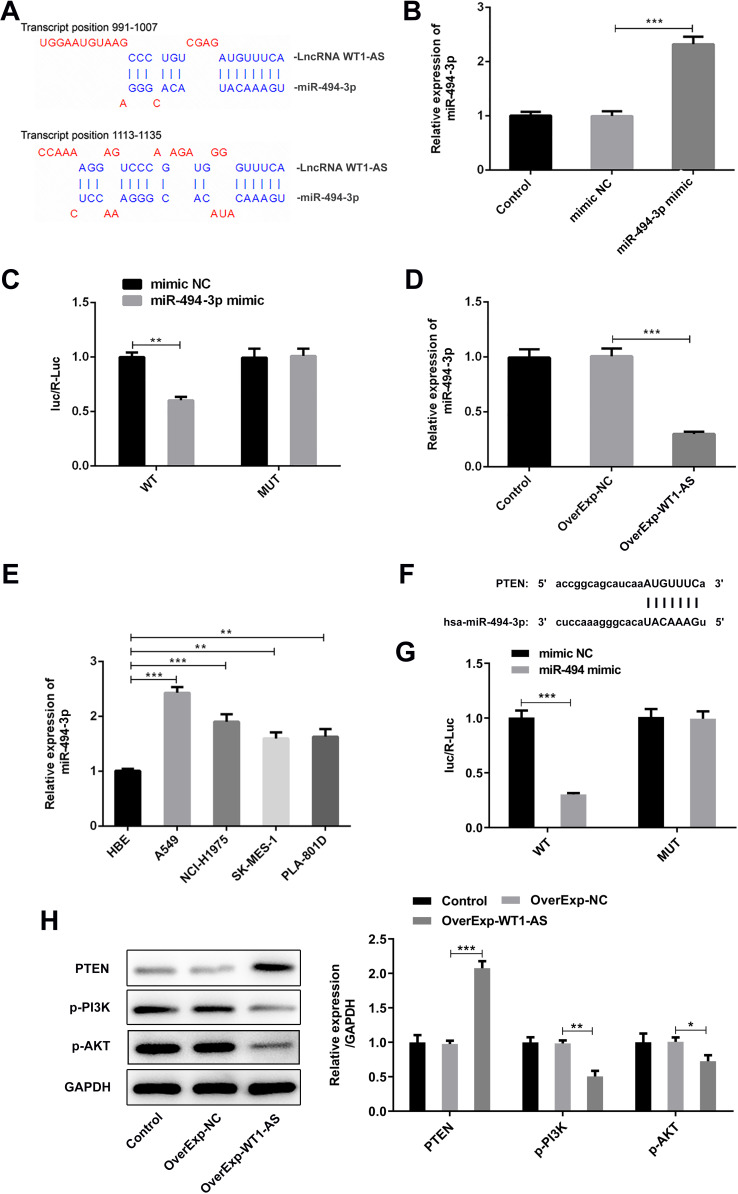
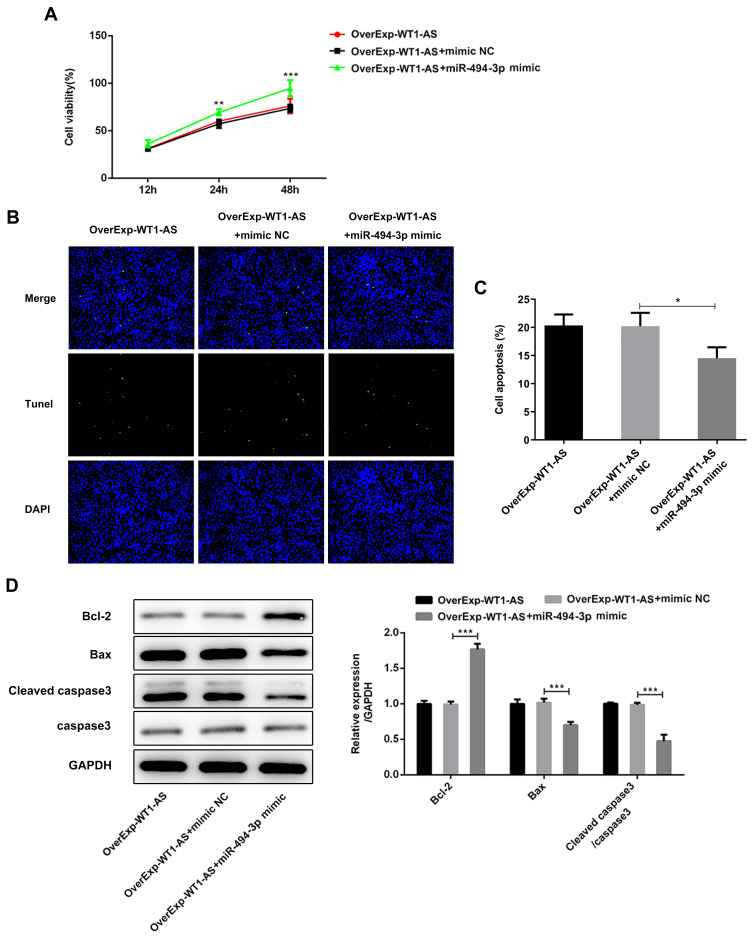
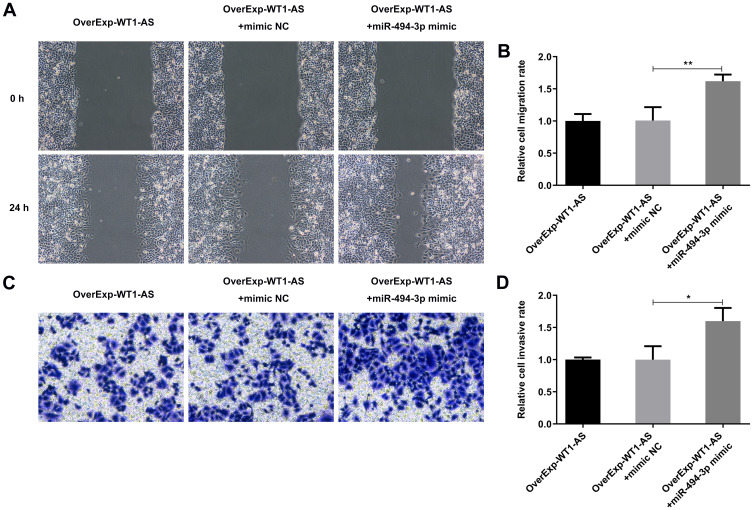
WT1-AS and miR-494-3p levels in NSCLC cell lines were detected by real-time quantitative polymerase chain reaction (RT-qPCR). In the current study, the regulatory effects of WT1-AS/miR-494-3p axis on cellular behaviors of NSCLC cell lines (A549 and NCI-H1975) were evaluated by a variety of methods. Cell counting kit-8 (CCK-8) and EDU assays were adopted to assess NSCLC cell proliferation. Tunnel staining and flow cytometry assay were applied to determine cell apoptosis and cell cycle distribution. Besides, cell migration and invasion abilities were analyzed by performing wound healing and transwell assays. Meanwhile, the levels of key proteins related to NSCLC cell apoptosis and PTEN/PI3K/AKT pathway were examined using Western blot assay. In addition, luciferase reporter assays were used to determine the interaction between WT1-AS and miR-494-3p or miR-494-3p and PTEN.
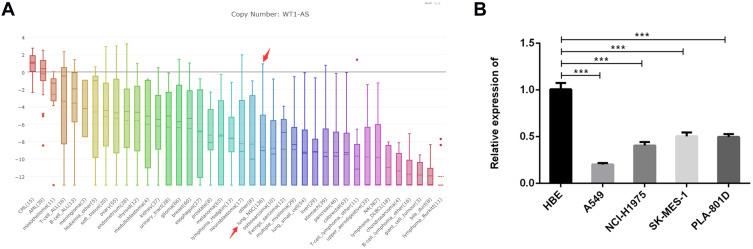
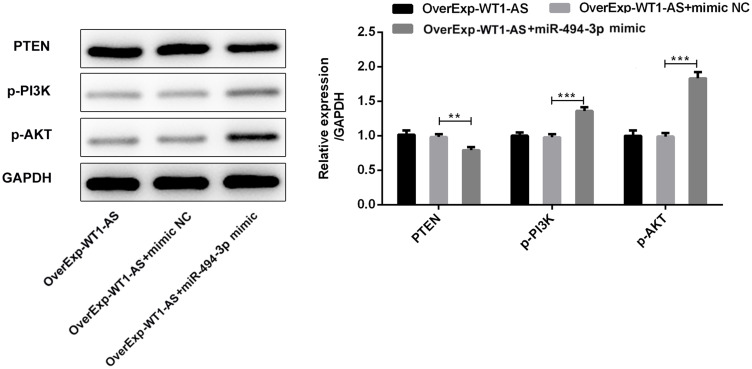
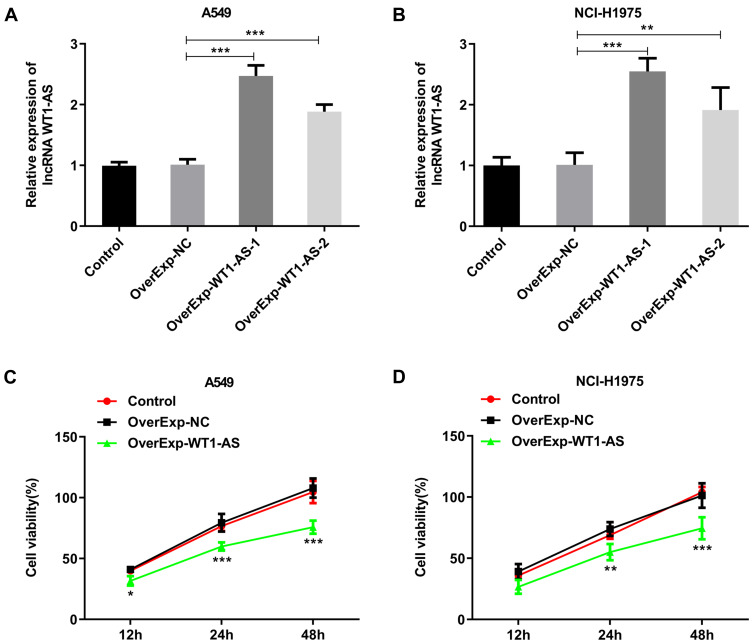
Visibly downregulated WT1-AS in NSCLC cell lines was obtained from Broad Institute Cancer Cell Line Encyclopedia (CCLE) database and further verified by performing RT-qPCR. Besides, miR-494-3p was the downstream target gene of WT1-AS and obviously upregulated miR-494-3p in NSCLC cell lines was confirmed. WT1-AS overexpression suppressed cell proliferation, migration and invasion abilities while enhanced cell apoptosis of A549 and NCI-H1975 cells. Furthermore, upregulation of miR-494-3p distinctly reversed these inhibitory effects of WT1-AS overexpression on the tumorigenesis and progression of NSCLC. In addition, WT1-AS promoted PTEN expression and thereby inhibited activation of PI3K/AKT pathway by sponging miR-494-3p.
To conclude, lncRNA WT1-AS impeded cell proliferation, migration, invasion but accelerated cell apoptosis via negatively regulating miR-494-3p to mediate PTEN/PI3K/AKT pathway in NSCLC.
非小细胞肺癌(NSCLC)是全球发病率和死亡率最高的常见恶性肿瘤之一。长链非编码RNA(lncRNAs)最近被认为是包括NSCLC在内的不同肿瘤的重要调节因子。然而,lncRNA WT1-AS在NSCLC进展中的生物学功能和调控机制仍未得到研究。
通过实时定量聚合酶链反应(RT-qPCR)检测NSCLC细胞系中WT1-AS和miR-494-3p的水平。在本研究中,采用多种方法评估WT1-AS/miR-494-3p轴对NSCLC细胞系(A549和NCI-H1975)细胞行为的调控作用。采用细胞计数试剂盒-8(CCK-8)和EDU检测评估NSCLC细胞增殖。采用Tunnel染色和流式细胞术检测确定细胞凋亡和细胞周期分布。此外,通过伤口愈合和Transwell检测分析细胞迁移和侵袭能力。同时,使用蛋白质免疫印迹法检测与NSCLC细胞凋亡和PTEN/PI3K/AKT通路相关的关键蛋白水平。此外,使用荧光素酶报告基因检测确定WT1-AS与miR-494-3p或miR-494-3p与PTEN之间的相互作用。
从布罗德研究所癌细胞系百科全书(CCLE)数据库获得NSCLC细胞系中明显下调的WT1-AS,并通过RT-qPCR进一步验证。此外,miR-494-3p是WT1-AS的下游靶基因,并证实NSCLC细胞系中miR-494-3p明显上调。WT1-AS过表达抑制A549和NCI-H1975细胞的增殖、迁移和侵袭能力,同时增强细胞凋亡。此外,miR-494-3p的上调明显逆转了WT1-AS过表达对NSCLC肿瘤发生和进展的这些抑制作用。此外,WT1-AS通过海绵化miR-494-3p促进PTEN表达,从而抑制PI3K/AKT通路的激活。
总之,lncRNA WT1-AS通过负向调节miR-494-3p介导PTEN/PI3K/AKT通路,从而抑制NSCLC细胞的增殖、迁移、侵袭,但加速细胞凋亡。