Chongqing University Central Hospital & Chongqing Emergency Medical Center, No. 1 Jiankang Road, Yuzhong District, Chongqing 400014, China.
School of Public Health, Medical College of Soochow University, 199 Ren'ai Road, Suzhou 215123, China.
Oxid Med Cell Longev. 2021 Feb 2;2021:6610124. doi: 10.1155/2021/6610124. eCollection 2021.
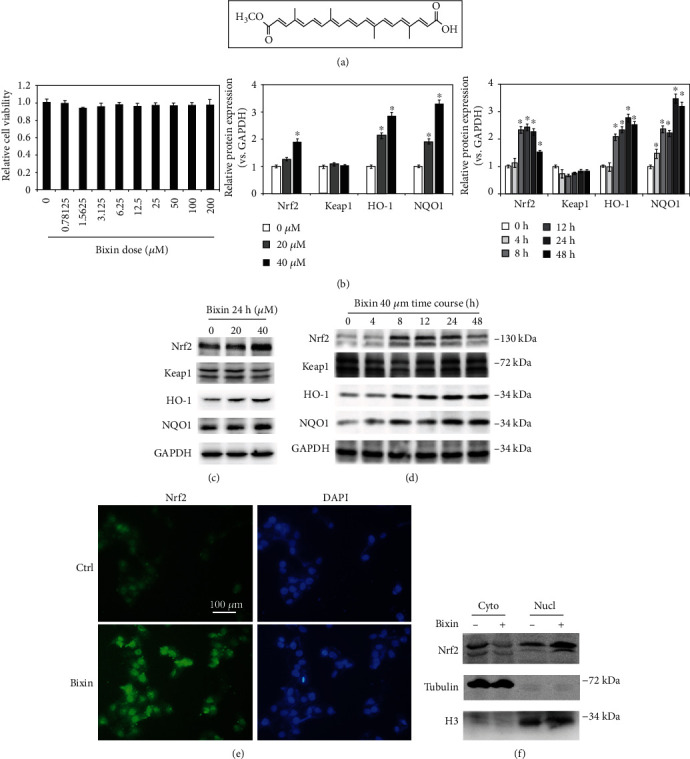
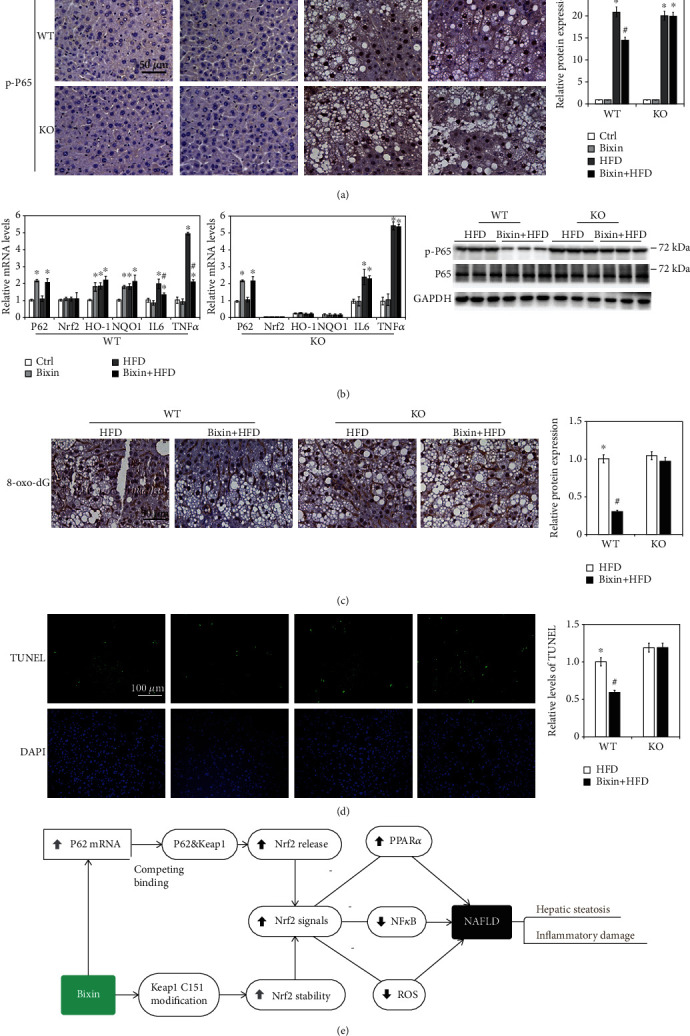
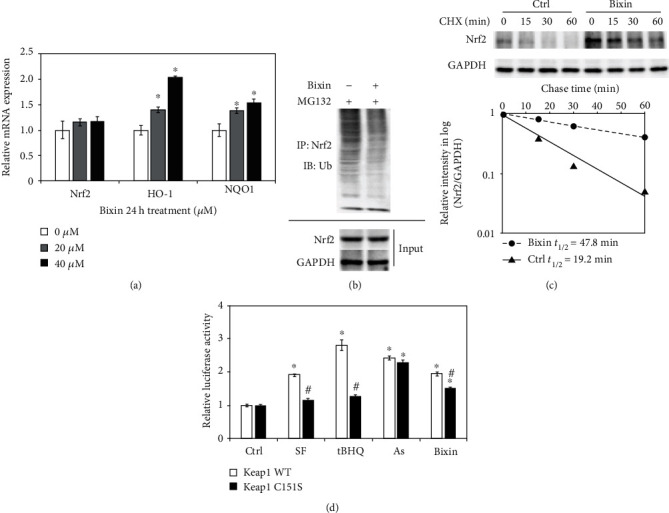
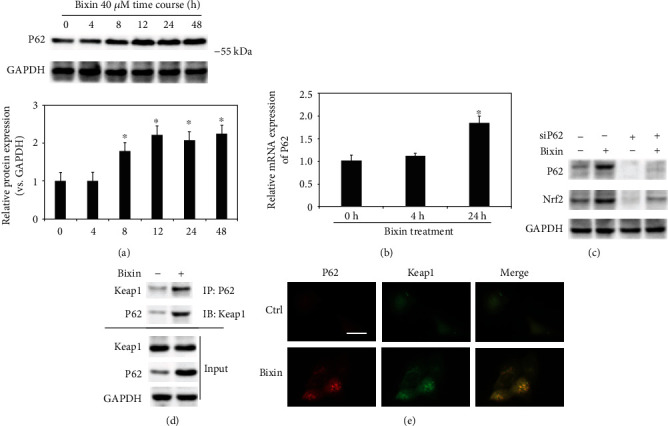
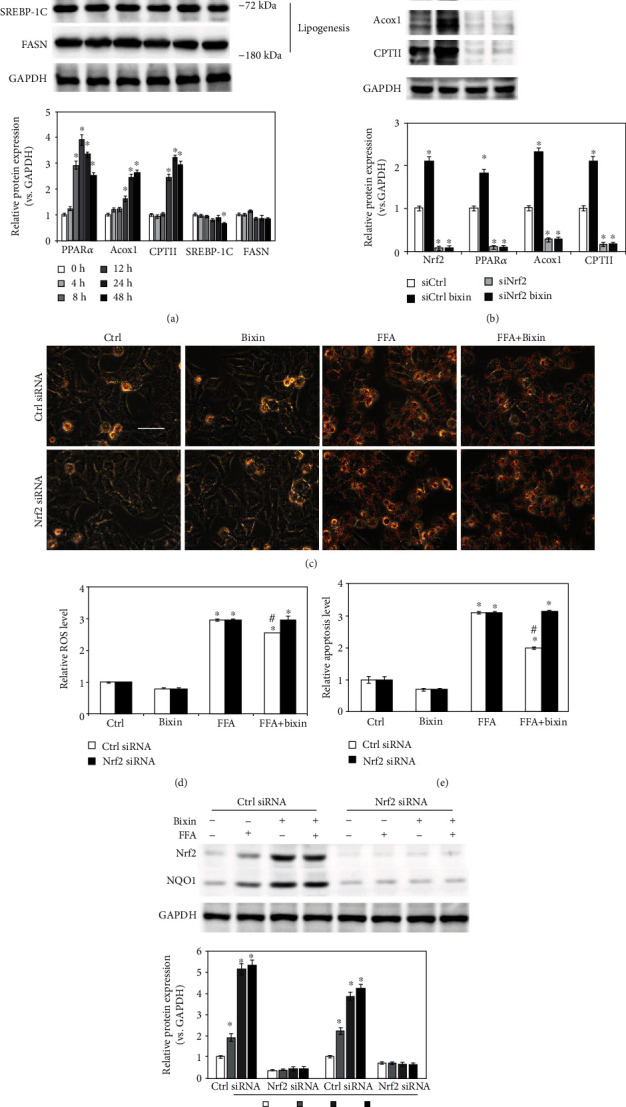
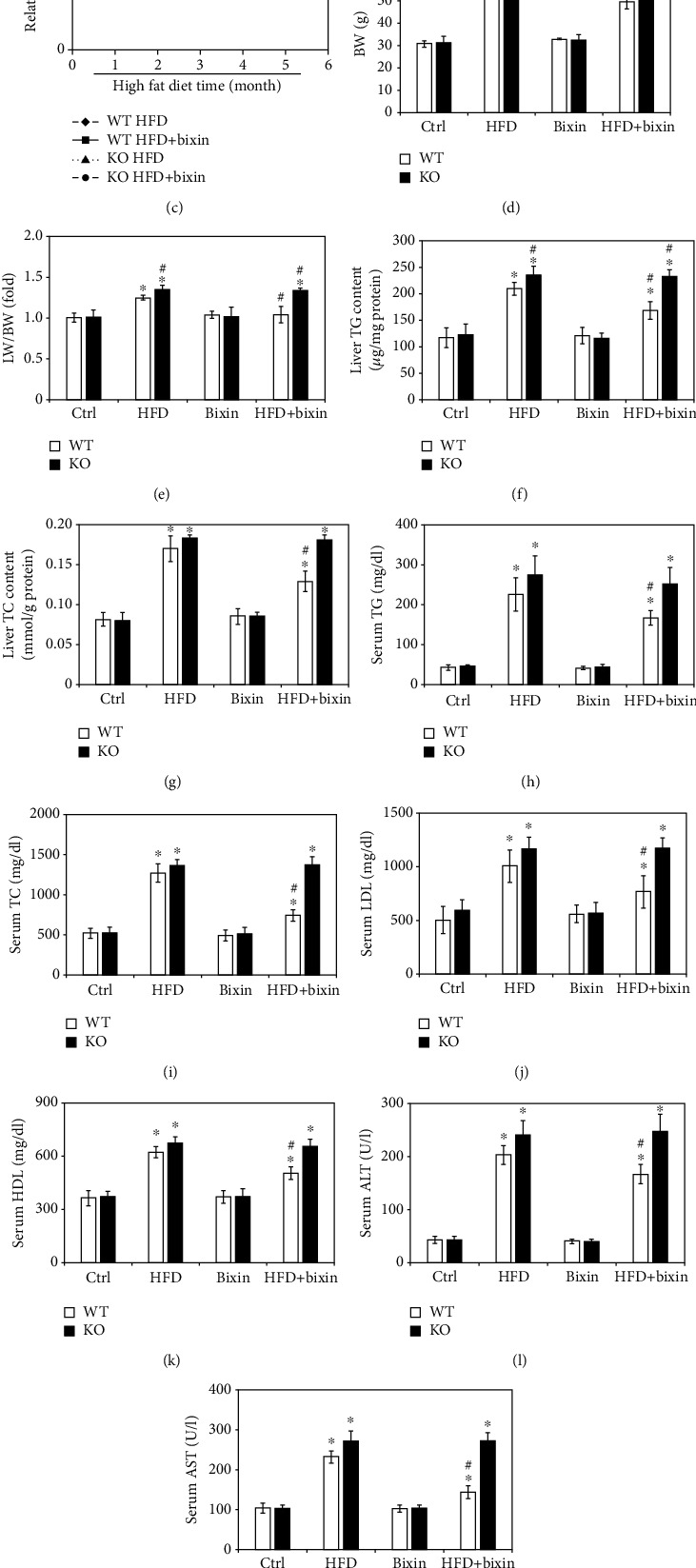
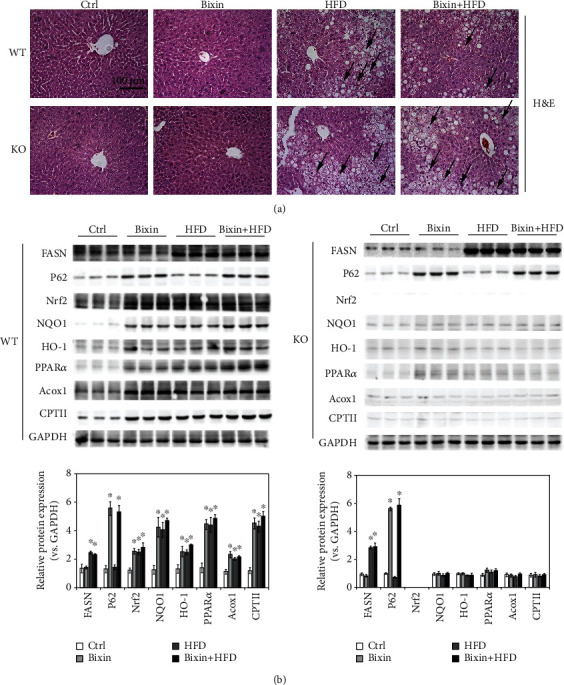
Nonalcoholic fatty liver disease is the most common liver disease worldwide. Hepatic steatosis and oxidative stress are the main characteristics of NAFLD (nonalcoholic fatty liver disease), which also affect its prognosis. Bixin acts as novel Nrf2 (NF-E2 p45-related factor 2) activator with the cytoprotection against oxidative stress and inflammation; this study mainly focused on the mechanism of Nrf2 activation by bixin and explored its potential feasibilities in long-term high-fat diet- (HFD-) caused hepatic steatosis and inflammatory response and . Bixin was found to activate Nrf2 signals by the modification of critical Keap1 (Kelch-like ECH-associated protein 1) cystine and competitive interaction with Keap1 with upregulating P62 mRNA and protein expression. In human liver cells exposed to FFA (free fatty acid), bixin displayed a pronounced cytoprotective activity with upregulation of Nrf2-mediated gene expression, such as PPAR and its targets related with fatty acid oxidation. In HFD-fed mice, systemic administration of bixin attenuated lipid accumulation, decreased oxidant inflammatory damage in the liver, and reduced circulating lipid levels through Nrf2. Different from most of other established inducers, bixin activated Nrf2 signals through two different mechanisms with safe administration for protection of oxidant inflammatory damage and attenuation of lipid accumulation in the long-term HFD-fed mice. Bixin represents a prototype Nrf2 activator that displays cytoprotective activity upon system administration targeting hepatic steatosis and oxidant inflammation originating from long-term HFD-fed mice. And bixin-based Nrf2-directed systemic intervention may also provide therapeutic benefit in protecting other organs in the process of metabolic syndrome.
非酒精性脂肪性肝病是全球最常见的肝脏疾病。肝脂肪变性和氧化应激是非酒精性脂肪性肝病(NAFLD)的主要特征,这也影响其预后。胭脂树橙作为一种新型 Nrf2(NF-E2 p45 相关因子 2)激活剂,具有抗氧化应激和炎症的细胞保护作用;本研究主要集中在胭脂树橙激活 Nrf2 的机制上,并探讨了其在长期高脂肪饮食(HFD)引起的肝脂肪变性和炎症反应中的潜在可行性。胭脂树橙通过修饰关键的 Keap1(Kelch-like ECH-associated protein 1)半胱氨酸和与 Keap1 的竞争性相互作用来激活 Nrf2 信号,从而上调 P62 mRNA 和蛋白表达。在暴露于游离脂肪酸(FFA)的人肝细胞中,胭脂树橙表现出明显的细胞保护活性,上调 Nrf2 介导的基因表达,如与脂肪酸氧化相关的 PPAR 及其靶基因。在 HFD 喂养的小鼠中,系统给予胭脂树橙通过 Nrf2 减轻脂质积累、减少肝脏氧化应激性炎症损伤,并降低循环脂质水平。与大多数其他已建立的诱导剂不同,胭脂树橙通过两种不同的机制激活 Nrf2 信号,其安全给药可保护氧化应激性炎症损伤,减轻长期 HFD 喂养小鼠的脂质积累。胭脂树橙代表了一种原型 Nrf2 激活剂,在系统给药靶向长期 HFD 喂养小鼠的肝脂肪变性和氧化应激炎症时显示出细胞保护活性。基于胭脂树橙的 Nrf2 靶向系统干预也可能在代谢综合征过程中保护其他器官提供治疗益处。