Department of Microbiology and Immunology, Tulane University School of Medicine, New Orleans, LA, United States.
Center for Microbial Pathogenesis, Abigail Wexner Research Institute at Nationwide Children's Hospital, Columbus, OH, United States.
Front Cell Infect Microbiol. 2021 Feb 2;10:624622. doi: 10.3389/fcimb.2020.624622. eCollection 2020.
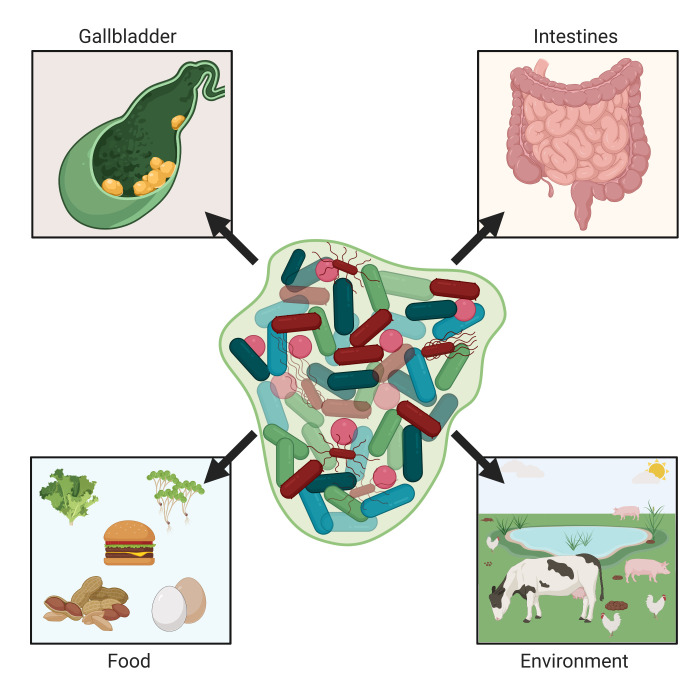
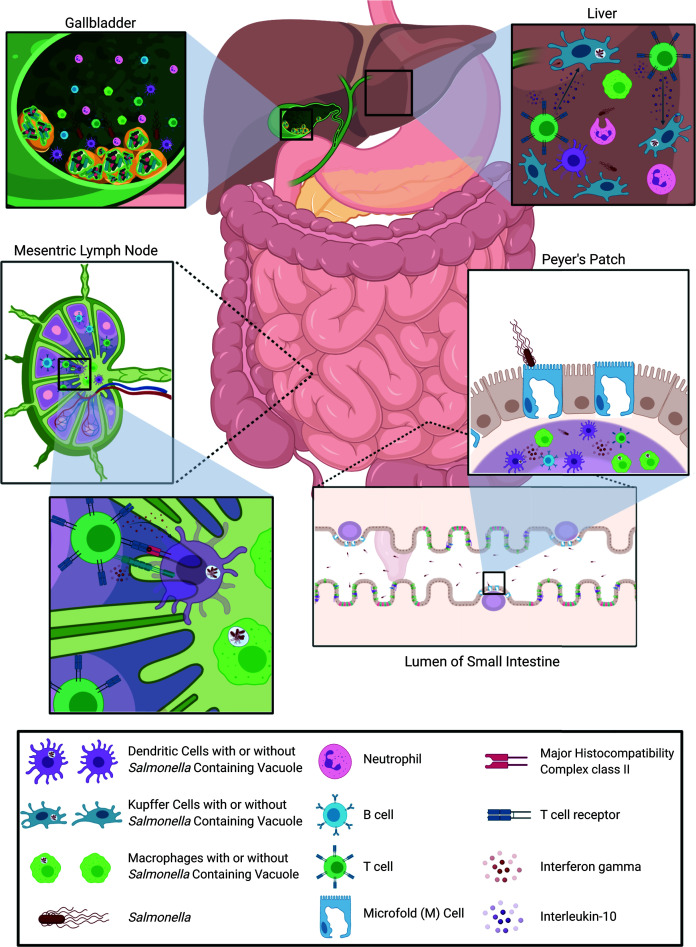
Within the species of , there is significant diversity represented among the numerous subspecies and serovars. Collectively, these account for microbes with variable host ranges, from common plant and animal colonizers to extremely pathogenic and human-specific serovars. Despite these differences, many species find commonality in the ability to form biofilms and the ability to cause acute, latent, or chronic disease. The exact outcome of infection depends on many factors such as the growth state of , the environmental conditions encountered at the time of infection, as well as the infected host and immune response elicited. Here, we review the numerous biofilm lifestyles of (on biotic and abiotic surfaces) and how the production of extracellular polymeric substances not only enhances long-term persistence outside the host but also is an essential function in chronic human infections. Furthermore, careful consideration is made for the events during initial infection that allow for gut transcytosis which, in conjunction with host immune functions, often determine the progression of disease. Both typhoidal and non-typhoidal salmonellae can cause chronic and/or secondary infections, thus the adaptive immune responses to both types of bacteria are discussed with particular attention to the differences between Typhi, Typhimurium, and invasive non-typhoidal that can result in differential immune responses. Finally, while strides have been made in our understanding of immunity to in the lymphoid organs, fewer definitive studies exist for intestinal and hepatobiliary immunity. By examining our current knowledge and what remains to be determined, we provide insight into new directions in the field of immunity, particularly as it relates to chronic infection.
在 物种中,存在着许多亚种和血清型,具有显著的多样性。这些亚种和血清型共同构成了宿主范围不同的微生物,从常见的植物和动物定植菌到极其致病的人类特异性血清型。尽管存在这些差异,但许多 物种在形成生物膜的能力和引起急性、潜伏或慢性疾病的能力方面具有共性。感染的确切结果取决于许多因素,如 的生长状态、感染时遇到的环境条件,以及受感染的宿主和引发的免疫反应。在这里,我们回顾了 (在生物和非生物表面)的许多生物膜生活方式,以及细胞外聚合物的产生如何不仅增强了宿主外的长期持久性,而且也是慢性人类感染中的一个重要功能。此外,我们还仔细考虑了感染初期允许肠道转胞吞作用的事件,这与宿主免疫功能一起,通常决定了疾病的进展。伤寒和非伤寒沙门氏菌都可引起慢性和/或继发性感染,因此讨论了针对这两种细菌的适应性免疫反应,特别注意了导致不同免疫反应的 Typhi、 Typhimurium 和侵袭性非伤寒 之间的差异。最后,虽然我们在理解 免疫方面在淋巴器官方面取得了进展,但在肠道和肝胆免疫方面的明确研究较少。通过检查我们目前的知识和仍需确定的内容,我们深入了解了 免疫领域的新方向,特别是与慢性感染相关的方向。