Hahn Mark M, González Juan F, Gunn John S
Center for Microbial Pathogenesis, Abigail Wexner Research Institute at Nationwide Children's Hospital, Columbus, OH, United States.
Infectious Diseases Institute, The Ohio State University, Columbus, OH, United States.
Front Cell Infect Microbiol. 2021 May 19;11:683081. doi: 10.3389/fcimb.2021.683081. eCollection 2021.
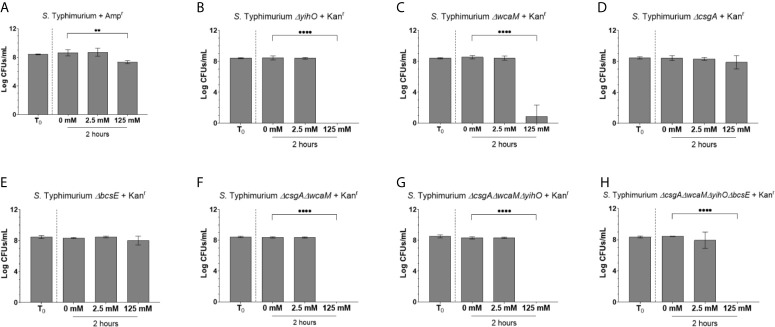
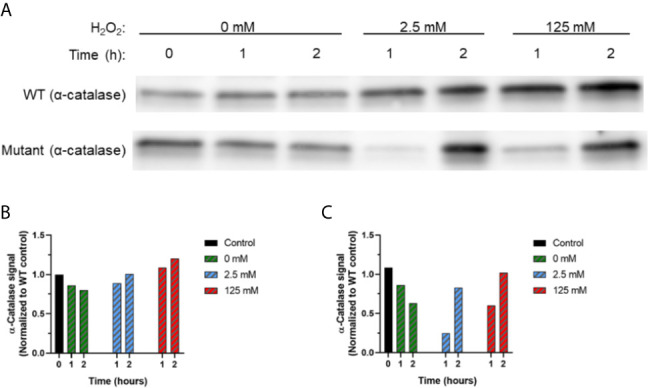
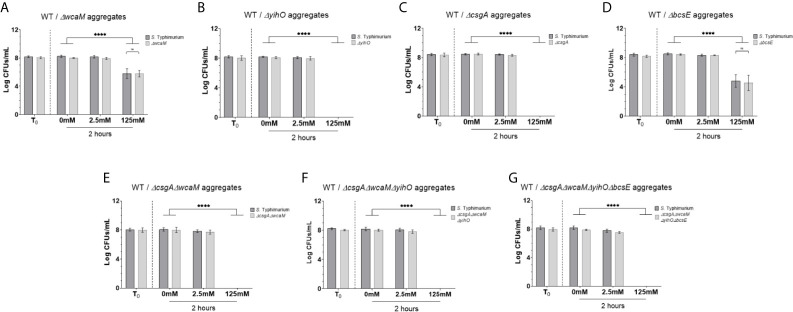
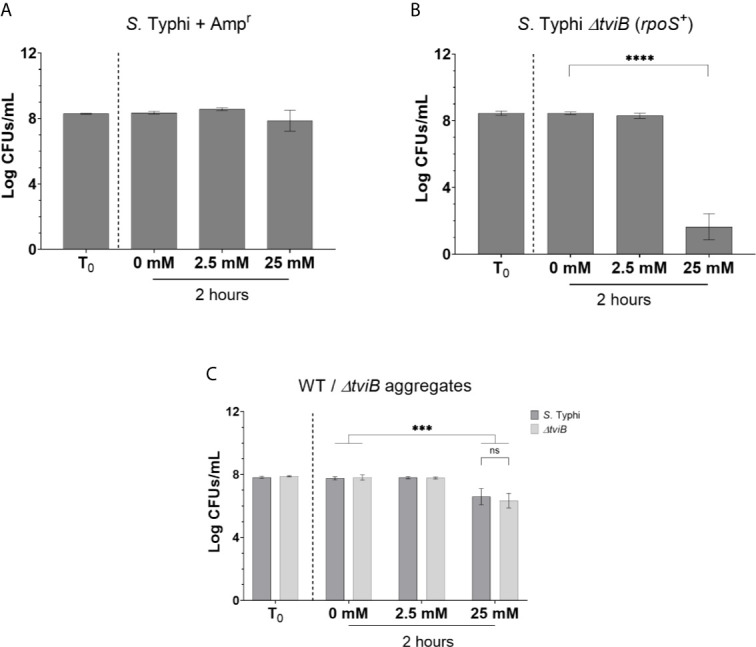
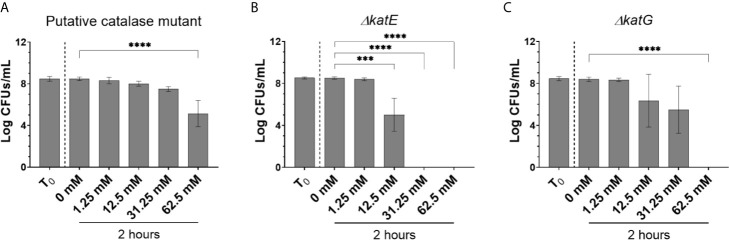
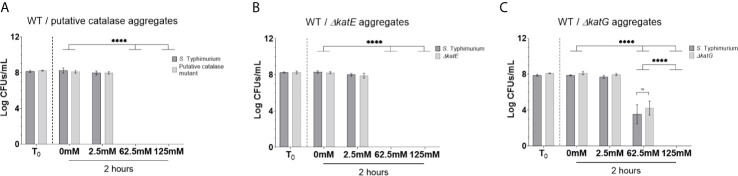
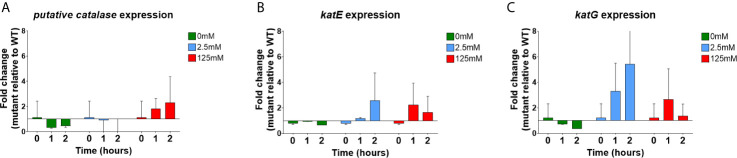
The ability of subspecies serovar Typhi ( Typhi) to cause chronic gallbladder infections is dependent on biofilm growth on cholesterol gallstones. Non-typhoidal (e.g. Typhimurium) also utilize the biofilm state to persist in the host and the environment. How the pathogen maintains recalcitrance to the host response, and oxidative stress in particular, during chronic infection is poorly understood. Previous experiments demonstrated that . Typhi and . Typhimurium biofilms are tolerant to hydrogen peroxide (HO), but that mutations in the biofilm extracellular polymeric substances (EPSs) O antigen capsule, colanic acid, or Vi antigen reduce tolerance. Here, biofilm-mediated tolerance to oxidative stress was investigated using a combination of EPS and catalase mutants, as catalases are important detoxifiers of HO. Using co-cultured biofilms of wild-type (WT) bacteria with EPS mutants, it was demonstrated that colanic acid in . Typhimurium and Vi antigen in . Typhi have a community function and protect all biofilm-resident bacteria rather than to only protect the individual cells producing the EPSs. However, the HO tolerance deficiency of a O antigen capsule mutant was unable to be compensated for by co-culture with WT bacteria. For curli fimbriae, both WT and mutant strains are tolerant to HO though unexpectedly, co-cultured WT/mutant biofilms challenged with HO resulted in sensitization of both strains, suggesting a more nuanced oxidative resistance alteration in these co-cultures. Three catalase mutant (, and a putative catalase) biofilms were also examined, demonstrating significant reductions in biofilm HO tolerance for the and mutants. Biofilm co-culture experiments demonstrated that catalases exhibit a community function. We further hypothesized that biofilms are tolerant to HO because the physical barrier formed by EPSs slows penetration of HO into the biofilm to a rate that can be mitigated by intra-biofilm catalases. Compared to WT, EPS-deficient biofilms have a heighted response even to low-dose (2.5 mM) HO challenge, confirming that resident bacteria of EPS-deficient biofilms are under greater stress and have limited protection from HO. Thus, these data provide an explanation for how achieves tolerance to HO by a combination of an EPS-mediated barrier and enzymatic detoxification.
伤寒亚种血清型伤寒杆菌(Typhi)引发慢性胆囊感染的能力取决于其在胆固醇胆结石上形成生物膜的生长情况。非伤寒型(如鼠伤寒沙门氏菌Typhimurium)也利用生物膜状态在宿主和环境中持续存在。在慢性感染期间,病原体如何维持对宿主反应,特别是氧化应激的抗性,目前了解甚少。先前的实验表明,Typhi和Typhimurium生物膜对过氧化氢(H₂O₂)具有耐受性,但生物膜细胞外聚合物(EPSs)、O抗原荚膜、柯氏酸或Vi抗原中的突变会降低耐受性。在此,使用EPS和过氧化氢酶突变体组合研究了生物膜介导的对氧化应激的耐受性,因为过氧化氢酶是H₂O₂的重要解毒剂。通过野生型(WT)细菌与EPS突变体的共培养生物膜实验表明,鼠伤寒沙门氏菌中的柯氏酸和伤寒杆菌中的Vi抗原具有群体功能,可保护所有生物膜内的细菌,而不仅仅是保护产生EPSs的单个细胞。然而,O抗原荚膜突变体对H₂O₂的耐受性缺陷无法通过与WT细菌共培养来弥补。对于卷曲菌毛,WT和突变菌株均对H₂O₂具有耐受性,但出乎意料的是,用H₂O₂攻击的WT/突变体共培养生物膜导致两种菌株均变得敏感,这表明在这些共培养中氧化抗性的改变更为细微。还检测了三种过氧化氢酶突变体(KatG、KatE和一种假定的过氧化氢酶)生物膜,结果表明KatG和KatE突变体的生物膜对H₂O₂的耐受性显著降低。生物膜共培养实验表明过氧化氢酶具有群体功能。我们进一步推测,生物膜对H₂O₂具有耐受性是因为EPS形成的物理屏障减缓了H₂O₂进入生物膜的速度,使其降至生物膜内过氧化氢酶可缓解的速率。与WT相比,EPS缺陷型生物膜即使对低剂量(2.5 mM)H₂O₂攻击也有增强的反应,这证实了EPS缺陷型生物膜内的细菌承受更大的压力,且对H₂O₂的保护有限。因此,这些数据解释了Typhi如何通过EPS介导的屏障和酶解毒作用相结合来实现对H₂O₂的耐受性。