Galán-Arriola Carlos, Vílchez-Tschischke Jean Paul, Lobo Manuel, López Gonzalo J, de Molina-Iracheta Antonio, Pérez-Martínez Claudia, Villena-Gutiérrez Rocio, Macías Álvaro, Díaz-Rengifo Iván A, Oliver Eduardo, Fuster Valentin, Sánchez-González Javier, Ibanez Borja
Centro Nacional de Investigaciones Cardiovasculares (CNIC), c/Melchor Fernández Almagro 3, 28029 Madrid, Spain.
Centro de Investigación Biomédica en Red en Enfermedades Cardiovasculares (CIBERCV), c/Melchor Fernández Almagro 3, 28029 Madrid, Spain.
Cardiovasc Res. 2022 Jan 29;118(2):531-541. doi: 10.1093/cvr/cvab053.
The aim of this study was to study changes in coronary microcirculation status during and after several cycles of anthracycline treatment.
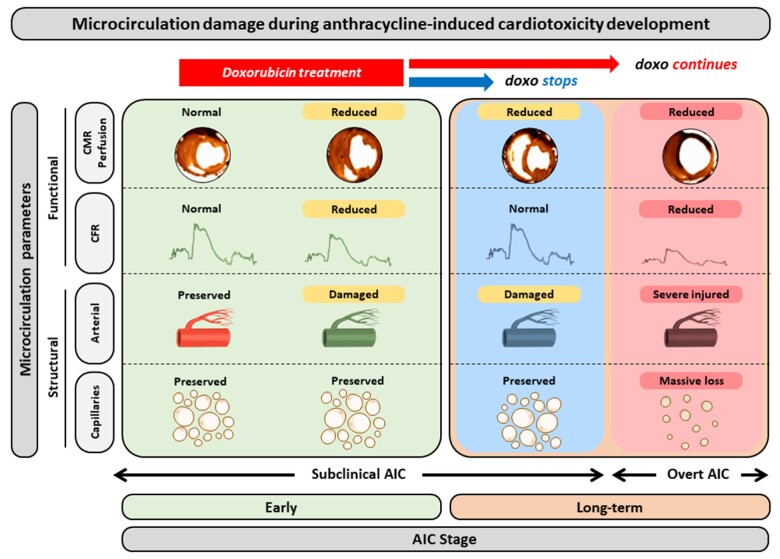
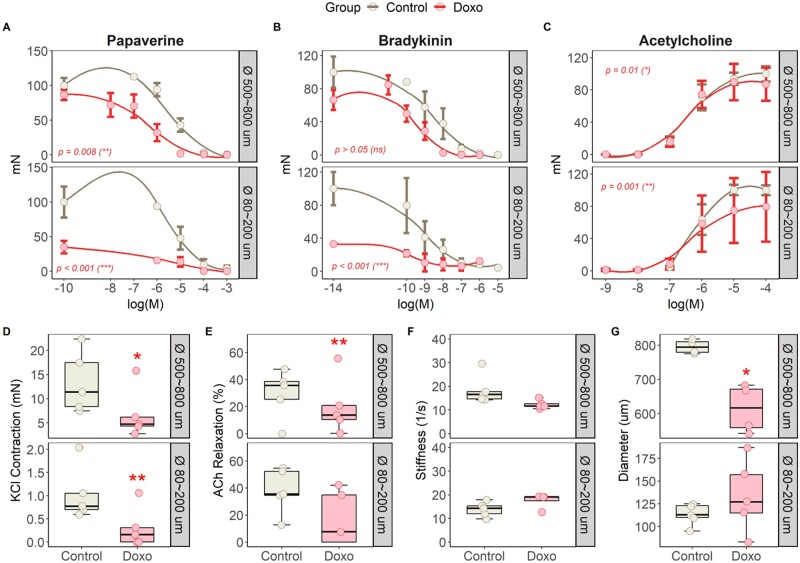
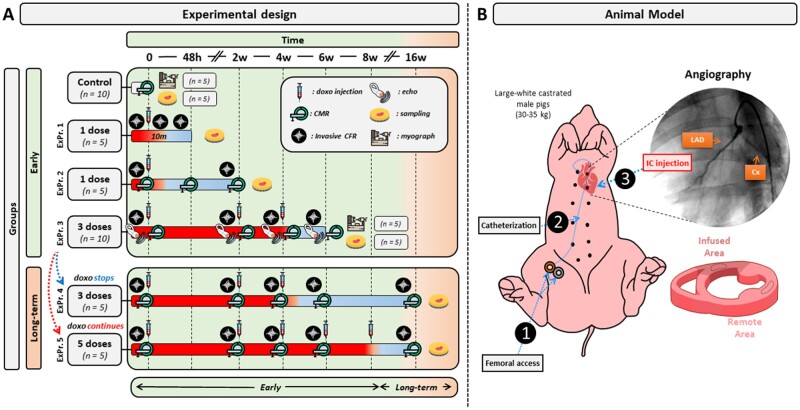
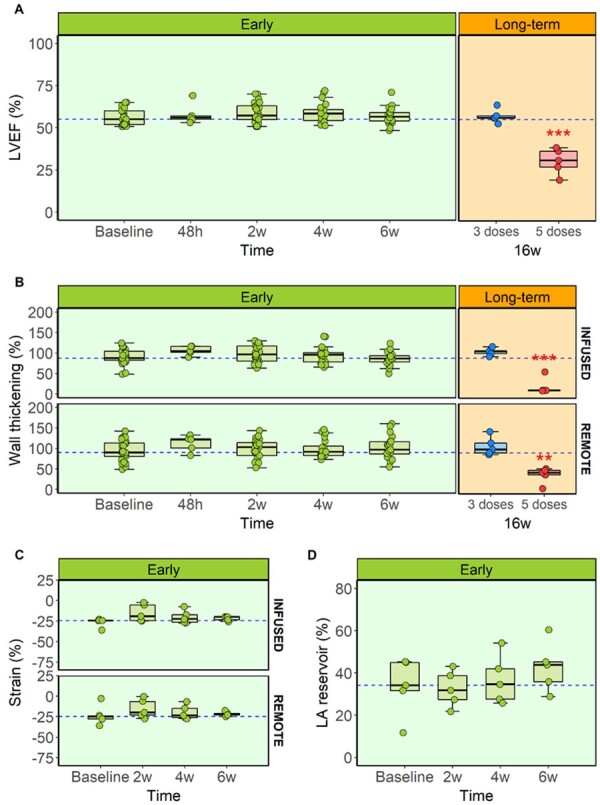
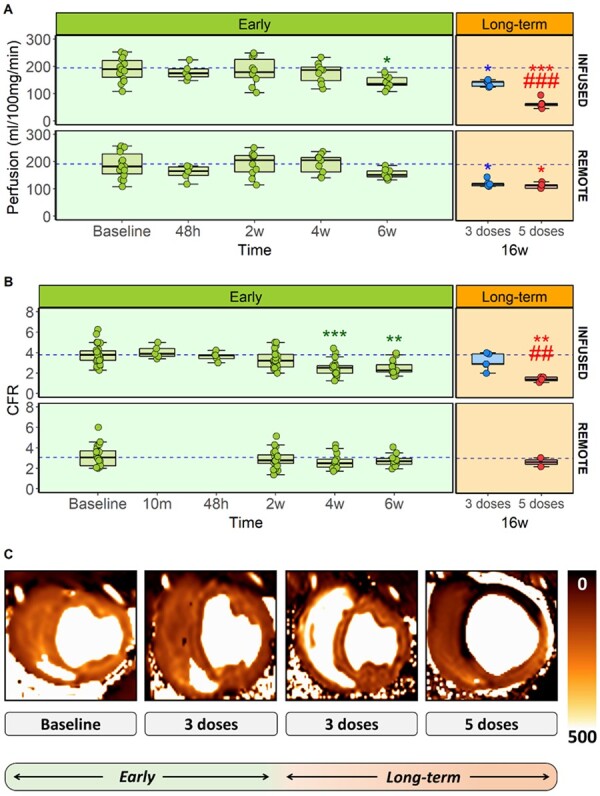
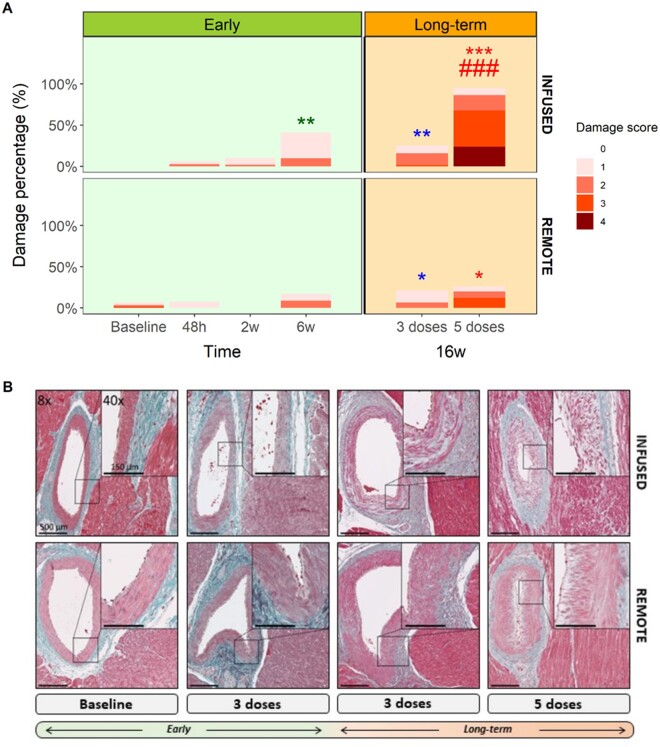
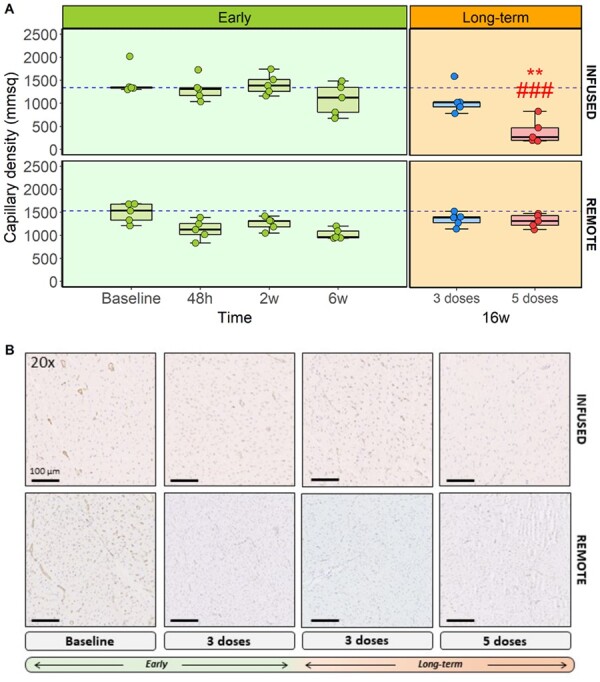
Large-white male pigs (n=40) were included in different experimental protocols (ExPr.) according to anthracycline cumulative exposure [0.45 mg/kg intracoronary (IC) doxorubicin per injection] and follow-up: control (no doxorubicin); single injection and sacrifice either at 48 h (ExPr. 1) or 2 weeks (ExPr. 2); 3 injections 2 weeks apart (low cumulative dose) and sacrifice either 2 weeks (ExPr. 3) or 12 weeks (ExPr. 4) after third injection; five injections 2 weeks apart (high cumulative dose) and sacrifice 8 weeks after fifth injection (ExPr. 5). All groups were assessed by serial cardiac magnetic resonance (CMR) to quantify perfusion and invasive measurement of coronary flow reserve (CFR). At the end of each protocol, animals were sacrificed for ex vivo analyses. Vascular function was further evaluated by myography in explanted coronary arteries of pigs undergoing ExPr. 3 and controls. A single doxorubicin injection had no impact on microcirculation status, excluding a direct chemical toxicity. A series of five fortnightly doxorubicin injections (high cumulative dose) triggered a progressive decline in microcirculation status, evidenced by reduced CMR-based myocardial perfusion and CFR-measured impaired functional microcirculation. In the high cumulative dose regime (ExPr. 5), microcirculation changes appeared long before any contractile defect became apparent. Low cumulative doxorubicin dose (three bi-weekly injections) was not associated with any contractile defect across long-term follow-up, but provoked persistent microcirculation damage, evident soon after third dose injection. Histological and myograph evaluations confirmed structural damage to arteries of all calibres even in animals undergoing low cumulative dose regimes. Conversely, arteriole damage and capillary bed alteration occurred only after high cumulative dose regime.
Serial in vivo evaluations of microcirculation status using state-of-the-art CMR and invasive CFR show that anthracyclines treatment is associated with progressive and irreversible damage to the microcirculation. This long-persisting damage is present even in low cumulative dose regimes, which are not associated with cardiac contractile deficits. Microcirculation damage might explain some of the increased incidence of cardiovascular events in cancer survivors who received anthracyclines without showing cardiac contractile defects.
本研究旨在探讨多柔比星多次治疗周期期间及之后冠状动脉微循环状态的变化。
根据多柔比星累积暴露量[每次冠状动脉内(IC)注射0.45mg/kg多柔比星]和随访情况,将40只大白雄性猪纳入不同的实验方案(ExPr.):对照组(未使用多柔比星);单次注射,分别在48小时(ExPr. 1)或2周(ExPr. 2)后处死;每隔2周注射3次(低累积剂量),在第三次注射后2周(ExPr. 3)或12周(ExPr. 4)处死;每隔2周注射5次(高累积剂量),在第五次注射后8周处死(ExPr. 5)。所有组均通过连续心脏磁共振成像(CMR)评估以量化灌注,并通过冠状动脉血流储备(CFR)的有创测量进行评估。在每个方案结束时,处死动物进行离体分析。在接受ExPr. 3的猪和对照组的离体冠状动脉中,通过血管造影进一步评估血管功能。单次注射多柔比星对微循环状态无影响,排除了直接化学毒性。每隔两周连续注射5次多柔比星(高累积剂量)引发了微循环状态的逐渐下降,基于CMR的心肌灌注减少和CFR测量的功能性微循环受损证明了这一点。在高累积剂量方案(ExPr. 5)中,微循环变化早在任何收缩缺陷明显出现之前就已出现。低累积多柔比星剂量(每两周注射3次)在长期随访中与任何收缩缺陷均无关联,但在第三次注射后不久就引发了持续的微循环损伤。组织学和血管造影评估证实,即使在接受低累积剂量方案的动物中,所有口径的动脉均有结构损伤。相反,仅在高累积剂量方案后才出现小动脉损伤和毛细血管床改变。
使用先进的CMR和有创CFR对微循环状态进行连续体内评估表明,多柔比星治疗与微循环的进行性和不可逆损伤有关。即使在低累积剂量方案中也存在这种长期持续的损伤,而低累积剂量方案与心脏收缩功能缺陷无关。微循环损伤可能解释了在接受多柔比星治疗但未出现心脏收缩功能缺陷的癌症幸存者中,心血管事件发生率增加的部分原因。