ICONE-Innsbruck Cognitive Neuroscience, Department for Hearing, Speech, and Voice Disorders, Medical University of Innsbruck, Innsbruck, Austria.
Department of Psychology, University of Innsbruck, Innsbruck, Austria.
PLoS One. 2021 Feb 19;16(2):e0246421. doi: 10.1371/journal.pone.0246421. eCollection 2021.
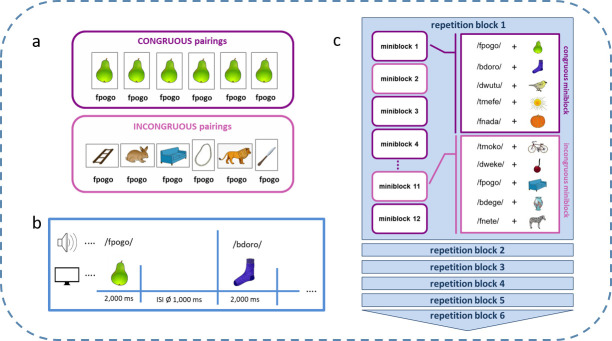
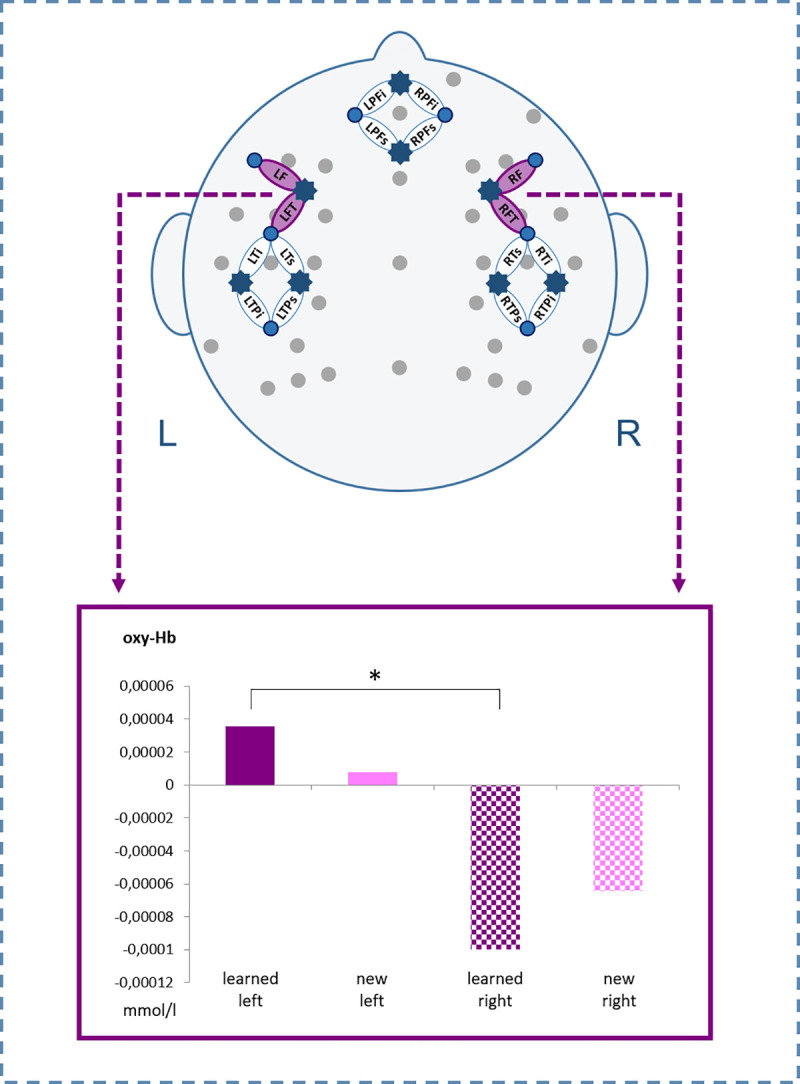
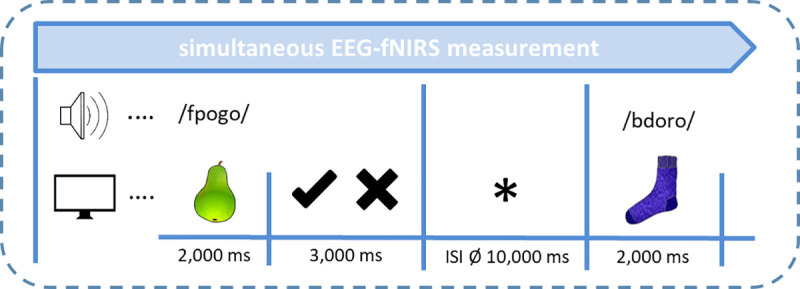
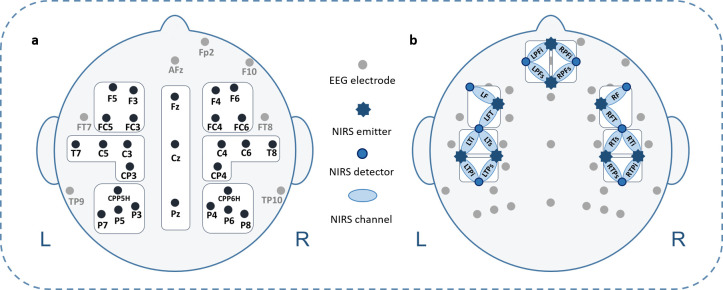
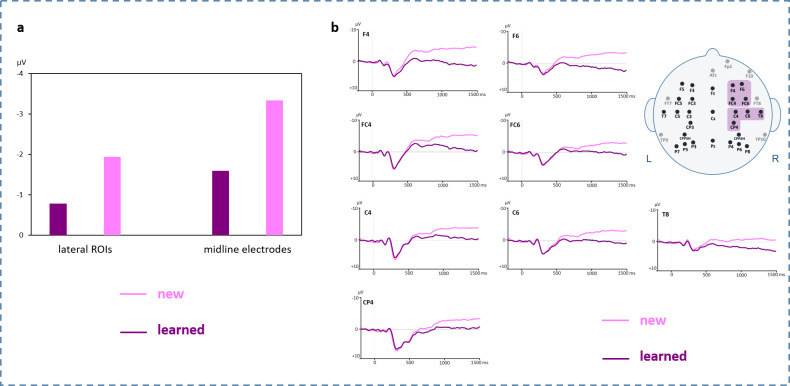
Being proficient in several foreign languages is an essential part of every-day life. In contrast to childhood, learning a new language can be highly challenging for adults. The present study aims at investigating neural mechanisms supporting very initial foreign language learning in adulthood. For this reason, subjects underwent an implicit semantic associative training in which they had to learn new pseudoword-picture pairings. Learning success was measured via a recognition experiment presenting learned versus new pseudoword-picture pairings. Neural correlates were assessed by an innovative multi-methodological approach simultaneously applying electroencephalography (EEG) and functional near-infrared spectroscopy (fNIRS). Results indicate memory-related processes based on familiarity and mechanisms of cognitive control to be present during initial vocabulary learning. Findings underline the fascinating plasticity of the adult brain during foreign language learning, even after a short semantic training of only 18 minutes as well as the importance of comparing evidence from different neuroscientific methods and behavioral data.
精通数种外语是日常生活的重要组成部分。与儿童时期不同,成年人学习新语言极具挑战性。本研究旨在调查支持成年人初期外语学习的神经机制。为此,研究对象进行了一项内隐语义联想训练,他们必须学习新的伪词-图片配对。通过识别实验来衡量学习成功,呈现学习过的和新的伪词-图片配对。通过同时应用脑电图(EEG)和功能性近红外光谱(fNIRS)的创新多方法学方法评估神经相关性。结果表明,在初始词汇学习过程中存在基于熟悉度的记忆相关过程和认知控制机制。研究结果强调了成人脑在外语学习过程中的惊人可塑性,即使是在仅有 18 分钟的短期语义训练后,也强调了比较来自不同神经科学方法和行为数据的证据的重要性。