Center for Endocrine and Metabolic Diseases, Fondazione Policlinico Universitario Agostino Gemelli IRCCS, Rome, Italy.
Department of Translational Medicine and Surgery, Università Cattolica del Sacro Cuore, Rome, Italy.
Diabetes Care. 2021 Mar;44(3):647-654. doi: 10.2337/dc20-1964.
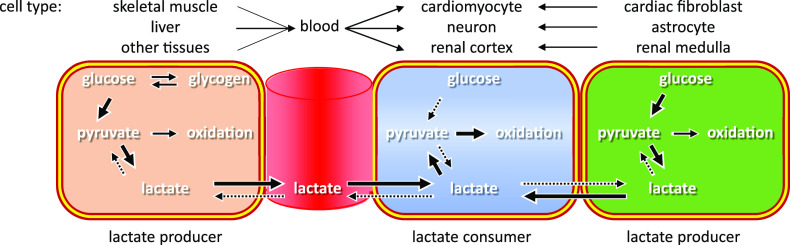
Since the UK Prospective Diabetes Study (UKPDS), metformin has been considered the first-line medication for patients with newly diagnosed type 2 diabetes. Though direct evidence from specific trials is still lacking, several studies have suggested that metformin may protect from diabetes- and nondiabetes-related comorbidities, including cardiovascular, renal, neurological, and neoplastic diseases. In the past few decades, several mechanisms of action have been proposed to explain metformin's protective effects, none being final. It is certain, however, that metformin increases lactate production, concentration, and, possibly, oxidation. Once considered a mere waste product of exercising skeletal muscle or anaerobiosis, lactate is now known to act as a major energy shuttle, redistributed from production sites to where it is needed. Through the direct uptake and oxidation of lactate produced elsewhere, all end organs can be rapidly supplied with fundamental energy, skipping glycolysis and its possible byproducts. Increased lactate production (and consequent oxidation) could therefore be considered a positive mechanism of action of metformin, except when, under specific circumstances, metformin and lactate become excessive, increasing the risk of lactic acidosis. We are proposing that, rather than considering metformin-induced lactate production as dangerous, it could be considered a mechanism through which metformin exerts its possible protective effect on the heart, kidneys, and brain and, to some extent, its antineoplastic action.
自英国前瞻性糖尿病研究(UKPDS)以来,二甲双胍一直被认为是新诊断为 2 型糖尿病患者的一线药物。尽管缺乏来自特定试验的直接证据,但多项研究表明,二甲双胍可能有助于预防糖尿病和非糖尿病相关的合并症,包括心血管、肾脏、神经和肿瘤疾病。在过去的几十年中,人们提出了几种作用机制来解释二甲双胍的保护作用,但没有一种是最终的。然而,可以肯定的是,二甲双胍会增加乳酸的产生、浓度,并可能增加其氧化。曾经被认为只是运动骨骼肌或无氧代谢的废物产物,现在已知乳酸是一种主要的能量穿梭物,从产生部位重新分配到需要的地方。通过直接摄取和氧化其他部位产生的乳酸,所有终末器官都可以迅速获得基本能量,跳过糖酵解及其可能的副产物。因此,增加的乳酸产生(随之而来的氧化)可以被认为是二甲双胍的一种积极作用机制,除非在特定情况下,二甲双胍和乳酸过多,增加乳酸酸中毒的风险。我们提出,与其将二甲双胍引起的乳酸产生视为危险,不如将其视为二甲双胍对心脏、肾脏和大脑发挥可能的保护作用的一种机制,并且在某种程度上对其抗肿瘤作用也是如此。