School of Pharmacy, Xi'an Jiaotong University, Xi'an, 710061, Shaanxi, China.
Institute of Pharmaceutical Science and Technology, Western China Science & Technology Innovation Harbour, Xi'an, 710115, Shaanxi, China.
Anal Bioanal Chem. 2021 May;413(11):2995-3004. doi: 10.1007/s00216-021-03233-7. Epub 2021 Feb 19.
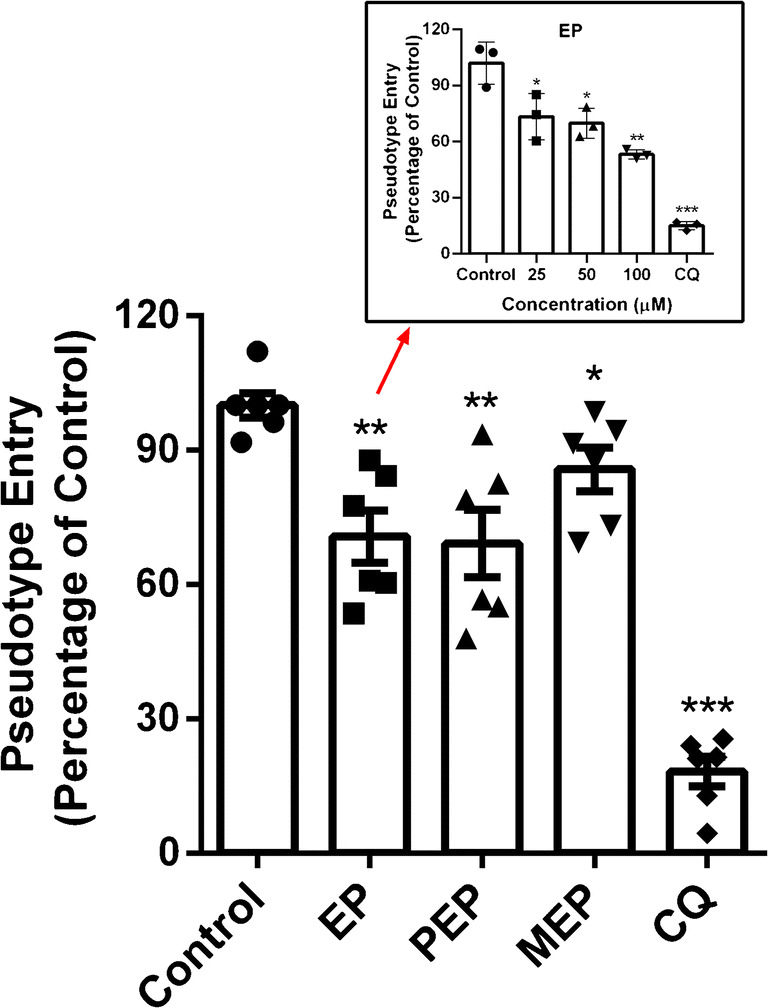
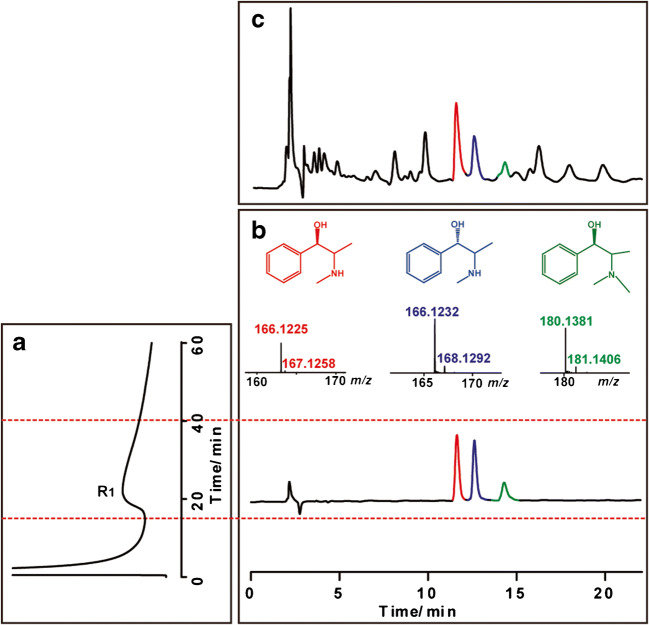
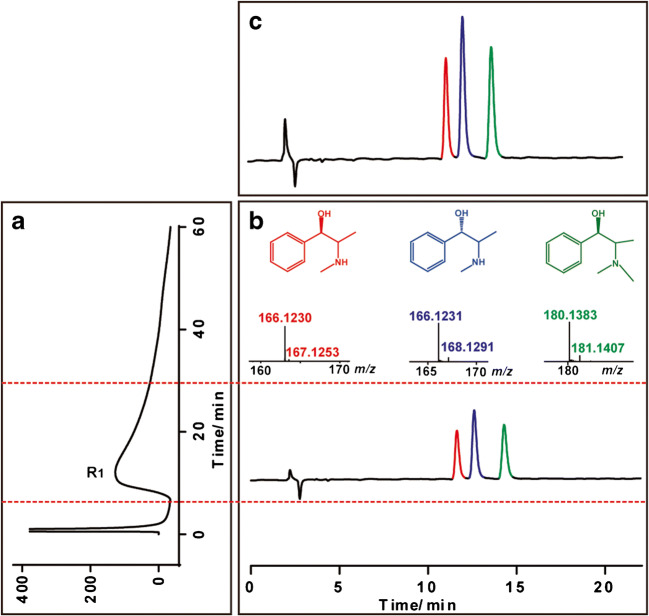
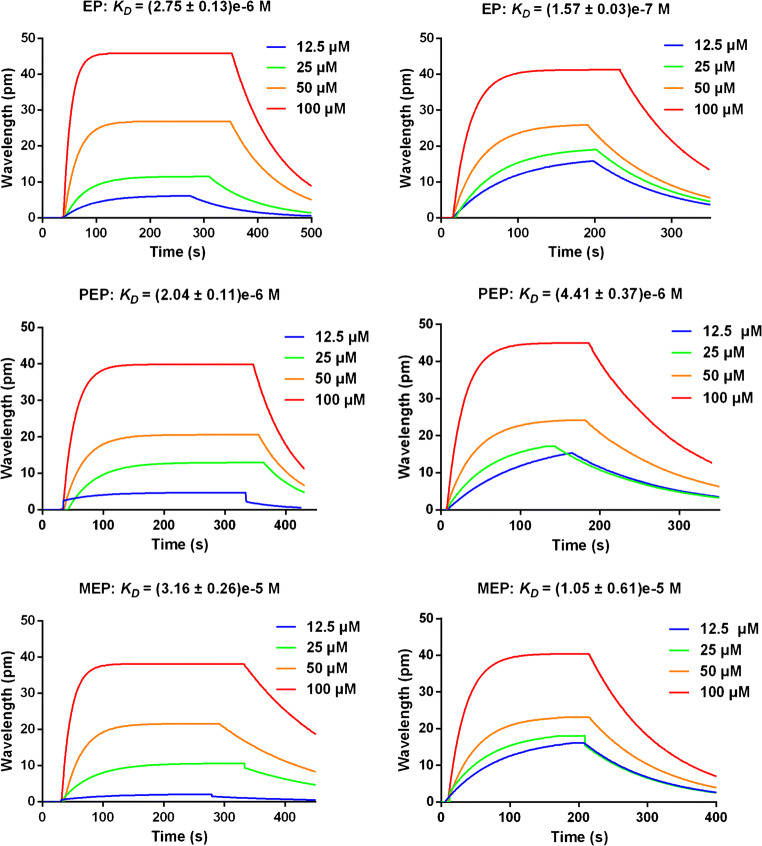
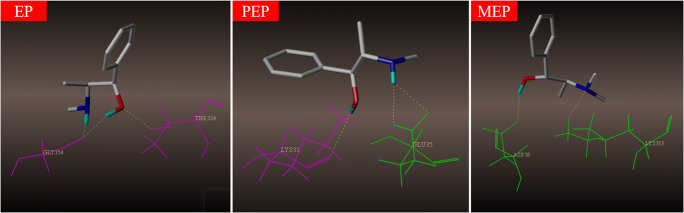
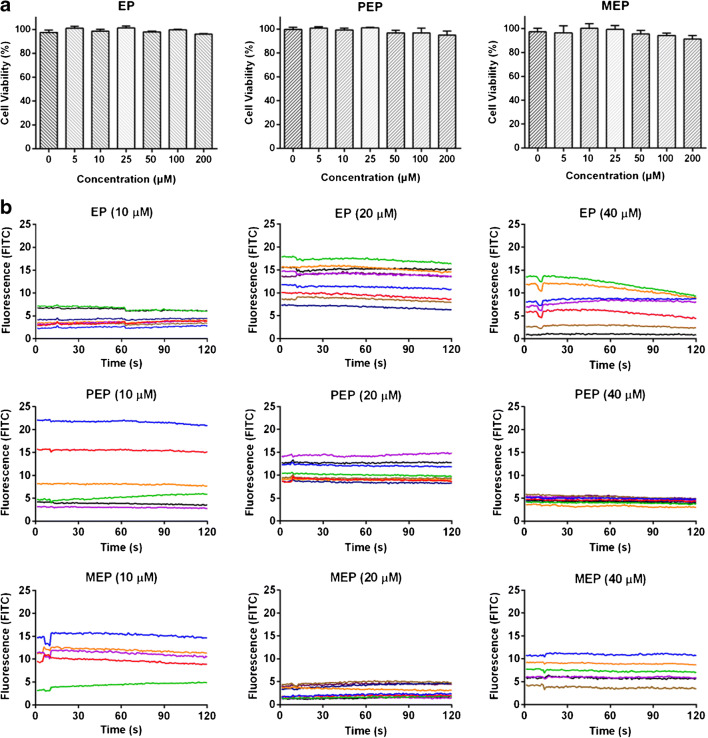
Traditional Chinese medicines played an important role in the treatment of COVID-19 in 2020. Ephedra sinica, one of the major constituent herbs of multi-component herbal formula, has been widely used to treat COVID-19 in China. However, its active components are still unclear. The objectives of this study are to screen and evaluate active components from the traditional Chinese medicine Ephedra sinica for the treatment of COVID-19. In our study, we established an ACE2/CMC bioaffinity chromatography model, and then developed an ACE2/CMC-HPLC-IT-TOF-MS system for the active compounds screening and identification from Ephedra sinica extract. We performed molecular docking and surface plasmon resonance (SPR) assays to assess the binding characteristics (binding mode and K value). We used CCK-8 staining to assess the toxicity of screened compounds, and also used SARS-CoV-2 pseudovirus to observe the viropexis effect of screened compounds in ACE2 cells. In this current work, one fraction was fished out, separated and identified as ephedrine (EP), pseudoephedrine (PEP), and methylephedrine (MEP). Binding assays showed that the three compounds could bind with ACE2 in a special way to some amino acid residues, similar to the way SARS-CoV-2 bound with ACE2. Additionally, the three compounds, especially EP, can inhibit the entrance of SARS-CoV-2 spike pseudovirus into ACE2 cells because they can reduce the entrance ratio of pseudovirus in the pseudovirus model. Overall, the ACE2/CMC-HPLC-IT-TOF-MS system was established and verified to be suitable for ACE2-targeted bioactive compound screening. EP, PEP, and MEP with ACE2-binding features were screened out from Ephedra sinica, and acted as blockers inhibiting SARS-CoV-2 spike pseudovirus entering ACE2 cells.
2020 年,传统中药在 COVID-19 的治疗中发挥了重要作用。麻黄作为多组分中药配方的主要组成草药之一,在中国被广泛用于治疗 COVID-19。然而,其活性成分仍不清楚。本研究旨在从中药麻黄中筛选和评价治疗 COVID-19 的活性成分。在本研究中,我们建立了 ACE2/CMC 生物亲和色谱模型,然后开发了 ACE2/CMC-HPLC-IT-TOF-MS 系统,用于从麻黄提取物中筛选和鉴定活性化合物。我们进行了分子对接和表面等离子体共振(SPR)实验来评估结合特性(结合模式和 K 值)。我们使用 CCK-8 染色法评估筛选化合物的毒性,并用 SARS-CoV-2 假病毒观察筛选化合物在 ACE2 细胞中的病毒结合效应。在本研究中,我们分离并鉴定出一个馏分中的三种化合物:麻黄碱(EP)、伪麻黄碱(PEP)和甲基麻黄碱(MEP)。结合实验表明,这三种化合物可以以特殊的方式与 ACE2 结合,类似于 SARS-CoV-2 与 ACE2 的结合方式。此外,这三种化合物,特别是 EP,可以抑制 SARS-CoV-2 刺突假病毒进入 ACE2 细胞,因为它们可以降低假病毒模型中假病毒的进入比例。总的来说,建立并验证了 ACE2/CMC-HPLC-IT-TOF-MS 系统适用于 ACE2 靶向生物活性化合物的筛选。从麻黄中筛选出具有 ACE2 结合特征的 EP、PEP 和 MEP,并作为阻断剂抑制 SARS-CoV-2 刺突假病毒进入 ACE2 细胞。