• 文献检索
  • 文档翻译
  • 深度研究
  • 学术资讯
  • Suppr Zotero 插件Zotero 插件
  • 邀请有礼
  • 套餐&价格
  • 历史记录
应用&插件
Suppr Zotero 插件Zotero 插件浏览器插件Mac 客户端Windows 客户端微信小程序
定价
高级版会员购买积分包购买API积分包
服务
文献检索文档翻译深度研究API 文档MCP 服务
关于我们
关于 Suppr公司介绍联系我们用户协议隐私条款
关注我们

Suppr 超能文献

核心技术专利:CN118964589B侵权必究
粤ICP备2023148730 号-1Suppr @ 2026

文献检索

告别复杂PubMed语法,用中文像聊天一样搜索,搜遍4000万医学文献。AI智能推荐,让科研检索更轻松。

立即免费搜索

文件翻译

保留排版,准确专业,支持PDF/Word/PPT等文件格式,支持 12+语言互译。

免费翻译文档

深度研究

AI帮你快速写综述,25分钟生成高质量综述,智能提取关键信息,辅助科研写作。

立即免费体验

自我恢复力和新冠疫情相关压力对日本人群心理健康的影响。

The effect of ego-resiliency and COVID-19-related stress on mental health among the Japanese population.

作者信息

Kubo Takahiro, Sugawara Daichi, Masuyama Akihiro

机构信息

Psychological Counseling Center, Iryo Sosei University, Chuodai-Iino 5-5-1, Iwaki City, Fukushima 970-8551, Japan.

Faculty of Human Sciences, University of Tsukuba, Tennodai 1-1-1, Tsukuba City 305-8752, Japan.

出版信息

Pers Individ Dif. 2021 Jun;175:110702. doi: 10.1016/j.paid.2021.110702. Epub 2021 Feb 11.

DOI:10.1016/j.paid.2021.110702
PMID:33612903
原文链接:https://pmc.ncbi.nlm.nih.gov/articles/PMC7877814/
Abstract

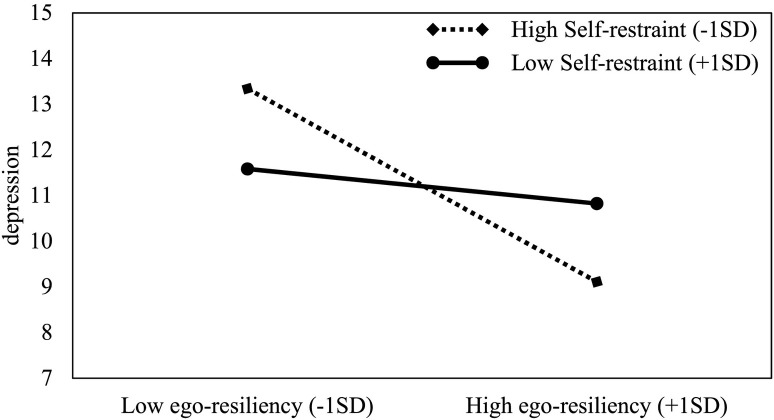
Due to the negative psychological consequences of the COVID-19 pandemic worldwide, it is necessary to study the factors that improve mental health. In this study, we evaluated changing income, self-restraint, fear of COVID-19, depression, anxiety, stress, and ego-resiliency, to investigate the main and moderating effects of ego-resiliency on psychological distress. We analyzed 222 Japanese samples from the dataset of Primary Survey in Japan (PSJ) in the Resilience to COVid-19 in Each Region (RE-COVER) project. The results showed significant main effects of ego-resiliency on depression and stress, and a significant interaction effect of self-restraint and ego-resiliency on depression. We also tested the significance of the moderating effect of ego-resiliency on the relationship between self-restraint and depression. The simple slope of ego-resiliency was only significant for individuals with high self-restraint. Our findings provide empirical evidence on mental health associated with the COVID-19 pandemic among the Japanese population, proving that ego-resiliency functioned to cope with the specific stresses associated with COVID-19.

摘要

由于新冠疫情在全球范围内造成的负面心理影响,有必要研究改善心理健康的因素。在本研究中,我们评估了收入变化、自我约束、对新冠的恐惧、抑郁、焦虑、压力和自我复原力,以调查自我复原力对心理困扰的主效应和调节效应。我们分析了来自日本各地区新冠疫情复原力(RE-COVER)项目中日本初级调查(PSJ)数据集的222个日本样本。结果显示,自我复原力对抑郁和压力有显著的主效应,自我约束和自我复原力对抑郁有显著的交互效应。我们还检验了自我复原力对自我约束与抑郁之间关系的调节效应的显著性。自我复原力的简单斜率仅对高自我约束的个体显著。我们的研究结果为日本人群中与新冠疫情相关的心理健康提供了实证证据,证明自我复原力在应对与新冠疫情相关的特定压力方面发挥了作用。
https://cdn.ncbi.nlm.nih.gov/pmc/blobs/ffff/7877814/005ef977511e/gr1_lrg.jpg

相似文献

1
The effect of ego-resiliency and COVID-19-related stress on mental health among the Japanese population.自我恢复力和新冠疫情相关压力对日本人群心理健康的影响。
Pers Individ Dif. 2021 Jun;175:110702. doi: 10.1016/j.paid.2021.110702. Epub 2021 Feb 11.
2
How Do Women React to the COVID-19 Pandemic Period? Relationship Between Ego-Resiliency, Anxiety, Alcohol Consumption and Aggression Among Polish Women.女性如何应对新冠疫情时期?波兰女性的自我恢复力、焦虑、饮酒与攻击性之间的关系。
Int J Womens Health. 2023 Jul 28;15:1219-1226. doi: 10.2147/IJWH.S419169. eCollection 2023.
3
"" Ego-Resiliency and Religiosity as Coping Resources with Pandemic Stress-Mediation Study."" 自我韧性和宗教信仰作为应对疫情压力的应对资源——中介研究。
Int J Environ Res Public Health. 2023 Jan 20;20(3):1942. doi: 10.3390/ijerph20031942.
4
Ego-resiliency moderates the risk of depression and social anxiety symptoms on suicidal ideation in medical students.自我恢复力调节医学生自杀意念中抑郁和社交焦虑症状的风险。
Ann Gen Psychiatry. 2022 Jun 18;21(1):19. doi: 10.1186/s12991-022-00399-x.
5
Depressive and Anxiety Symptoms and Their Relationships with Ego-Resiliency and Life Satisfaction among Well-Educated, Young Polish Citizens during the COVID-19 Pandemic.抑郁和焦虑症状及其与 COVID-19 大流行期间受过良好教育的年轻波兰公民的自我韧性和生活满意度的关系。
Int J Environ Res Public Health. 2022 Aug 19;19(16):10364. doi: 10.3390/ijerph191610364.
6
Is it good to be resilient during the COVID‑19 period? The role of ego-resiliency in the intensity of symptoms of anxiety, alcohol use and aggression among Polish people.在 COVID-19 期间有韧性好吗?自我韧性在波兰人焦虑、酒精使用和攻击症状强度中的作用。
Int J Occup Med Environ Health. 2021 May 27;34(2):289-300. doi: 10.13075/ijomeh.1896.01766. Epub 2021 May 14.
7
Heterogeneous patterns of stress over the four years of college: associations with anxious attachment and ego-resiliency.大学四年压力的异质模式:与焦虑型依恋和自我韧性的关系。
J Pers. 2013 Oct;81(5):476-86. doi: 10.1111/jopy.12010. Epub 2013 Jan 14.
8
Cultural Contributors to Ego-Resiliency and Associations with Depressive Problems in Midwestern Latino Youth.文化因素对中西部拉丁裔青年自我韧性的影响及其与抑郁问题的关系。
J Res Adolesc. 2020 Feb;30 Suppl 2:349-361. doi: 10.1111/jora.12481. Epub 2019 Feb 21.
9
The Loneliness-Life Satisfaction Relationship: The Parallel and Serial Mediating Role of Hopelessness, Depression and Ego-Resilience among Young Adults in South Africa during COVID-19.孤独感-生活满意度关系:在 COVID-19 期间南非青年中绝望、抑郁和自我韧性的平行和串联中介作用。
Int J Environ Res Public Health. 2021 Mar 31;18(7):3613. doi: 10.3390/ijerph18073613.
10
What factors explain anger and mental health during the COVID-19 pandemic? The case of Israeli society.哪些因素解释了新冠疫情期间的愤怒情绪和心理健康状况?以以色列社会为例。
World J Psychiatry. 2021 Oct 19;11(10):864-875. doi: 10.5498/wjp.v11.i10.864.

引用本文的文献

1
Stress to stability: Sense of coherence as a buffer against pandemic-related psychological distress.从压力到稳定:连贯感作为抵御大流行相关心理困扰的缓冲因素
Health SA. 2025 Jun 24;30:2859. doi: 10.4102/hsag.v30i0.2859. eCollection 2025.
2
Ego-Resiliency, Life Satisfaction and Symptoms of Anxiety and Depression Among Students of Pro-Health Faculties During COVID-19 Pandemic.新冠疫情期间健康相关专业学生的自我恢复力、生活满意度以及焦虑和抑郁症状
Healthcare (Basel). 2025 Apr 27;13(9):1008. doi: 10.3390/healthcare13091008.
3
Urban safety and psychological distress during the pandemic: the results of a longitudinal study.

本文引用的文献

1
Multisystem Resilience for Children and Youth in Disaster: Reflections in the Context of COVID-19.灾害中儿童和青少年的多系统复原力:COVID-19背景下的思考
Advers Resil Sci. 2020;1(2):95-106. doi: 10.1007/s42844-020-00010-w. Epub 2020 Jun 25.
2
Validation and Psychometric Properties of the Japanese Version of the Fear of COVID-19 Scale Among Adolescents.青少年中《日本版COVID-19恐惧量表》的效度验证及心理测量特性
Int J Ment Health Addict. 2022;20(1):387-397. doi: 10.1007/s11469-020-00368-z. Epub 2020 Jul 13.
3
Stress, anxiety, and depression levels in the initial stage of the COVID-19 outbreak in a population sample in the northern Spain.
疫情期间的城市安全与心理困扰:一项纵向研究的结果
Front Psychol. 2024 May 6;15:1343585. doi: 10.3389/fpsyg.2024.1343585. eCollection 2024.
4
Association Between Ego-Resilience and Social Isolation Among Urban Older People.城市老年人的自我恢复力与社会隔离之间的关联
Gerontol Geriatr Med. 2024 Mar 13;10:23337214241238069. doi: 10.1177/23337214241238069. eCollection 2024 Jan-Dec.
5
How Do Women React to the COVID-19 Pandemic Period? Relationship Between Ego-Resiliency, Anxiety, Alcohol Consumption and Aggression Among Polish Women.女性如何应对新冠疫情时期?波兰女性的自我恢复力、焦虑、饮酒与攻击性之间的关系。
Int J Womens Health. 2023 Jul 28;15:1219-1226. doi: 10.2147/IJWH.S419169. eCollection 2023.
6
A predictive model of perceived stress during the first wave of the COVID-19 pandemic in university students Ecuadorians.厄瓜多尔大学生在新冠疫情第一波期间感知压力的预测模型
Front Psychiatry. 2023 Jul 13;14:1202625. doi: 10.3389/fpsyt.2023.1202625. eCollection 2023.
7
The Resilience of South African School Teachers in the Time of COVID-19: Coping with Risk of Infection, Loneliness, and Anxiety.南非学校教师在 COVID-19 时期的韧性:应对感染风险、孤独和焦虑。
Int J Environ Res Public Health. 2023 Feb 16;20(4):3462. doi: 10.3390/ijerph20043462.
8
"" Ego-Resiliency and Religiosity as Coping Resources with Pandemic Stress-Mediation Study."" 自我韧性和宗教信仰作为应对疫情压力的应对资源——中介研究。
Int J Environ Res Public Health. 2023 Jan 20;20(3):1942. doi: 10.3390/ijerph20031942.
9
How Does Teachers' Psychological Capital Influence Workplace Well-Being? A Moderated Mediation Model of Ego-Resiliency and Work-Meaning Cognition.教师心理资本如何影响工作幸福感?自我韧性和工作意义认知的中介调节模型。
Int J Environ Res Public Health. 2022 Nov 9;19(22):14730. doi: 10.3390/ijerph192214730.
10
Depressive and Anxiety Symptoms and Their Relationships with Ego-Resiliency and Life Satisfaction among Well-Educated, Young Polish Citizens during the COVID-19 Pandemic.抑郁和焦虑症状及其与 COVID-19 大流行期间受过良好教育的年轻波兰公民的自我韧性和生活满意度的关系。
Int J Environ Res Public Health. 2022 Aug 19;19(16):10364. doi: 10.3390/ijerph191610364.
西班牙北部人群样本在 COVID-19 爆发初期的压力、焦虑和抑郁水平。
Cad Saude Publica. 2020 Apr 30;36(4):e00054020. doi: 10.1590/0102-311X00054020. eCollection 2020.
4
Mental health problems faced by healthcare workers due to the COVID-19 pandemic-A review.由于 COVID-19 大流行,医护人员面临的心理健康问题 - 综述。
Asian J Psychiatr. 2020 Jun;51:102119. doi: 10.1016/j.ajp.2020.102119. Epub 2020 Apr 22.
5
"We Are Staying at Home." Association of Self-perceptions of Aging, Personal and Family Resources, and Loneliness With Psychological Distress During the Lock-Down Period of COVID-19.“我们待在家里。”自我老龄化认知、个人和家庭资源与新冠疫情封锁期间孤独感与心理困扰的关联。
J Gerontol B Psychol Sci Soc Sci. 2021 Jan 18;76(2):e10-e16. doi: 10.1093/geronb/gbaa048.
6
The Mental Health Consequences of COVID-19 and Physical Distancing: The Need for Prevention and Early Intervention.新冠疫情及身体距离措施对心理健康的影响:预防与早期干预的必要性
JAMA Intern Med. 2020 Jun 1;180(6):817-818. doi: 10.1001/jamainternmed.2020.1562.
7
"Pandemic fear" and COVID-19: mental health burden and strategies.“大流行恐惧”与新冠肺炎:心理健康负担及应对策略
Braz J Psychiatry. 2020;42(3):232-235. doi: 10.1590/1516-4446-2020-0008. Epub 2020 Apr 3.
8
The Fear of COVID-19 Scale: Development and Initial Validation.《COVID-19恐惧量表:编制与初步验证》
Int J Ment Health Addict. 2022;20(3):1537-1545. doi: 10.1007/s11469-020-00270-8. Epub 2020 Mar 27.
9
Posttraumatic stress symptoms and attitude toward crisis mental health services among clinically stable patients with COVID-19 in China.中国临床症状稳定的新冠肺炎患者的创伤后应激症状及对危机心理健康服务的态度
Psychol Med. 2021 Apr;51(6):1052-1053. doi: 10.1017/S0033291720000999. Epub 2020 Mar 27.
10
A nationwide survey of psychological distress among Chinese people in the COVID-19 epidemic: implications and policy recommendations.新冠疫情期间中国人心理困扰的全国性调查:启示与政策建议
Gen Psychiatr. 2020 Mar 6;33(2):e100213. doi: 10.1136/gpsych-2020-100213. eCollection 2020.