Huang Jiali, Chen Zhenyao, Chen Xin, Chen Jun, Cheng Zhixiang, Wang Zhaoxia
Cancer Medical Center, The Second Affiliated Hospital of Nanjing Medical University, Nanjing 210011, Jiangsu, China.
Department of Oncology, Suzhou Ninth People's Hospital, Suzhou, China.
Mol Ther Nucleic Acids. 2021 Jan 1;23:887-896. doi: 10.1016/j.omtn.2020.12.021. eCollection 2021 Mar 5.
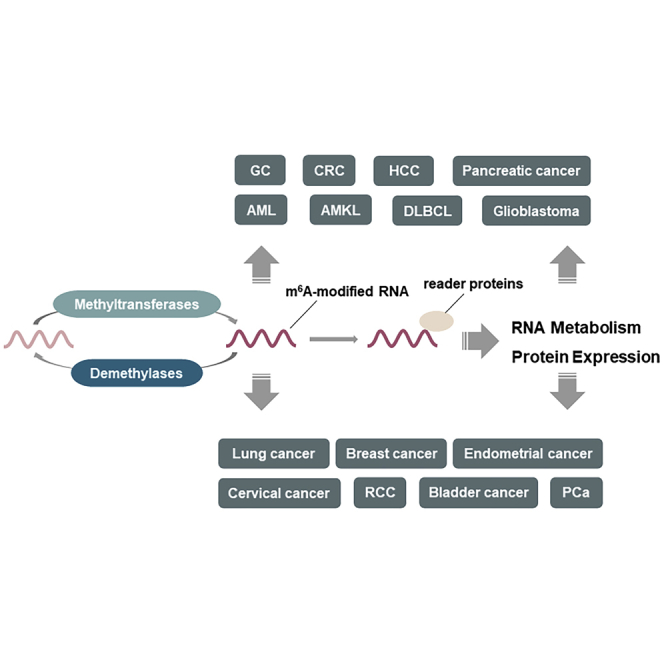
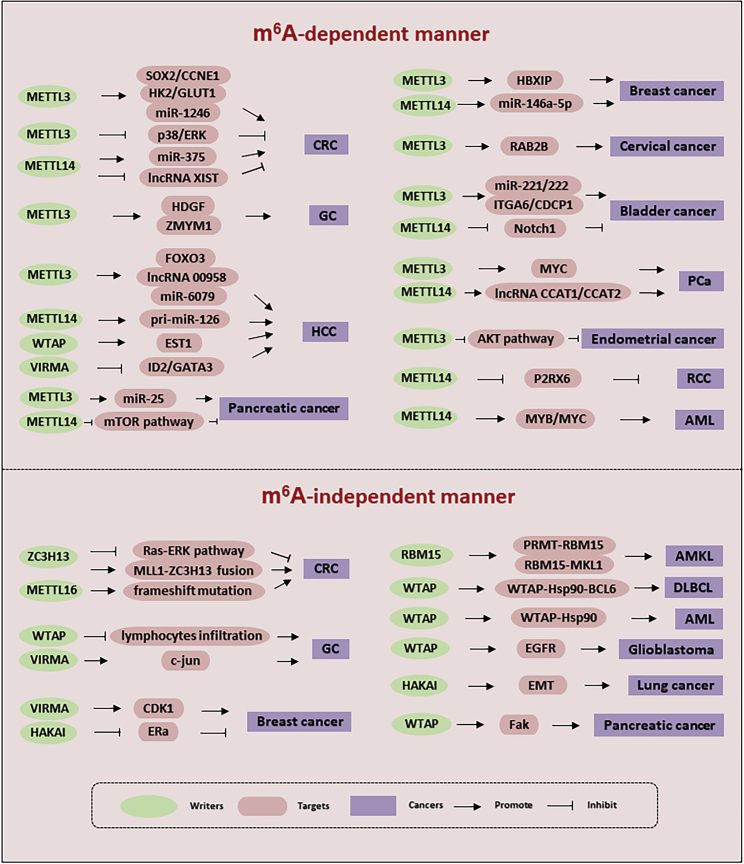
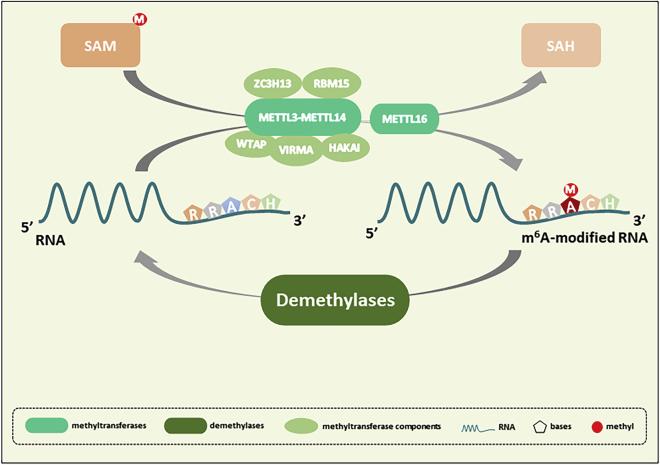
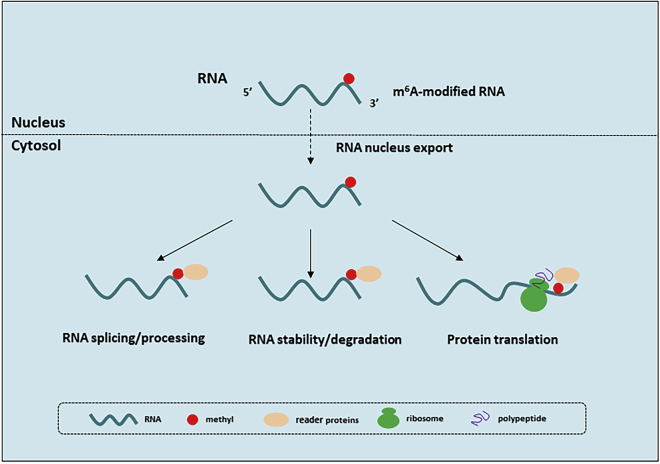
Modification of eukaryotic RNA by methylation of adenosine residues to generate -methyladenosine (mA) is a highly prevalent process. mA is dynamically regulated during cell metabolism and embryo development, and it is mainly involved in various aspects of RNA metabolism, including RNA splicing, processing, transport from the nucleus, translation, and degradation. Accumulating evidence shows that dynamic changes to mA are closely related to the occurrence and development of cancer and that methyltransferases, as key elements in the dynamic regulation of mA, play a crucial role in these processes. Therefore, in this review, we describe the role of methyltransferases as mA writers in cancer and summarize their potential molecular mechanisms of action.
通过腺苷残基甲基化修饰真核RNA以生成N6-甲基腺苷(mA)是一个高度普遍的过程。mA在细胞代谢和胚胎发育过程中受到动态调控,并且主要参与RNA代谢的各个方面,包括RNA剪接、加工、从细胞核输出、翻译和降解。越来越多的证据表明,mA的动态变化与癌症的发生和发展密切相关,而甲基转移酶作为mA动态调控的关键元件,在这些过程中发挥着至关重要的作用。因此,在本综述中,我们描述了甲基转移酶作为mA写入器在癌症中的作用,并总结了它们潜在的分子作用机制。