Department of Bioengineering, iBB- Institute for Bioengineering and Biosciences, Instituto Superior Técnico, Universidade de Lisboa, Avenida Rovisco Pais, 1049-001, Lisbon, Portugal.
Department of Bioinformatics, Wissenschaftszentrum Weihenstephan, Technische Universität München, Maximus von-Imhof- Forum 3, 85354, Freising, Germany.
BMC Genomics. 2021 Feb 23;22(1):131. doi: 10.1186/s12864-021-07438-z.
Saccharomycodes ludwigii belongs to the poorly characterized Saccharomycodeacea family and is known by its ability to spoil wines, a trait mostly attributable to its high tolerance to sulfur dioxide (SO). To improve knowledge about Saccharomycodeacea our group determined whole-genome sequences of Hanseniaspora guilliermondii (UTAD222) and S. ludwigii (UTAD17), two members of this family. While in the case of H. guilliermondii the genomic information elucidated crucial aspects concerning the physiology of this species in the context of wine fermentation, the draft sequence obtained for S. ludwigii was distributed by more than 1000 contigs complicating extraction of biologically relevant information. In this work we describe the results obtained upon resequencing of S. ludwigii UTAD17 genome using PacBio as well as the insights gathered from the exploration of the annotation performed over the assembled genome.
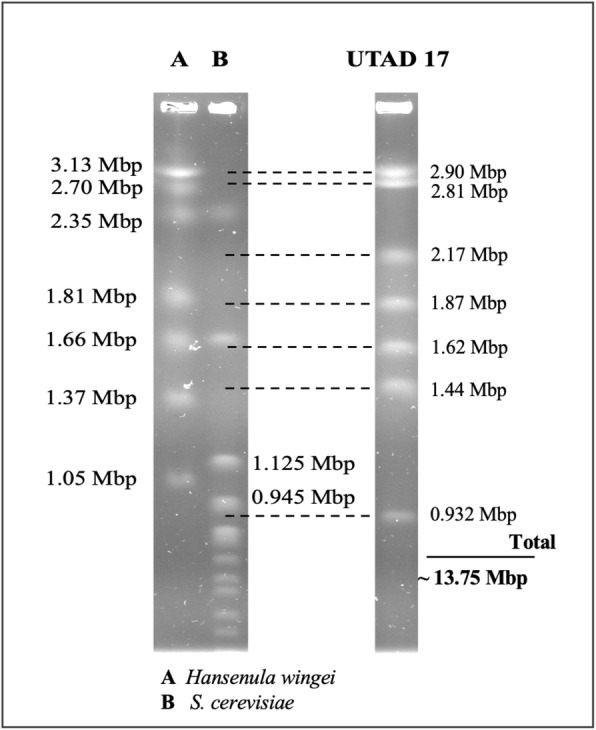
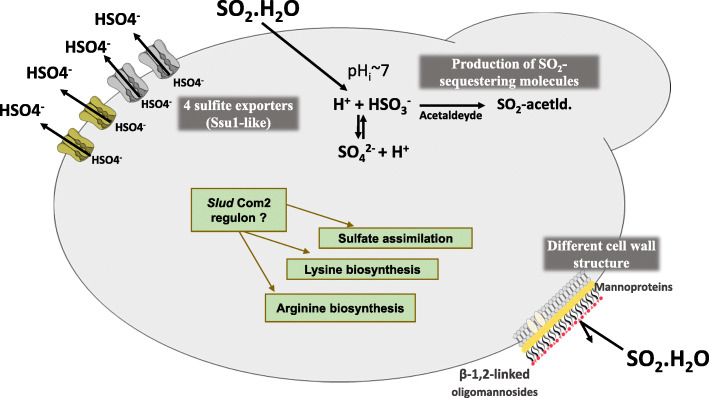
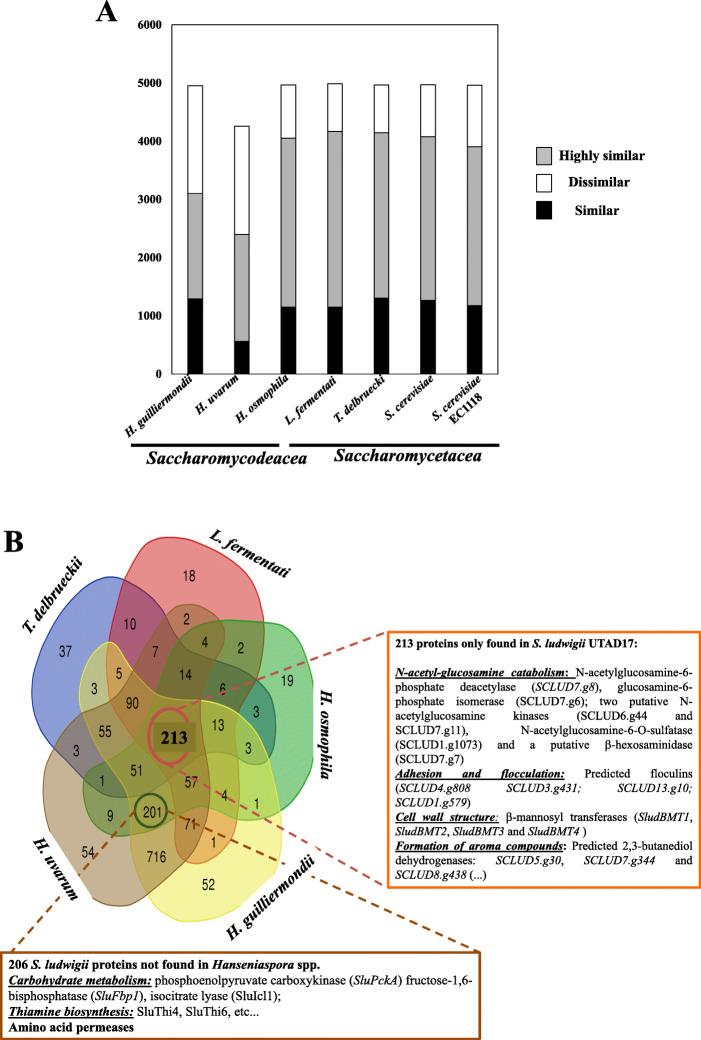
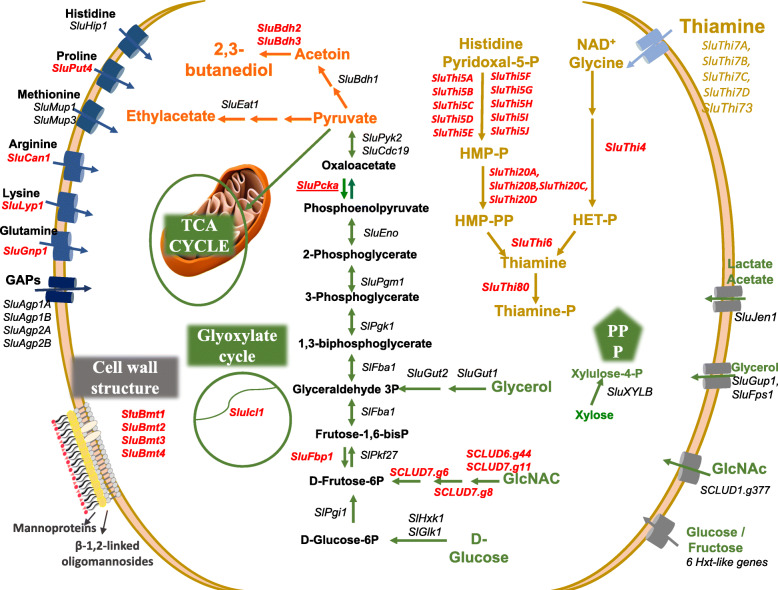
Resequencing of S. ludwigii UTAD17 genome with PacBio resulted in 20 contigs totaling 13 Mb of assembled DNA and corresponding to 95% of the DNA harbored by this strain. Annotation of the assembled UTAD17 genome predicts 4644 protein-encoding genes. Comparative analysis of the predicted S. ludwigii ORFeome with those encoded by other Saccharomycodeacea led to the identification of 213 proteins only found in this species. Among these were six enzymes required for catabolism of N-acetylglucosamine, four cell wall β-mannosyltransferases, several flocculins and three acetoin reductases. Different from its sister Hanseniaspora species, neoglucogenesis, glyoxylate cycle and thiamine biosynthetic pathways are functional in S. ludwigii. Four efflux pumps similar to the Ssu1 sulfite exporter, as well as robust orthologues for 65% of the S. cerevisiae SO-tolerance genes, were identified in S. ludwigii genome.
This work provides the first genome-wide picture of a S. ludwigii strain representing a step forward for a better understanding of the physiology and genetics of this species and of the Saccharomycodeacea family. The release of this genomic sequence and of the information extracted from it can contribute to guide the design of better wine preservation strategies to counteract spoilage prompted by S. ludwigii. It will also accelerate the exploration of this species as a cell factory, specially in production of fermented beverages where the use of Non-Saccharomyces species (including spoilage species) is booming.
Saccharomycodes ludwigii 属于特征不明显的 Saccharomycodeacea 科,以其能够使葡萄酒变质而闻名,这种特性主要归因于其对二氧化硫(SO)的高耐受性。为了提高对 Saccharomycodeacea 的认识,我们的小组确定了 Hanseniaspora guilliermondii(UTAD222)和 S. ludwigii(UTAD17)这两个家族成员的全基因组序列。在 Hanseniaspora guilliermondii 的情况下,基因组信息阐明了该物种在葡萄酒发酵背景下生理的关键方面,而获得的 S. ludwigii 草案序列则由 1000 多个重叠群组成,这使得提取生物学相关信息变得复杂。在这项工作中,我们描述了使用 PacBio 重新测序 S. ludwigii UTAD17 基因组的结果,以及从组装基因组注释中获得的见解。
使用 PacBio 对 S. ludwigii UTAD17 基因组进行重测序得到了 20 个总计 13 Mb 的组装 DNA 序列,对应于该菌株携带的 DNA 的 95%。组装的 UTAD17 基因组的注释预测了 4644 个编码蛋白的基因。预测的 S. ludwigii ORFeome 与其他 Saccharomycodeacea 编码的 ORFeome 进行比较分析,导致鉴定出仅在该物种中发现的 213 种蛋白。其中包括 6 种用于 N-乙酰葡萄糖胺分解代谢的酶、4 种细胞壁β-甘露糖基转移酶、几种絮凝素和 3 种乙酰丙酮还原酶。与姐妹 Hanseniaspora 物种不同,新糖生成、乙醛酸循环和硫胺素生物合成途径在 S. ludwigii 中是功能性的。在 S. ludwigii 基因组中发现了四个类似于 Ssu1 亚硫酸盐出口器的外排泵,以及 65%的 S. cerevisiae SO 耐受性基因的强大直系同源物。
这项工作提供了 S. ludwigii 菌株的全基因组图谱,这是对该物种生理学和遗传学以及 Saccharomycodeacea 科的更好理解的一个进步。该基因组序列的发布以及从中提取的信息可以有助于指导更好的葡萄酒保存策略的设计,以对抗 S. ludwigii 引起的变质。它还将加速该物种作为细胞工厂的探索,特别是在发酵饮料生产中,非酿酒酵母(包括变质酵母)的使用正在蓬勃发展。