Imran Eisha, Khurshid Zohaib, Adanir Necdet, Ashi Heba, Almarzouki Nawaf, Baeshen Hosam Ali
Department of Dental Materials, Islamic International Dental College, Riphah International University, Islamabad, 44000, Pakistan.
Department of Prosthodontics and Dental Implantology, College of Dentistry, King Faisal University, Al Ahsa, 31982, Saudi Arabia.
Risk Manag Healthc Policy. 2021 Feb 15;14:605-618. doi: 10.2147/RMHP.S287547. eCollection 2021.
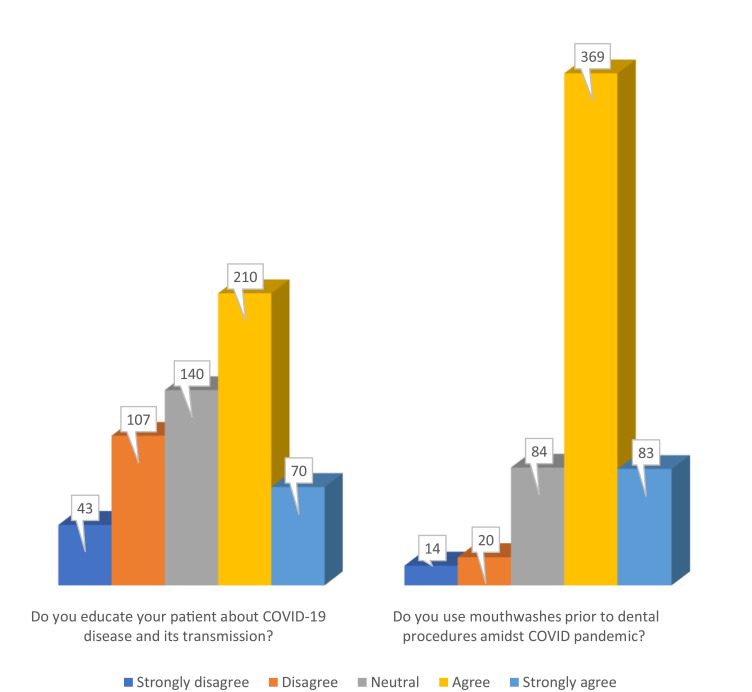
COVID-19 created a peculiar situation worldwide, thus altering the fundamental dynamics of clinical dentistry. This KAP survey was carried out to evaluate the knowledge, attitude and practices among dental practitioners regarding the use of mouthwashes and emphasize on pre-procedural utilization of mouthwashes.
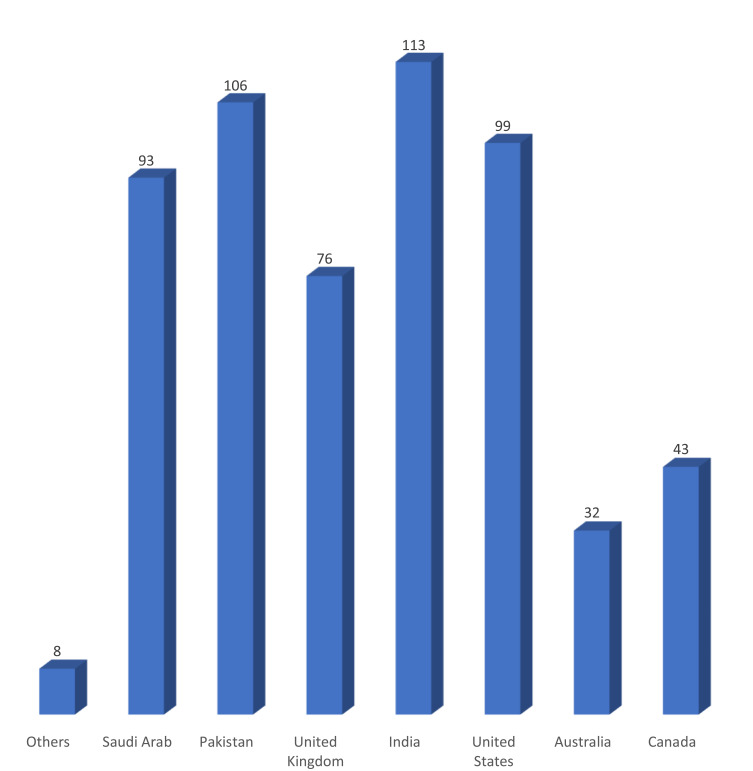
A descriptive, cross-sectional study was conducted during 1st to 15th July 2020, among working dental practitioners across the globe. A questionnaire was formed on Kwiksurveys.com, it comprised of demographic details, it further investigated the level of knowledge and new precautionary measures adopted. A total number of 707 dental practitioners from eighteen different countries responded.
Data were analyzed using SPSS version 23. A "fisher exact test" was applied to assess the difference between the mouthwashes prescribed by various countries. Knowledge section revealed a requisite understanding regarding the disease and its transmission. Only 38.9% of the participants knew that Povidone-iodine (PVP-I) mouthwashes are more efficient in reducing coronaviruses in contrast to mouthwashes made of chlorhexidine (CHX). Whereas 33.9% knew that 0.23% of PVP-I had substantial virucidal activity against SARS-COV, MERS-CoV, influenza virus and rotavirus while 31.1% recognized that oral rinses of Cetylpyridinium chloride (CPC) remained successful in the oral cavity for up to 180-300 minutes.
There is an immense need to raise awareness among practitioners, regarding the viricidal activity of commercially available mouthwashes as demonstrated by numerous in-vitro studies and urge health workers to carry out more clinical trials and to get a translational step towards clinical practice.
新型冠状病毒肺炎(COVID-19)在全球造成了特殊情况,从而改变了临床牙科的基本动态。开展这项知识、态度和实践(KAP)调查是为了评估牙科从业者在使用漱口水方面的知识、态度和实践情况,并强调在操作前使用漱口水。
2020年7月1日至15日,在全球在职牙科从业者中进行了一项描述性横断面研究。在Kwiksurveys.com上编制了一份问卷,其中包括人口统计学细节,进一步调查了知识水平和采取的新预防措施。来自18个不同国家的707名牙科从业者做出了回应。
使用SPSS 23版对数据进行分析。应用“Fisher精确检验”来评估各国所开漱口水之间的差异。知识部分显示出对该疾病及其传播有必要的了解。只有38.9%的参与者知道聚维酮碘(PVP-I)漱口水在减少冠状病毒方面比洗必泰(CHX)漱口水更有效。而33.9%的人知道0.23%的PVP-I对严重急性呼吸综合征冠状病毒(SARS-CoV)、中东呼吸综合征冠状病毒(MERS-CoV)、流感病毒和轮状病毒具有显著的杀病毒活性,31.1%的人认识到西吡氯铵(CPC)口腔冲洗液在口腔中可持续有效180 - 300分钟。
迫切需要提高从业者对众多体外研究表明的市售漱口水杀病毒活性的认识,并敦促卫生工作者开展更多临床试验,朝着临床实践迈出转化性的一步。