Kawi Jennifer, Yeh Chao Hsing, Li Mengchi, Caswell Bs Keenan, Mazraani Md Maurice, Lukkahatai PhD Rn Nada, Mensah Rn Sylvanus, Taylor Janiece, Budhathoki Chakra, Christo Paul
School of Nursing, University of Nevada, Las Vegas, Las Vegas, Nevada.
School of Nursing, Johns Hopkins University School of Nursing, Baltimore, Maryland.
Glob Adv Health Med. 2021 Jan 22;10:2164956120987531. doi: 10.1177/2164956120987531. eCollection 2021.
Chronic musculoskeletal pain (CMP) is the most common self-reported chronic pain condition. Current treatment for CMP is limited.
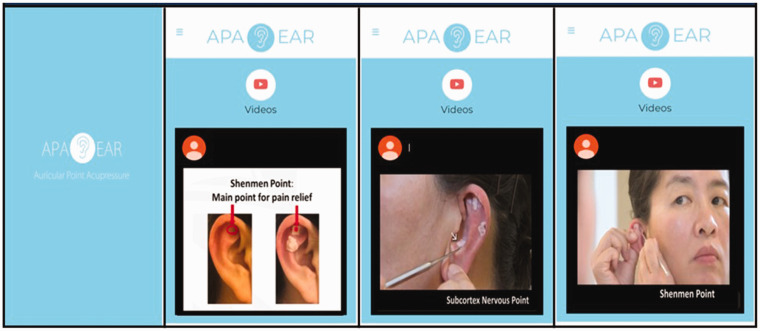
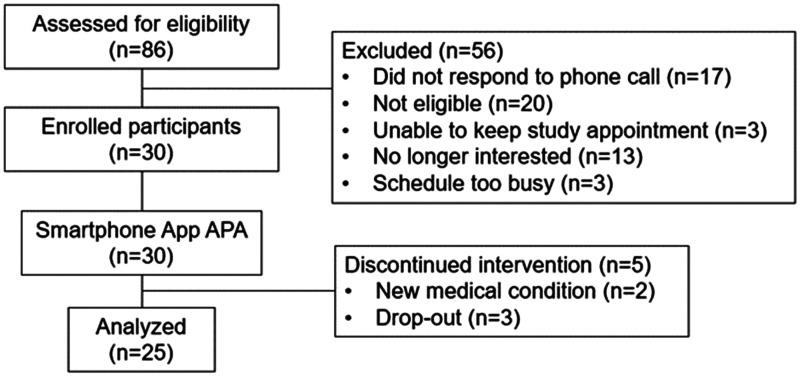
This was a two-phase study. In Phase 1, three auricular point acupressure (APA)-naïve participants were recruited to explore their experiences of APA and a smartphone app was developed based on their feedback. In Phase 2, a prospective longitudinal study was used to examine the effectiveness of the smartphone app to self-manage CMP.
Phase 1 resulted in the successful development of the APA smartphone app. In Phase 2, after four weeks of APA, participants reported reduced pain intensity (30%), pain interference (35%), and disability (40%), as well as improved physical function (47%). The mean score for the participants' perception of treatment efficacy was 4.94 (SD = 2.08, scale of 0-7) indicating that approximately 70% of participants rated global improvements with noticeable changes. The majority (88%, n = 22) of the participants were satisfied with the treatment: 32% [8] were very satisfied and 56% [n = 14] were somewhat satisfied. The average frequency of pressing APA seeds per day was 2.93 times (SD = 2.27, range 0-10) and 1.60 minutes per time (SD = 2.64, range 0-10); the participants were able to adhere to the suggested pressing time per day, although they only pressed the ear points about 53% of the suggested time.
It is feasible for individuals to learn APA from the smartphone app and successfully self-administer APA to manage their pain. Participants found the app useful and were satisfied with the information provided through the app.
慢性肌肉骨骼疼痛(CMP)是最常见的自我报告的慢性疼痛病症。目前针对CMP的治疗方法有限。
这是一项分为两个阶段的研究。在第一阶段,招募了三名从未接受过耳穴按压(APA)的参与者,以探索他们对APA的体验,并根据他们的反馈开发了一款智能手机应用程序。在第二阶段,采用前瞻性纵向研究来检验该智能手机应用程序自我管理CMP的有效性。
第一阶段成功开发了APA智能手机应用程序。在第二阶段,经过四周的APA治疗后,参与者报告疼痛强度降低了30%,疼痛干扰降低了35%,残疾程度降低了40%,身体功能也改善了47%。参与者对治疗效果的感知平均评分为4.94(标准差=2.08,范围为0-7),这表明约70%的参与者对整体改善给予了评分,且有明显变化。大多数(88%,n=22)参与者对治疗感到满意:32%[8人]非常满意,56%[n=14人]有些满意。每天按压APA种子的平均频率为2.93次(标准差=2.27,范围为0-10),每次1.60分钟(标准差=2.64,范围为0-10);参与者能够遵守每天建议的按压时间,尽管他们仅按压耳穴的时间约为建议时间的53%。
个人从智能手机应用程序学习APA并成功自我实施APA来管理疼痛是可行的。参与者发现该应用程序有用,并对通过该应用程序提供的信息感到满意。