Department of Orthopaedic Surgery, Showa University School of Medicine, 1-5-8 Hatanodai, Sinagaka-ku, Tokyo, 142-8666, Japan.
Arch Osteoporos. 2021 Feb 24;16(1):42. doi: 10.1007/s11657-021-00901-0.
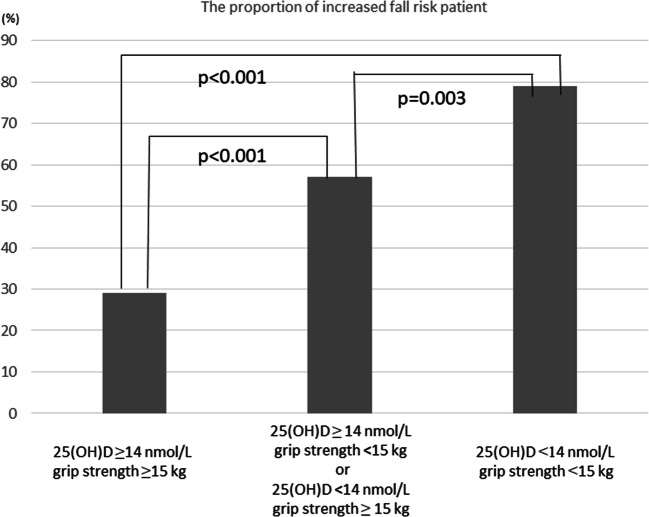
We investigated the relationship between serum 25(OH)D levels, grip strength, and fall score in elderly osteoporotic women for fall risk assessment. Both low serum 25(OH)D and low grip strength were independently associated with increased fall risk. The serum 25(OH)D cutoff specific to increased fall risk was 14 mg/dL (35 nmol/L).
This study aimed to establish a cutoff value of serum 25-hydroxyvitamin D (25(OH)D) for fall assessment and investigate the relationship between serum 25(OH)D, grip strength, and fall score adjusted for age in osteoporotic elderly Japanese women.
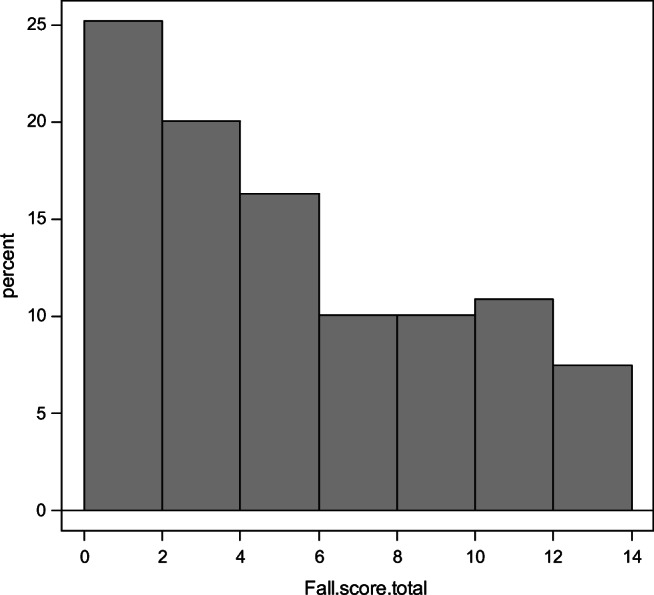
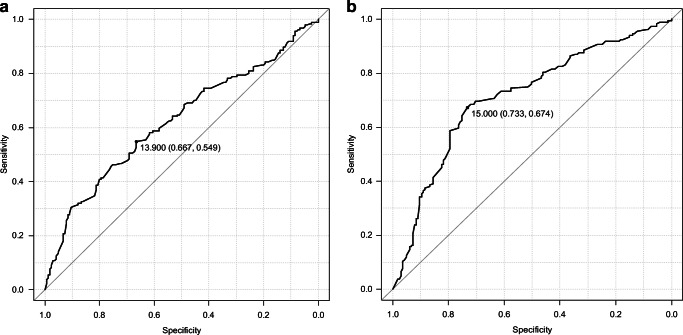
This is a cross-sectional study utilizing collected data of osteoporotic elderly (age ≥65 years) female patients. A questionnaire for fall risk assessment was used, in which a score ≥ 6 was determined as increased fall risk. Serum 25(OH)D levels and grip strength were measured, and the cutoff points were calculated by receiver operating curve (ROC) analysis. Logistic regression analysis with age adjustment was conducted for potential risk factors for fall.
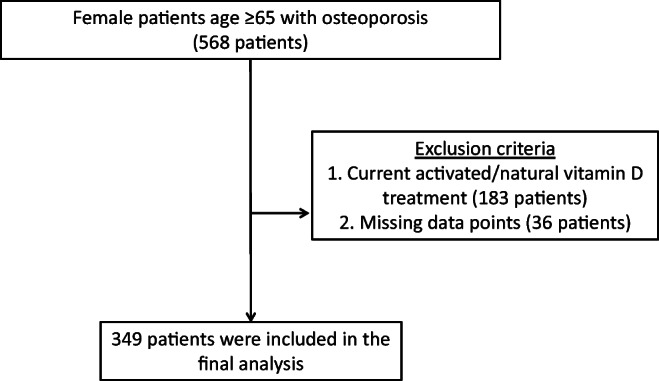
After applying eligibility criteria, finally, 349 patients were enrolled. The median patient age was 77.0 years, and the mean serum 25(OH)D level was 15.6 ng/mL (36 nmol/L). Based on the ROC analysis, we defined the cutoff values of serum 25(OH)D level and grip strength as 14 ng/mL (35 nmol/L) and 15 kg, respectively. A multivariate analysis adjusted for age was conducted. Low serum 25(OH)D level and grip strength were independent risk factors for ≥6 fall risk scores.
Both low serum 25(OH)D level and low grip strength were independently associated with increased fall risk score in osteoporotic elderly women. The appropriate serum 25(OH)D cutoff specific to the increased fall risk group in this population was 14 mg/dL (35 nmol/L). These findings might be used for the identification of patients with high fall risks. These results should be confirmed in other patient groups.
本研究旨在确定血清 25-羟维生素 D(25(OH)D)用于评估跌倒的截断值,并探讨血清 25(OH)D、握力与年龄校正后日本骨质疏松老年女性跌倒评分之间的关系。
这是一项利用骨质疏松老年(年龄≥65 岁)女性患者的回顾性数据进行的横断面研究。采用跌倒风险评估问卷,得分≥6 分为跌倒风险增加。测量血清 25(OH)D 水平和握力,并通过接收者操作曲线(ROC)分析计算截断点。对年龄调整后的潜在跌倒危险因素进行逻辑回归分析。
最终,符合入选标准的 349 例患者纳入研究。患者中位年龄为 77.0 岁,平均血清 25(OH)D 水平为 15.6ng/ml(36nmol/L)。根据 ROC 分析,我们将血清 25(OH)D 水平和握力的截断值分别定义为 14ng/ml(35nmol/L)和 15kg。对年龄进行多变量分析。低血清 25(OH)D 水平和握力是骨质疏松老年女性跌倒风险评分≥6 的独立危险因素。
低血清 25(OH)D 水平和握力均与骨质疏松老年女性跌倒风险评分增加独立相关。本研究人群中,与跌倒风险增加相关的合适血清 25(OH)D 截断值为 14mg/dl(35nmol/L)。这些发现可能有助于识别高跌倒风险的患者。这些结果应在其他患者群体中得到证实。