Division of Internal Medicine, Department of Gastroenterology and Hepatology, Aichi Medical University, Nagakute, Aichi, Japan.
PLoS One. 2021 Feb 24;16(2):e0247303. doi: 10.1371/journal.pone.0247303. eCollection 2021.
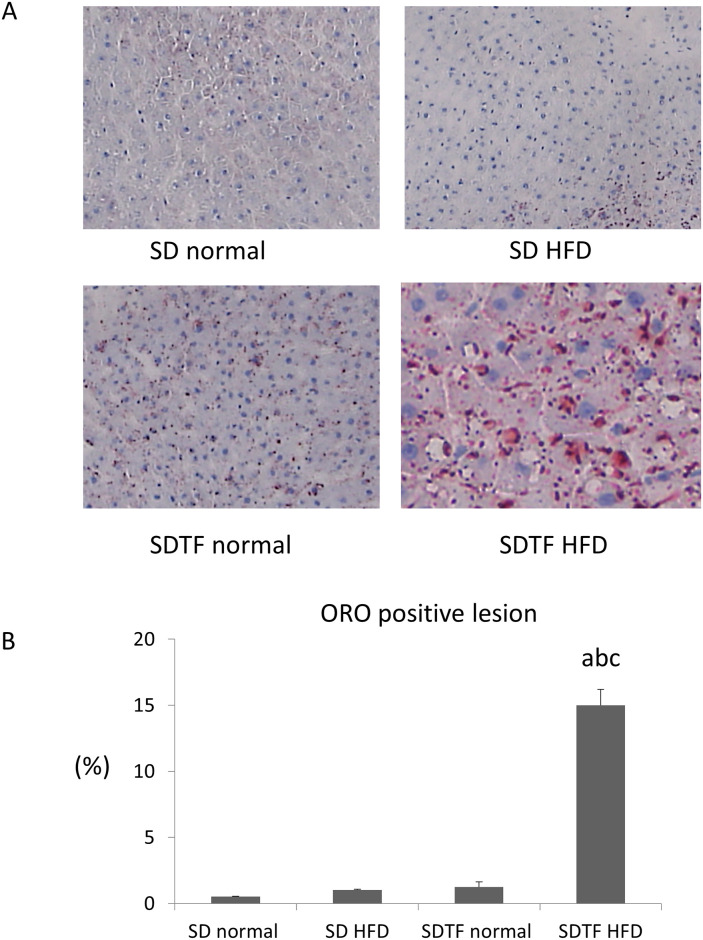
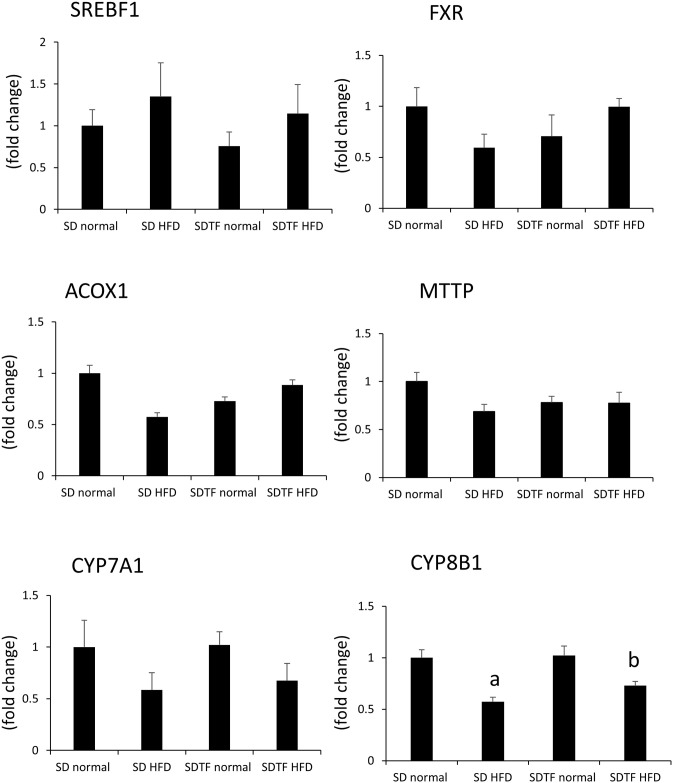
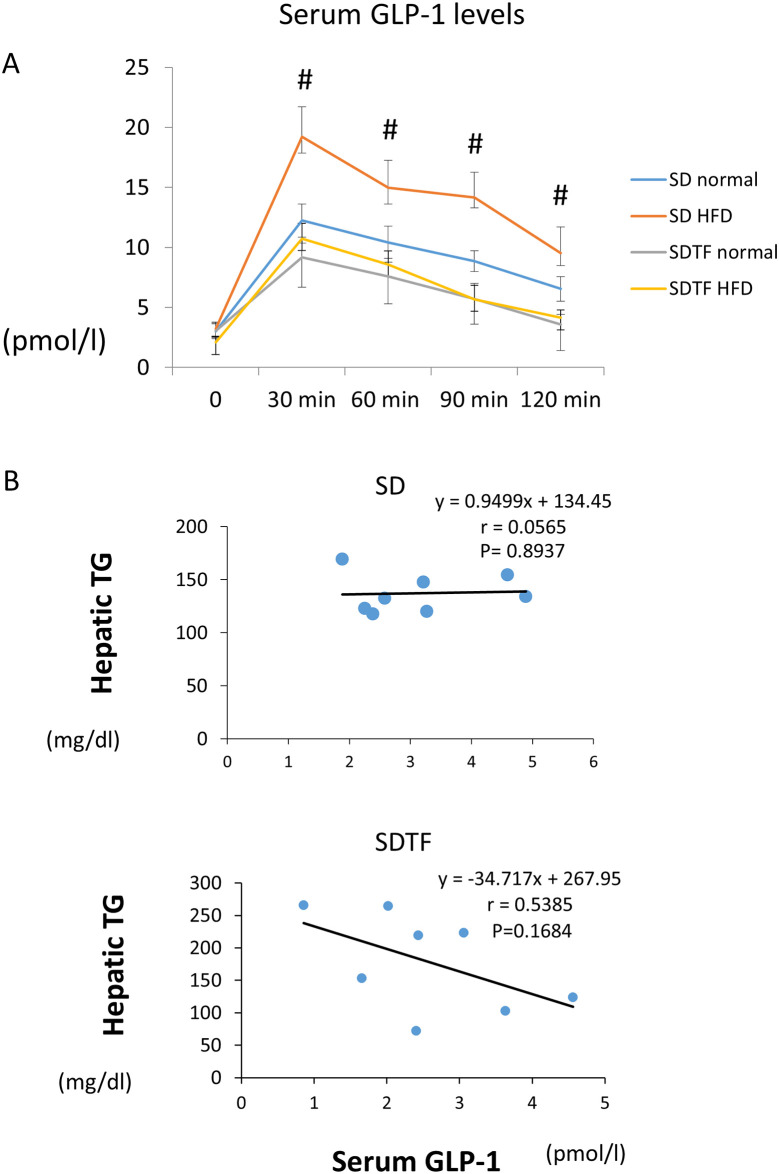
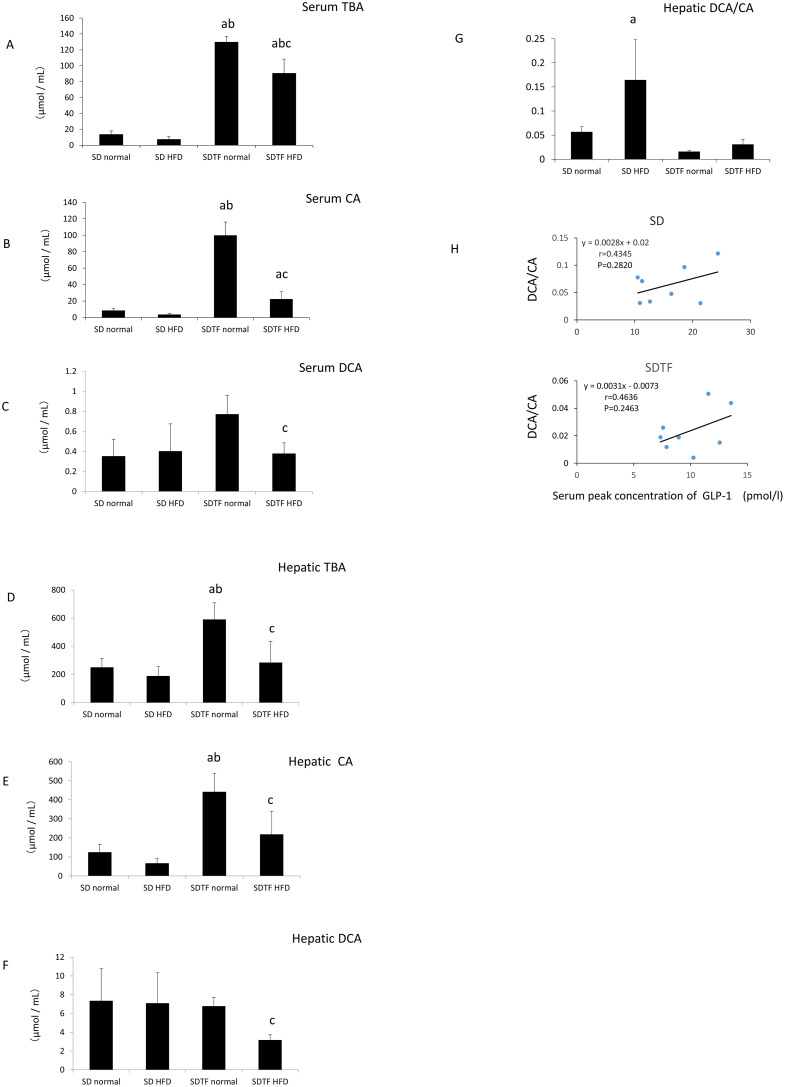
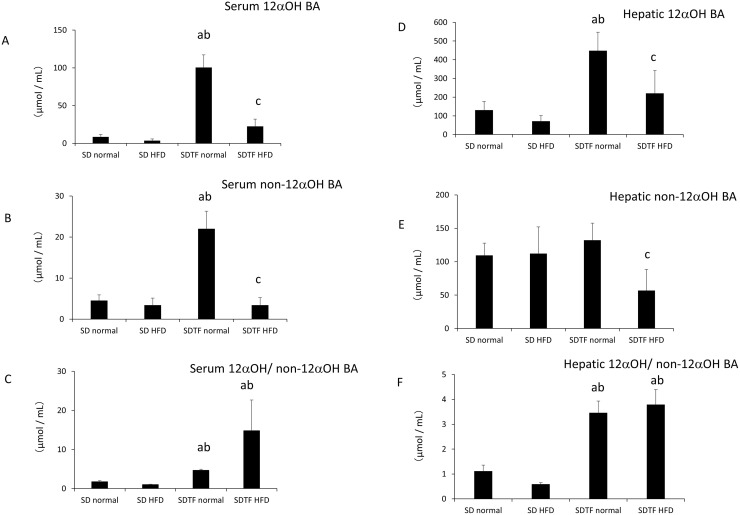
Bile acid has attracted attention as a signal transmission molecule in energy metabolism. Although a high-fat diet (HFD) or obesity is known to increase hepatic fat content and alter bile acid composition, the changes in bile acid composition due to HFD or obesity remain to be elucidated. We sought to examine the bile acid composition in high fat diet-induced non-alcoholic fatty liver disease (NAFLD) in obese diabetic rats. Eight-week-old male spontaneously diabetic Torii fatty (SDTF) rats or control rats were fed an HFD. Twelve weeks post the commencement of HFD, serum and hepatic bile acid compositions and serum GLP-1 levels, which is stimulated by the secondary bile acid deoxycholic acid (DCA), were measured. The correlation between the bile acid composition and serum GLP-1 levels was also examined. While serum and hepatic levels of cholic acid (CA), a primary bile acid, tended to decrease in HFD-fed control rats, they were significantly decreased in HFD-fed SDTF rats. Hepatic CYP8B1, which plays a role in CA synthesis, the mRNA levels were significantly decreased in HFD-fed control and SDTF rats. In contrast, while serum and hepatic DCA levels were not changed in HFD-fed control rats, they were decreased in HFD-fed SDTF rats. Hepatic DCA/CA did not change in HFD-fed SDTF rats, but significantly increased in HFD-fed control rats. While serum GLP-1 levels were not changed in SDTF rats, they were significantly increased in HFD-fed control rats. Hepatic DCA/CA tended to correlate with serum GLP-1 levels, which tended to negatively correlate with the hepatic triglyceride content in SDTF rats. These results indicate that relatively increased DCA might contribute to an increase in serum GLP-1 levels, which inhibits hepatic steatosis in NAFLD.
胆汁酸作为能量代谢中的信号转导分子受到关注。虽然高脂肪饮食(HFD)或肥胖已知会增加肝脂肪含量并改变胆汁酸组成,但 HFD 或肥胖引起的胆汁酸组成变化仍有待阐明。我们试图研究肥胖型糖尿病 Torii 肥胖(SDTF)大鼠中高脂肪饮食诱导的非酒精性脂肪性肝病(NAFLD)中的胆汁酸组成。将 8 周龄雄性自发性糖尿病 Torii 肥胖(SDTF)大鼠或对照大鼠喂饲 HFD。在开始 HFD 后 12 周,测量血清和肝胆汁酸组成以及血清 GLP-1 水平,后者受次级胆汁酸脱氧胆酸(DCA)刺激。还检查了胆汁酸组成与血清 GLP-1 水平之间的相关性。虽然 HFD 喂养对照大鼠的血清和肝胆酸(CA)水平呈下降趋势,但 HFD 喂养 SDTF 大鼠的 CA 水平明显下降。在 HFD 喂养的对照和 SDTF 大鼠中,CA 合成中起作用的肝 CYP8B1 的 mRNA 水平显着降低。相反,虽然 HFD 喂养的对照大鼠的血清和肝 DCA 水平没有改变,但 SDTF 大鼠的 DCA 水平降低。HFD 喂养的 SDTF 大鼠的肝 DCA/CA 没有改变,但 HFD 喂养的对照大鼠的 DCA/CA 显着增加。SDTF 大鼠的血清 GLP-1 水平没有改变,但 HFD 喂养的对照大鼠的血清 GLP-1 水平显着增加。肝 DCA/CA 与血清 GLP-1 水平呈正相关,而与 SDTF 大鼠肝甘油三酯含量呈负相关。这些结果表明,相对增加的 DCA 可能有助于增加血清 GLP-1 水平,从而抑制 NAFLD 中的肝脂肪变性。