School of Molecular and Cellular Biology, Faculty of Biological Sciences, University of Leeds, Leeds, West Yorkshir, UK.
Astbury Centre for Structural Molecular Biology, University of Leeds, Leeds, West Yorkshire, UK.
Oncogene. 2021 Mar;40(11):2112-2129. doi: 10.1038/s41388-021-01679-8. Epub 2021 Feb 24.
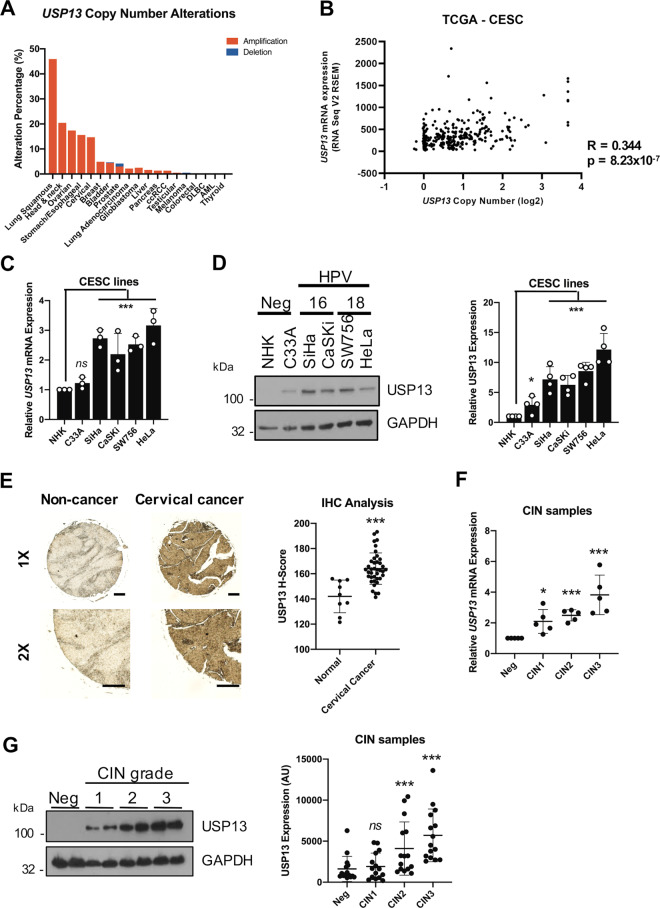
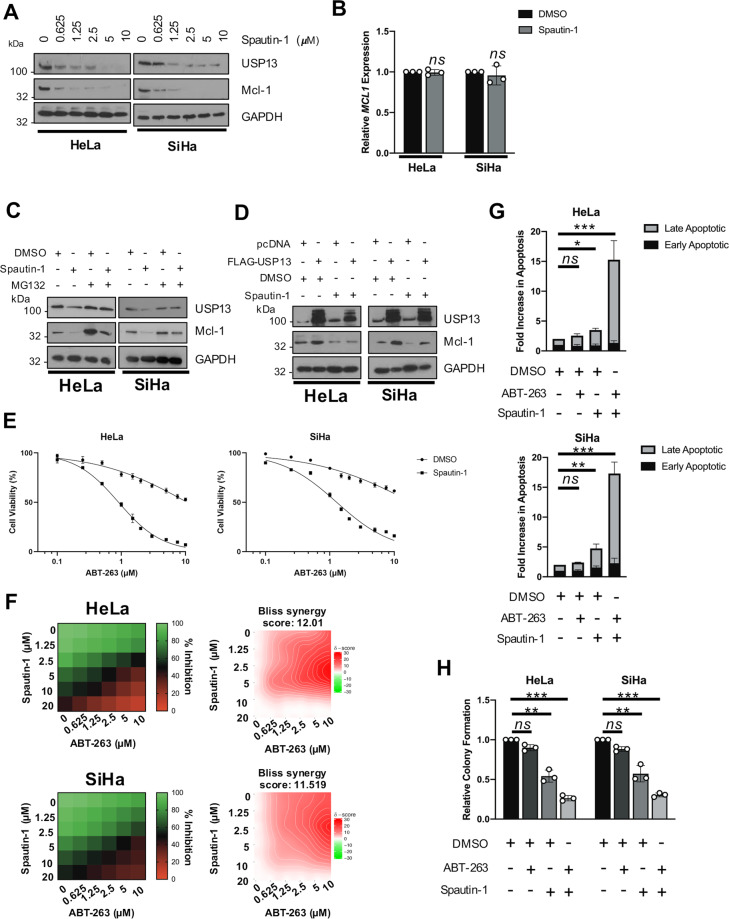
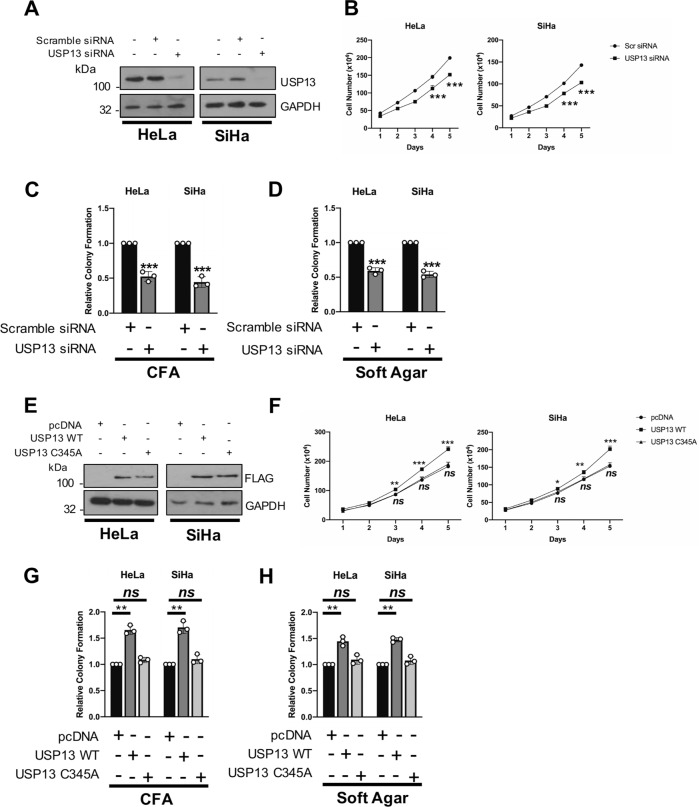
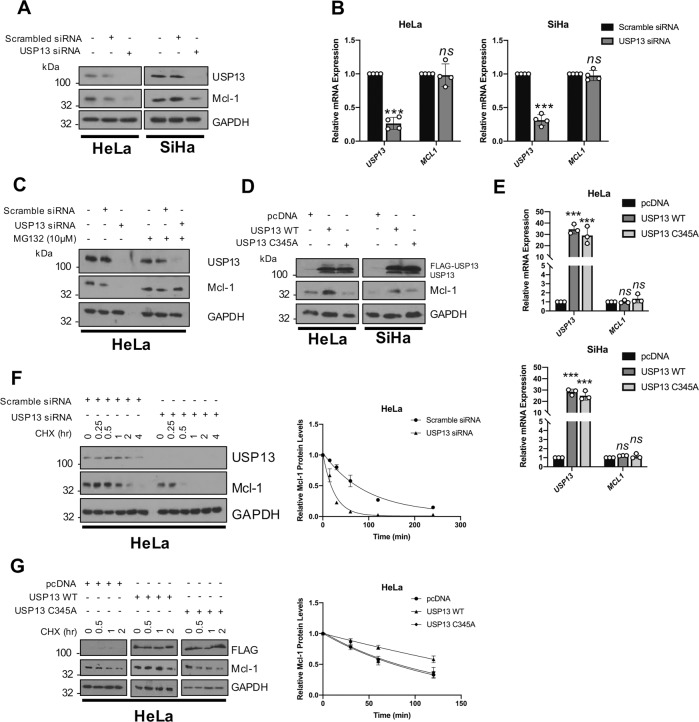
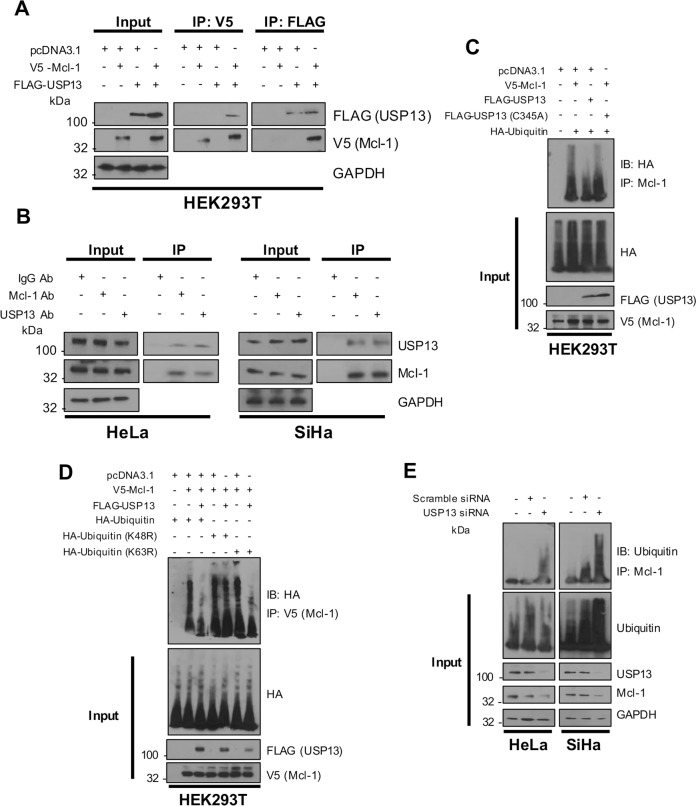
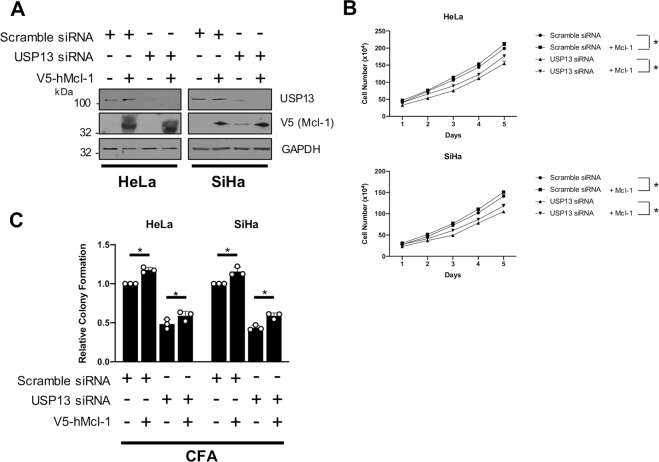
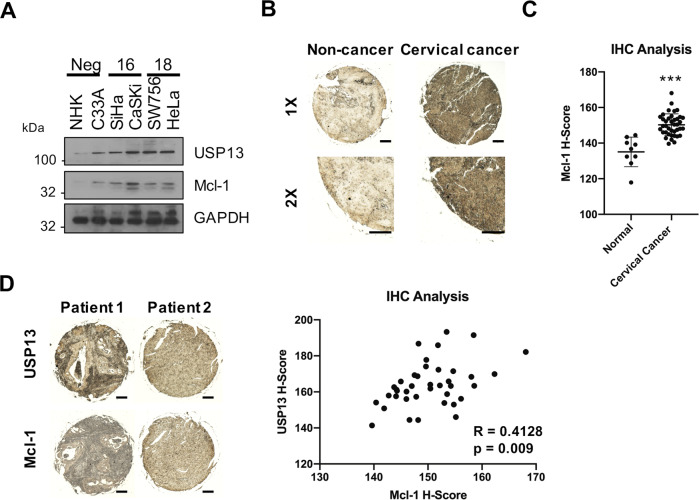
Protein ubiquitination is a critical regulator of cellular homeostasis. Aberrations in the addition or removal of ubiquitin can result in the development of cancer and key components of the ubiquitination machinery serve as oncogenes or tumour suppressors. An emerging target in the development of cancer therapeutics are the deubiquitinase (DUB) enzymes that remove ubiquitin from protein substrates. Whether this class of enzyme plays a role in cervical cancer has not been fully explored. By interrogating the cervical cancer data from the TCGA consortium, we noted that the DUB USP13 is amplified in ~15% of cervical cancer cases. We confirmed that USP13 expression was increased in cervical cancer cell lines, cytology samples from patients with cervical disease and in cervical cancer tissue. Depletion of USP13 inhibited cervical cancer cell proliferation. Mechanistically, USP13 bound to, deubiquitinated and stabilised Mcl-1, a pivotal member of the anti-apoptotic BCL-2 family. Furthermore, reduced Mcl-1 expression partially contributed to the observed proliferative defect in USP13 depleted cells. Importantly, the expression of USP13 and Mcl-1 proteins correlated in cervical cancer tissue. Finally, we demonstrated that depletion of USP13 expression or inhibition of USP13 enzymatic activity increased the sensitivity of cervical cancer cells to the BH3 mimetic inhibitor ABT-263. Together, our data demonstrates that USP13 is a potential oncogene in cervical cancer that functions to stabilise the pro-survival protein Mcl-1, offering a potential therapeutic target for these cancers.
蛋白质泛素化是细胞内稳态的关键调节因子。泛素的添加或去除异常可导致癌症的发生,而泛素化机制的关键组成部分可作为癌基因或肿瘤抑制因子。在癌症治疗药物的开发中,新兴的靶点是去除蛋白质底物上泛素的去泛素化酶(DUB)。这一类酶是否在宫颈癌中发挥作用尚未得到充分探索。通过对 TCGA 联盟的宫颈癌数据进行分析,我们注意到 DUB USP13 在约 15%的宫颈癌病例中被扩增。我们证实 USP13 在宫颈癌细胞系、宫颈癌患者的细胞学样本和宫颈癌组织中表达增加。USP13 的耗竭抑制了宫颈癌细胞的增殖。从机制上讲,USP13 与抗凋亡 BCL-2 家族的关键成员 Mcl-1 结合,使其去泛素化并稳定化。此外,Mcl-1 表达的降低部分导致了 USP13 耗竭细胞中观察到的增殖缺陷。重要的是,USP13 和 Mcl-1 蛋白在宫颈癌组织中的表达呈正相关。最后,我们证明了 USP13 表达的耗竭或 USP13 酶活性的抑制增加了宫颈癌细胞对 BH3 模拟抑制剂 ABT-263 的敏感性。总之,我们的数据表明 USP13 是宫颈癌中的一个潜在癌基因,其功能是稳定促生存蛋白 Mcl-1,为这些癌症提供了一个潜在的治疗靶点。