Rahimmanesh Ilnaz, Totonchi Mehdi, Khanahmad Hossein
Department of Genetics and Molecular Biology, School of Medicine, Isfahan University of Medical Sciences, Isfahan, I.R. Iran.
Department of Stem Cells and Developmental Biology, Royan Institute for Stem Cell Biology and Technology, ACECR, Tehran, I.R. Iran.
Res Pharm Sci. 2020 Oct 19;15(5):437-446. doi: 10.4103/1735-5362.297846. eCollection 2020 Oct.
The optimization of an effective non-viral gene delivery method for genetic manipulation of primary human T cells has been a major challenge in immunotherapy researches. Due to the poor transfection efficiency of conventional methods in T cells, there has been an effort to increase the transfection rate in these cells. Protamine is an FDA-approved compound with a documented safety profile that enhances DNA condensation for gene delivery.
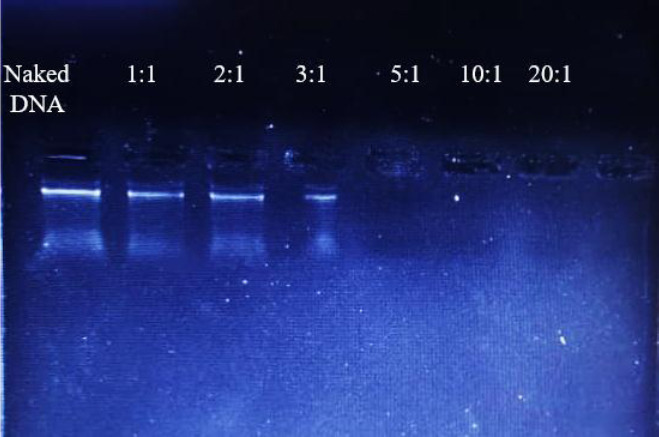
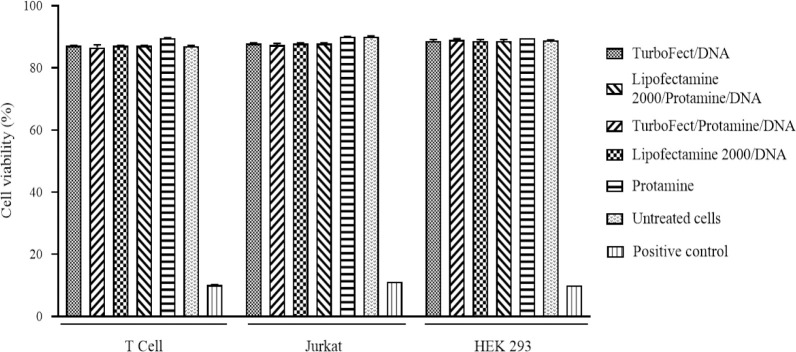
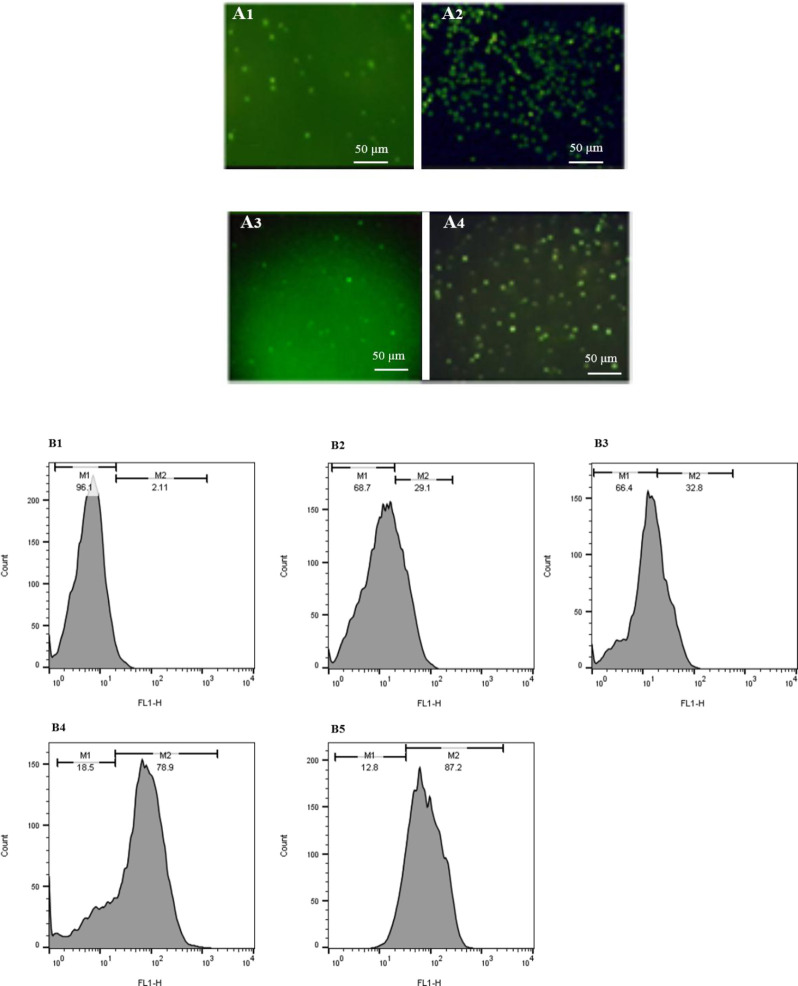
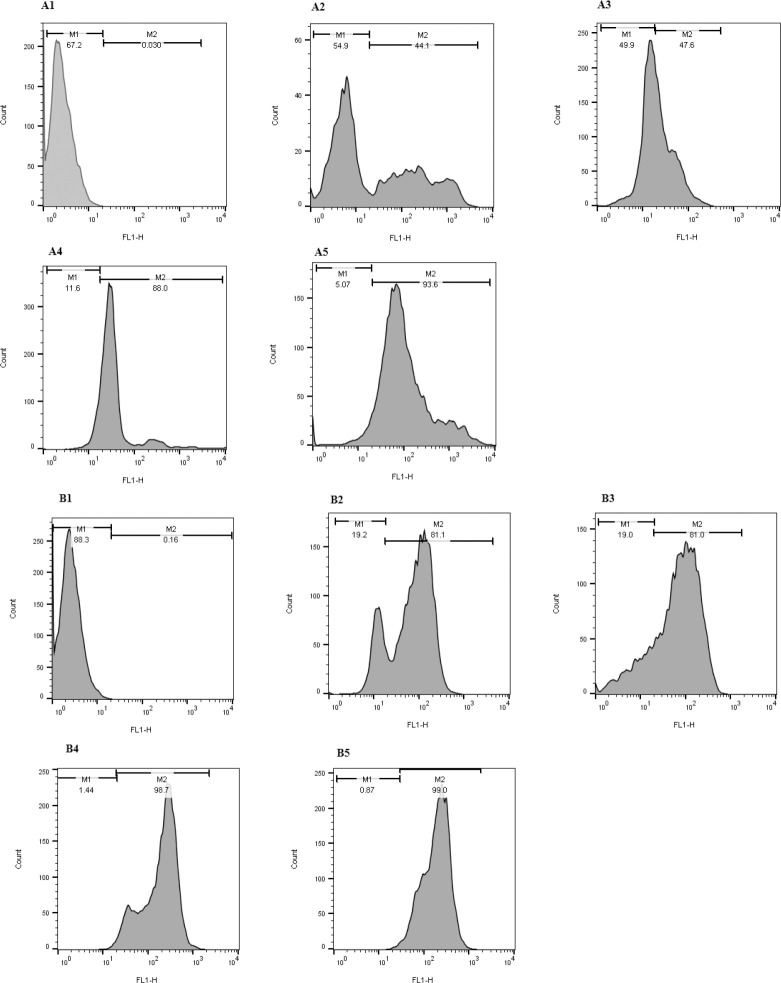
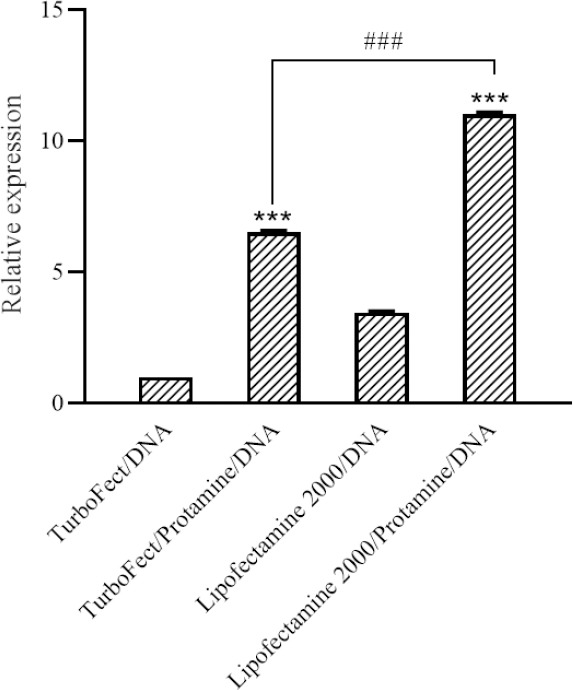
In this study, the effect of protamine sulfate on the transfection efficiency of standard transfection reagents, was evaluated to transfect primary human T cells. In this regard, pre-condensation of DNA was applied using protamine, and the value of the zeta potential of DNA/protamine/cargo complexes was determined. T cells were transfected with DNA/protamine/cargo complexes. The transfection efficiency rate was evaluated by flow cytometry. Also, the green fluorescent protein expression level and cytotoxicity of each complex were identified using real-time polymerase chain reaction and MTT assay, respectively.
FINDINGS/RESULTS: Our results demonstrated that protamine efficiently increases the positive charge of DNA/cargo complex without any cytotoxic effect on the primary human T cells. We observed that the transfection efficiency in DNA/protamine/ Lipofectamine 2000 and DNA/protamine/TurboFect™ was 87.2% and 78.9%, respectively, while transfection of T cells by Lipofectamine 2000 and TurboFect™ would not result in sufficient transfection.
Protamine sulfate enhanced the transfection rate of T cells; and could be a promising non-viral gene delivery method to achieve a safe, rapid, cost-effective, and efficient system which will be further applied in gene therapy and T cells manipulation methods.
优化一种有效的非病毒基因递送方法用于原代人T细胞的基因操作,一直是免疫治疗研究中的一项重大挑战。由于传统方法在T细胞中的转染效率较低,人们一直在努力提高这些细胞的转染率。鱼精蛋白是一种经美国食品药品监督管理局(FDA)批准的化合物,具有已记录的安全概况,可增强用于基因递送的DNA凝聚作用。
在本研究中,评估了硫酸鱼精蛋白对标准转染试剂转染原代人T细胞效率的影响。在这方面,使用鱼精蛋白对DNA进行预凝聚,并测定DNA/鱼精蛋白/载体复合物的ζ电位值。用DNA/鱼精蛋白/载体复合物转染T细胞。通过流式细胞术评估转染效率。此外,分别使用实时聚合酶链反应和MTT法鉴定每种复合物的绿色荧光蛋白表达水平和细胞毒性。
我们的结果表明,鱼精蛋白可有效增加DNA/载体复合物的正电荷,且对原代人T细胞无任何细胞毒性作用。我们观察到,DNA/鱼精蛋白/脂质体2000和DNA/鱼精蛋白/TurboFect™ 的转染效率分别为87.2%和78.9%,而用脂质体2000和TurboFect™ 转染T细胞则不会产生足够的转染效果。
硫酸鱼精蛋白提高了T细胞的转染率;可能是一种有前景的非病毒基因递送方法,可实现一个安全、快速、经济高效的系统,该系统将进一步应用于基因治疗和T细胞操作方法。