Laboratory of Vaccine and Antibody Engineering, Beijing Institute of Biotechnology, No. 20, Dongdajie street, Fengtai District, Beijing, 100071, China.
Institute of Health Sciences, Anhui University, No. 111, Jiulong Road, Hefei, 230601, China.
BMC Biotechnol. 2018 Jan 30;18(1):4. doi: 10.1186/s12896-018-0419-0.
Effective gene-delivery systems for primary human T cell engineering are useful tools for both basic research and clinical immunotherapy applications. Pseudovirus-based systems and electro-transfection are the most popular strategies for genetic material transduction. Compared with viral-particle-mediated approaches, electro-transfection is theoretically safer, because it does not promote transgene integration into the host genome. Additionally, the simplicity and speed of the procedure increases the attractiveness of electroporation. Here, we developed and optimized an electro-transfection method for the production of engineered chimeric antigen receptor (CAR)-T cells.
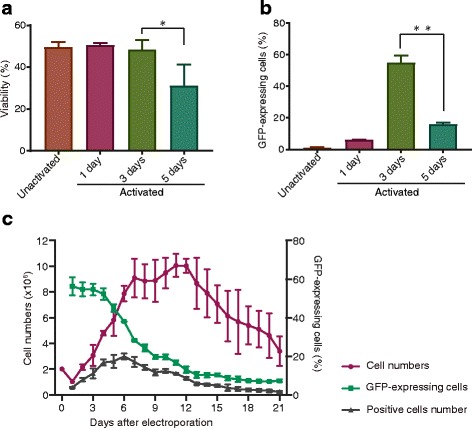
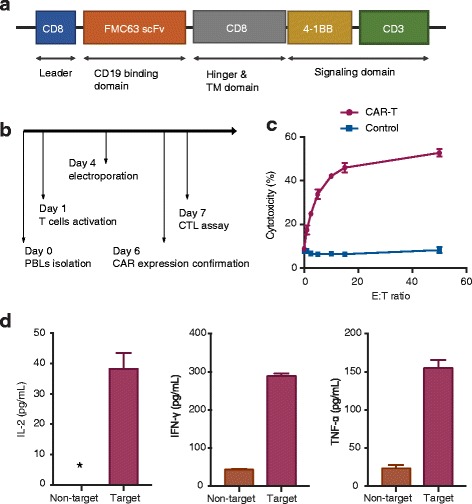
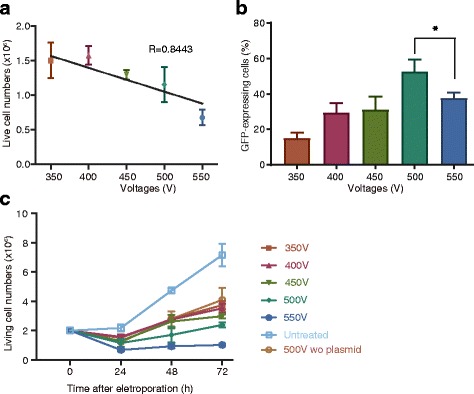
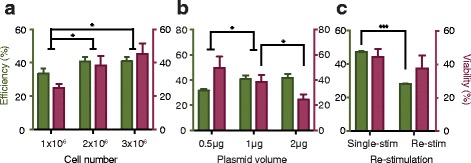
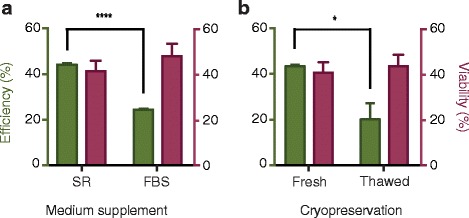
Stimulation of T cells had the greatest effect on their transfection, with stimulation of cells for up to 3 days substantially improving transfection efficiency. Additionally, the strength of the external electric field, input cell number, and the initial amount of DNA significantly affected transfection performance. The voltage applied during electroporation affected plasmid permeation and was negatively correlated with the number of viable cells after electroporation. Moreover, higher plasmid concentration increased the proportion of positively transfected cells, but decreased cell viability, and for single-activated cells, higher cell density enhanced their viability. We evaluated the effects of two clinically relevant factors, serum supplementation in the culture medium and cryopreservation immediately after the isolation of peripheral blood lymphocytes. Our findings showed that our protocol performed well using xeno-free cultured, fresh T cells, with application resulting in a lower but acceptable transfection efficiency of cells cultured with fetal bovine serum or thawed cells. Furthermore, we described an optimized procedure to generate CAR-T cells within 6 days and that exhibited cytotoxicity toward targeted cells.
Our investigation of DNA electro-transfection for the use in human primary T cell engineering established and validated an optimized method for the construction of functional CAR-T cells.
有效的原发性人 T 细胞工程基因传递系统是基础研究和临床免疫治疗应用的有用工具。假病毒为基础的系统和电转染是遗传物质转导的最流行策略。与病毒颗粒介导的方法相比,电转染在理论上更安全,因为它不会促进转基因整合到宿主基因组中。此外,该过程的简单性和速度增加了电穿孔的吸引力。在这里,我们开发并优化了用于生产工程嵌合抗原受体(CAR)-T 细胞的电转染方法。
T 细胞的刺激对其转染效果最大,刺激细胞长达 3 天可显著提高转染效率。此外,外部电场强度、输入细胞数量和初始 DNA 量对转染性能有显著影响。电穿孔过程中施加的电压会影响质粒渗透,与电穿孔后存活细胞的数量呈负相关。此外,更高的质粒浓度会增加阳性转染细胞的比例,但会降低细胞活力,对于单个激活的细胞,更高的细胞密度会提高其活力。我们评估了两种临床相关因素的影响,即培养基中血清补充和外周血淋巴细胞分离后立即冷冻保存。我们的研究结果表明,我们的方案在使用无动物源培养的新鲜 T 细胞时表现良好,应用该方案可降低但可接受地转染培养有胎牛血清或解冻细胞的细胞的转染效率。此外,我们描述了一种优化的程序,可在 6 天内生成具有靶向细胞毒性的 CAR-T 细胞。
我们对 DNA 电转染在人原发性 T 细胞工程中的应用进行了研究,建立并验证了一种优化的方法,用于构建功能性 CAR-T 细胞。