Pandeya Prakash Raj, Lamichhane Ramakanta, Lee Kyung-Hee, Lamichhane Gopal, Kim Se-Gun, Jung Hyun-Ju
Department of Oriental Pharmacy and Wonkwang-Oriental Medicines Research Institute, Wonkwang University, Sinyong-Dong, Iksan 570-749, Republic of Korea.
Department of Agricultural Biology, National Academy of Agricultural Science, Rural Development Administration, Wanju 566-851, Republic of Korea.
Evid Based Complement Alternat Med. 2021 Feb 8;2021:8854915. doi: 10.1155/2021/8854915. eCollection 2021.
Currently, obesity and its comorbidities have become a serious threat to human health necessitating urgent development of safe and effective therapy for their management.
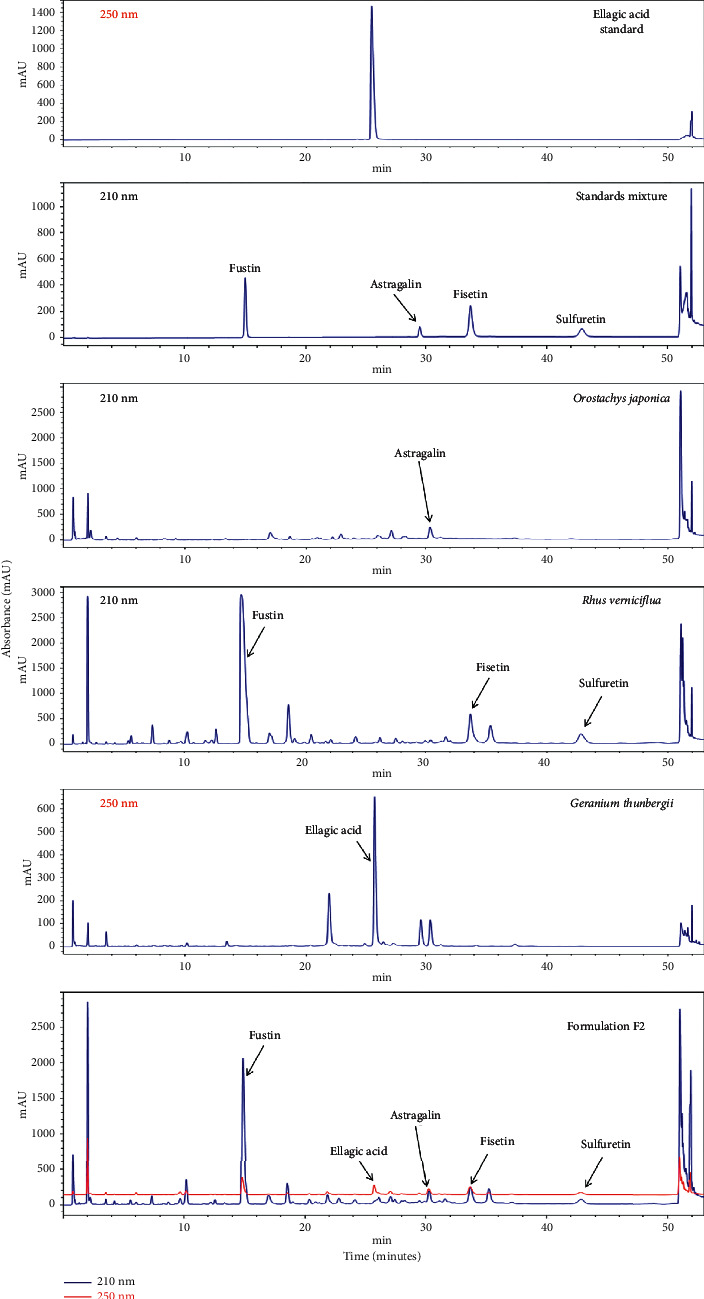
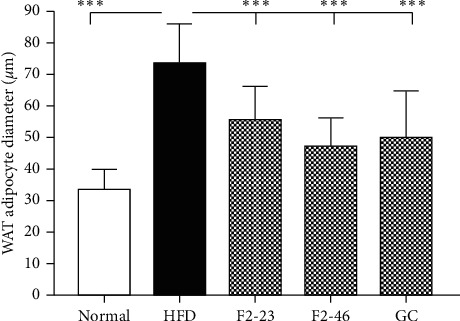
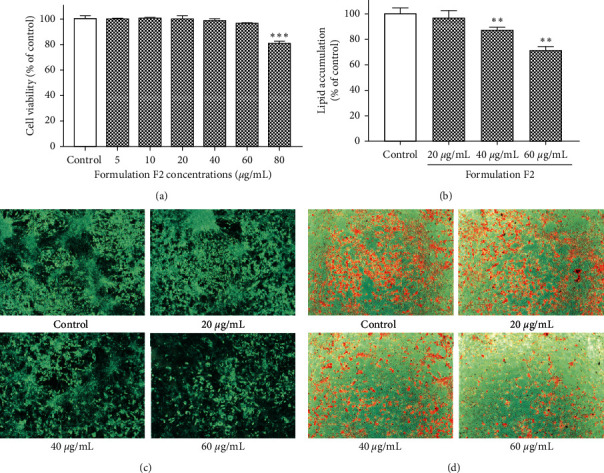
In this research, a novel polyherbal formulation (F2) was prepared by mixing specific proportions of royal jelly and lemon juice with ethanol extracts of , , and . The antioxidant activity was assessed using DPPH and ABTS assay methods. The antiobesity potential of the F2 was assessed using 3T3-L1 fibroblast and using a high-fat diet (HFD) fed C57BL/6J mice model. F2 was administered in mice at the dose of 23 mg/kg and 46 mg/kg, twice daily by oral gavage. A well-accepted antiobesity agent, (GC), at 200 mg/kg was used as a positive control.
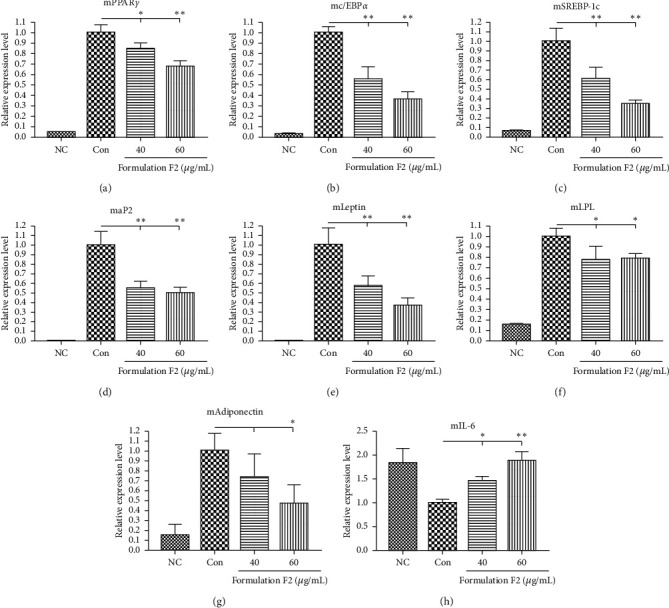
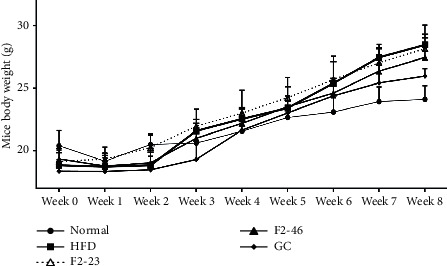
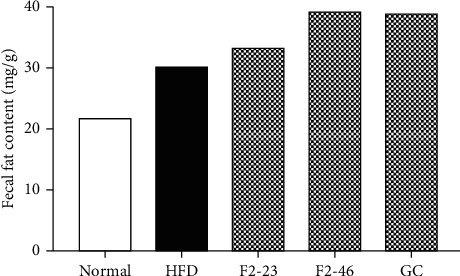
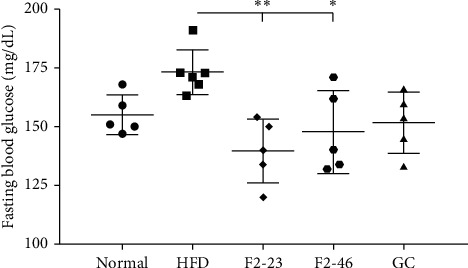
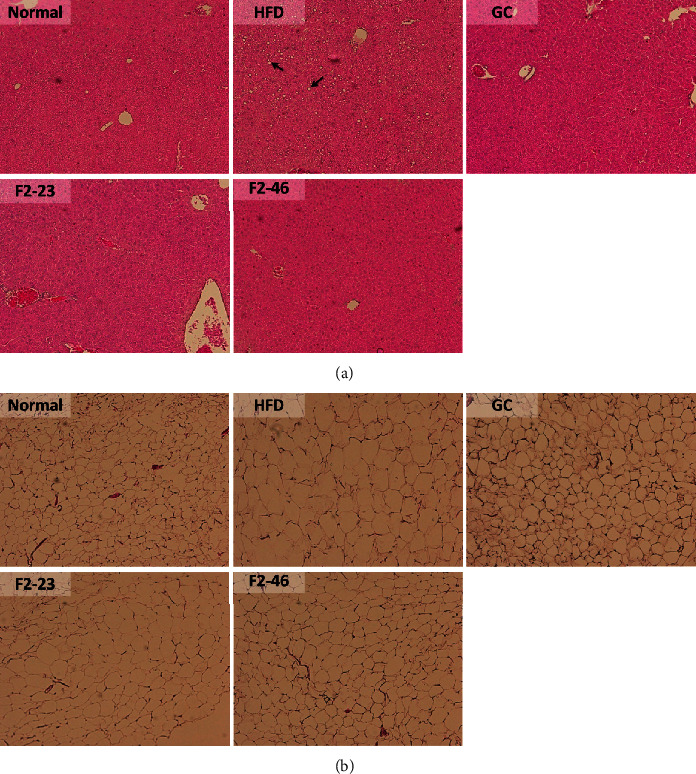
F2 was observed to exhibit synergistic antiadipogenic activity in 3T3-L1 cells. This inhibition was reinforced by the downregulation of specific adipogenic transcription factors. Furthermore, F2 was also found to reduce mice body weight gain, food efficiency ratio, fasting blood glucose level, fat deposition into the liver, and mass of white adipose tissue. F2 also played a role in the excretion of fat consumed by the mice. For most of the assays performed, the F2 (46 mg/kg) was comparable to the positive control GC (200 mg/kg). In addition, potential and synergistic antioxidant activity was observed on F2.
The results revealed that the formulation F2 exhibited potential antiobesity activity through the inhibition of adipocyte differentiation, dietary fat absorption, and reduction of free fatty acids deposition in tissues.
目前,肥胖及其合并症已成为对人类健康的严重威胁,迫切需要开发安全有效的治疗方法来进行管理。
在本研究中,通过将特定比例的蜂王浆、柠檬汁与[具体植物名称1]、[具体植物名称2]、[具体植物名称3]的乙醇提取物混合,制备了一种新型多草药配方(F2)。使用DPPH和ABTS测定方法评估抗氧化活性。使用3T3-L1成纤维细胞并采用高脂饮食(HFD)喂养的C57BL/6J小鼠模型评估F2的抗肥胖潜力。F2以23毫克/千克和46毫克/千克的剂量通过口服灌胃法给予小鼠,每日两次。一种公认的抗肥胖药物[具体药物名称](GC),以200毫克/千克的剂量用作阳性对照。
观察到F2在3T3-L1细胞中表现出协同抗脂肪生成活性。这种抑制作用通过特定脂肪生成转录因子的下调得到加强。此外,还发现F2可降低小鼠体重增加、食物效率比、空腹血糖水平、肝脏脂肪沉积以及白色脂肪组织质量。F2还在小鼠消耗脂肪的排泄中发挥作用。对于所进行的大多数试验,F2(46毫克/千克)与阳性对照GC(200毫克/千克)相当。此外,观察到F2具有潜在的协同抗氧化活性。
结果表明,配方F2通过抑制脂肪细胞分化、饮食脂肪吸收以及减少组织中游离脂肪酸沉积,表现出潜在的抗肥胖活性。