Department of Anesthesiology, Tianjin Medical University Cancer Institute and Hospital, National Clinical Research Center for Cancer, Key Laboratory of Cancer Prevention and Therapy, Tianjin, Tianjin's Clinical Research Center for Cancer, Key Laboratory of Cancer Immunology and Biotherapy, Tianjin 300060, China.
Department of Immunology, Tianjin Medical University Cancer Institute and Hospital, National Clinical Research Center for Cancer, Key Laboratory of Cancer Prevention and Therapy, Tianjin, Tianjin's Clinical Research Center for Cancer, Key Laboratory of Cancer Immunology and Biotherapy, Tianjin 300060, China.
Cancer Biol Med. 2021 Feb 15;18(1):155-171. doi: 10.20892/j.issn.2095-3941.2020.0442.
Patients with cancer pain are highly dependent on morphine analgesia, but studies have shown a negative correlation between morphine demand and patient outcomes. The long-term use of morphine may result in abnormally elevated serum morphine-3-glucuronide (M3G) levels. Hence, the effects of M3G on tumor progression are worth studying.
The effects of M3G on PD-L1 expressions in human non-small cell lung cancer (NSCLC) cell lines were first evaluated. Activation of TLR4 downstream pathways after M3G treatment was then determined by Western blot. The effects of M3G on human cytotoxic T lymphocytes (CTL) cytotoxicity and INF-γ release was also detected. Finally, the LLC murine lung adenocarcinoma cell line were used to establish a murine lung cancer model, and the effects of M3G on tumor growth and metastasis were determined.
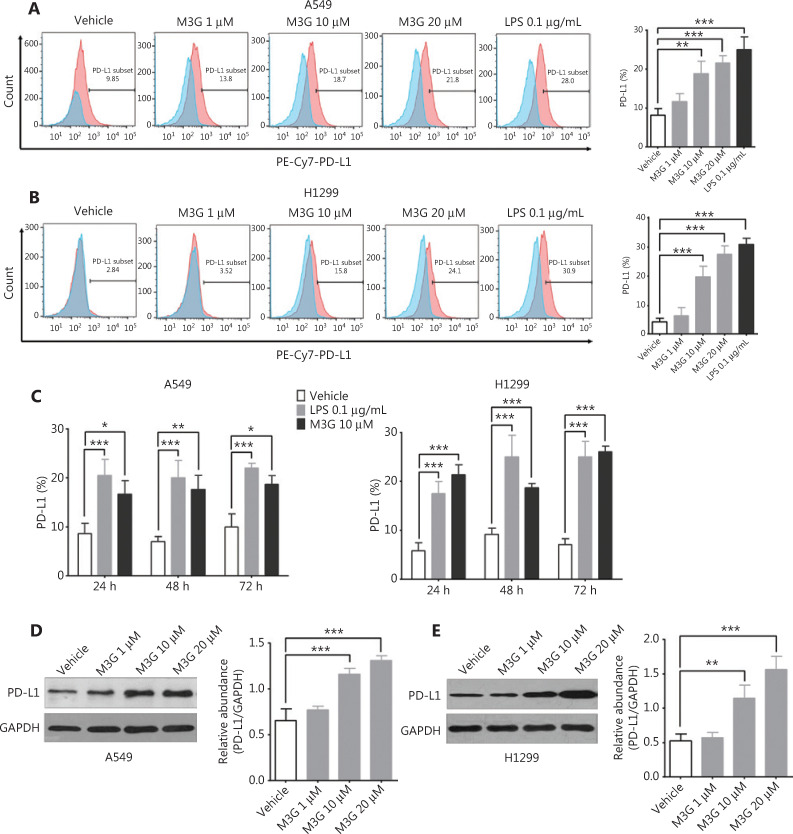
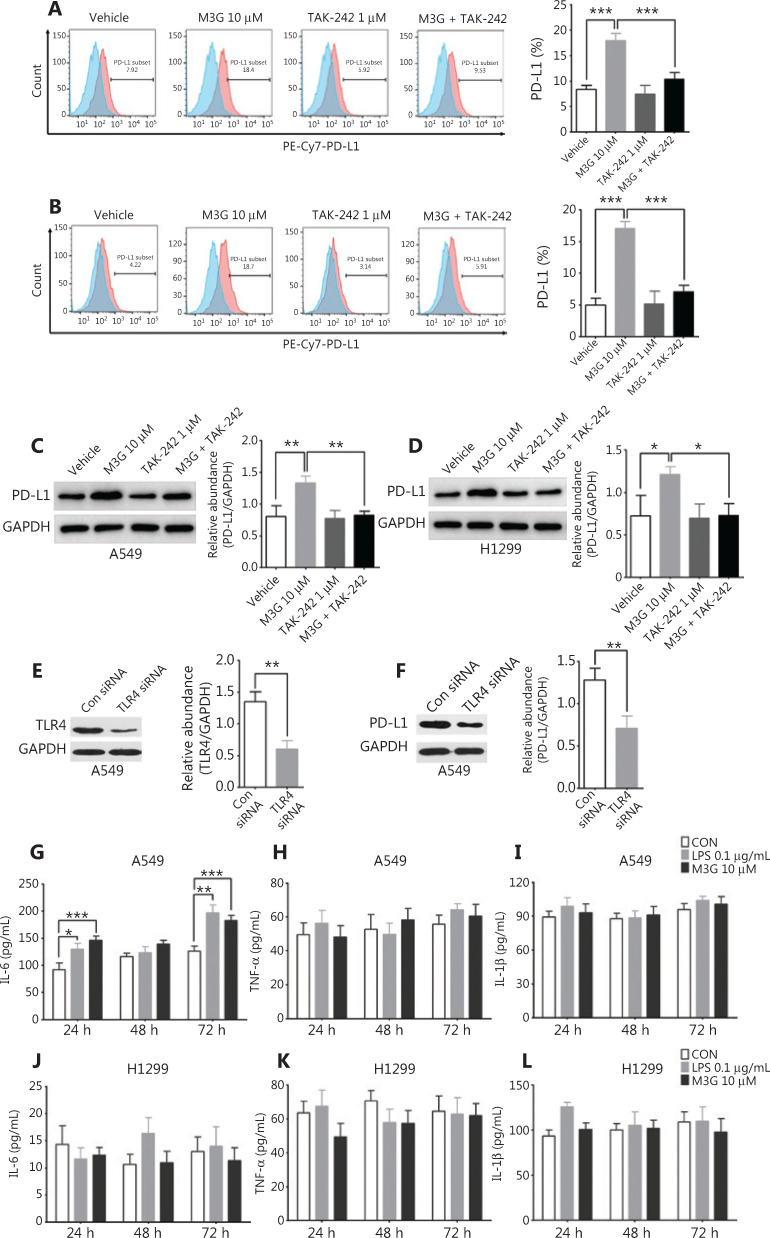
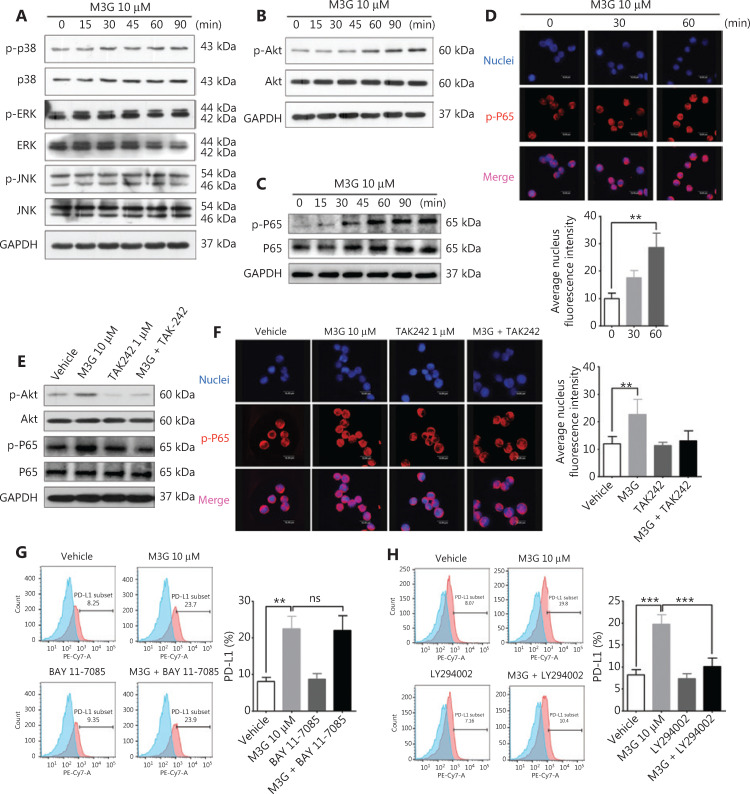
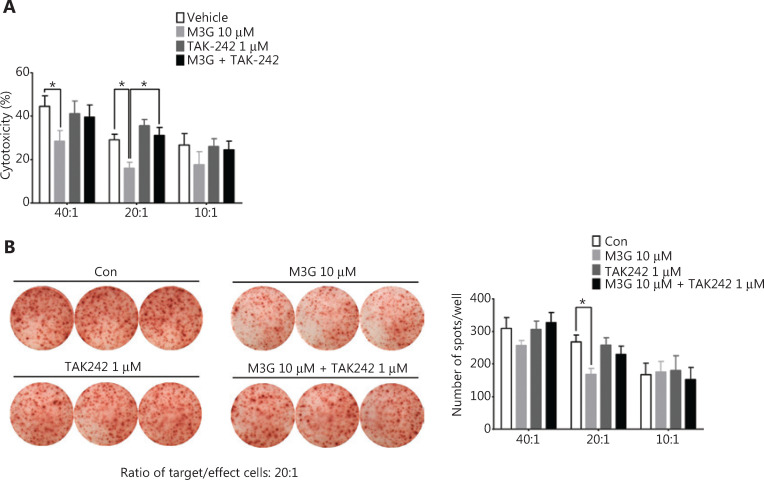
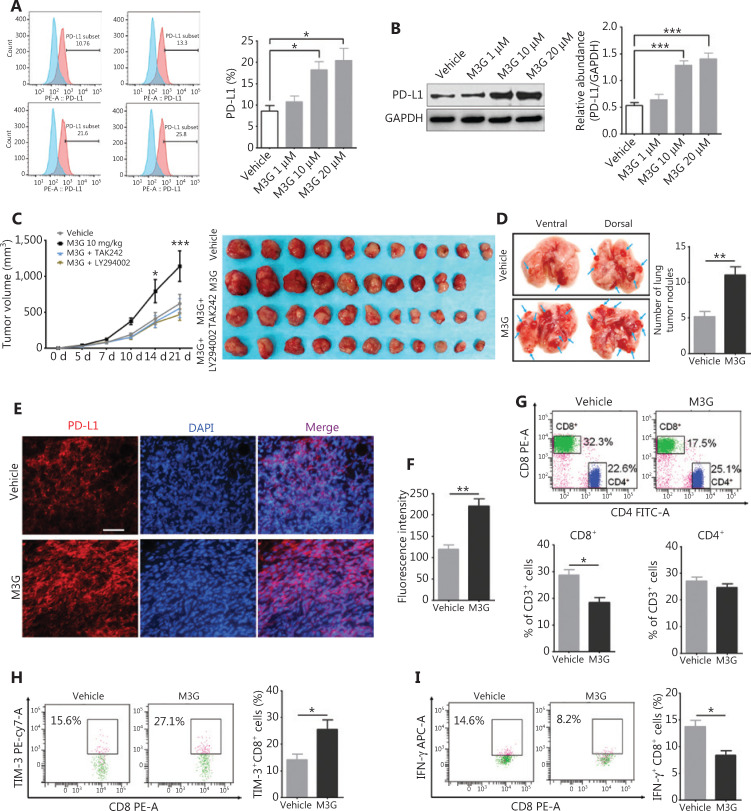
M3G promoted the expressions of PD-L1 in the A549 and H1299 cell lines in a TLR4-dependent manner ( < 0.05). M3G activated the PI3K and the NFκB signaling pathways, and this effect was antagonized by a TLR4 pathway inhibitor. A PI3K pathway inhibitor reversed the M3G-mediated PD-L1 upregulation. M3G inhibited the cytotoxicity of CTL on A549 cells and decreased the level of INF-γ. Repeated M3G intraperitoneal injections promoted LLC tumor growth and lung metastasis through the upregulation of tumor expressed PD-L1 and the reduction of CTL in the tumor microenvironment.
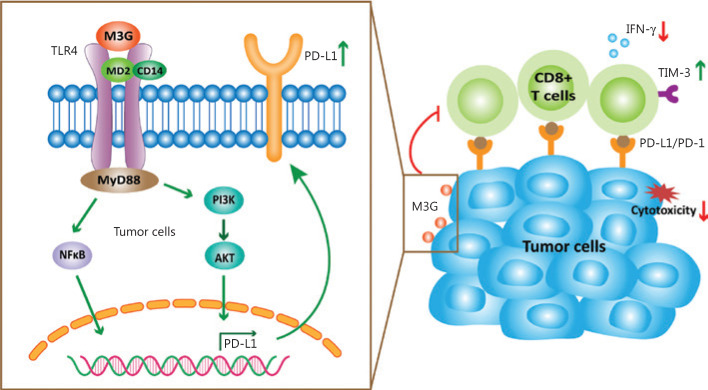
M3G specifically activated TLR4 in NSCLC cells and upregulated PD-L1 expression through the PI3K signaling pathway, thereby inhibiting CTL cytotoxicity and finally promoting tumor immune escape.
癌症疼痛患者高度依赖吗啡镇痛,但研究表明吗啡需求与患者预后呈负相关。吗啡的长期使用可能导致血清吗啡-3-葡糖苷酸(M3G)水平异常升高。因此,研究 M3G 对肿瘤进展的影响是值得的。
首先评估 M3G 对人非小细胞肺癌(NSCLC)细胞系中 PD-L1 表达的影响。然后通过 Western blot 确定 M3G 处理后 TLR4 下游途径的激活。还检测了 M3G 对人细胞毒性 T 淋巴细胞(CTL)细胞毒性和 INF-γ释放的影响。最后,使用 LLC 小鼠肺腺癌细胞系建立小鼠肺癌模型,确定 M3G 对肿瘤生长和转移的影响。
M3G 以 TLR4 依赖的方式促进 A549 和 H1299 细胞系中 PD-L1 的表达(<0.05)。M3G 激活了 PI3K 和 NFκB 信号通路,而 TLR4 通路抑制剂拮抗了这种作用。PI3K 通路抑制剂逆转了 M3G 介导的 PD-L1 上调。M3G 抑制 CTL 对 A549 细胞的细胞毒性,并降低 INF-γ水平。重复 M3G 腹腔注射通过上调肿瘤表达的 PD-L1 和减少肿瘤微环境中的 CTL 来促进 LLC 肿瘤生长和肺转移。
M3G 特异性激活 NSCLC 细胞中的 TLR4,并通过 PI3K 信号通路上调 PD-L1 表达,从而抑制 CTL 细胞毒性,最终促进肿瘤免疫逃逸。