Institute for Emergency Medicine and Department of Anesthesiology and Intensive Care Medicine, University Hospital Schleswig-Holstein, Campus Kiel, Arnold-Heller-Straße 3, 24105, Kiel, Germany.
Elektromedizinische Geräte G. Stemple GmbH, Kaufering, Germany.
Scand J Trauma Resusc Emerg Med. 2021 Feb 25;29(1):39. doi: 10.1186/s13049-021-00855-9.
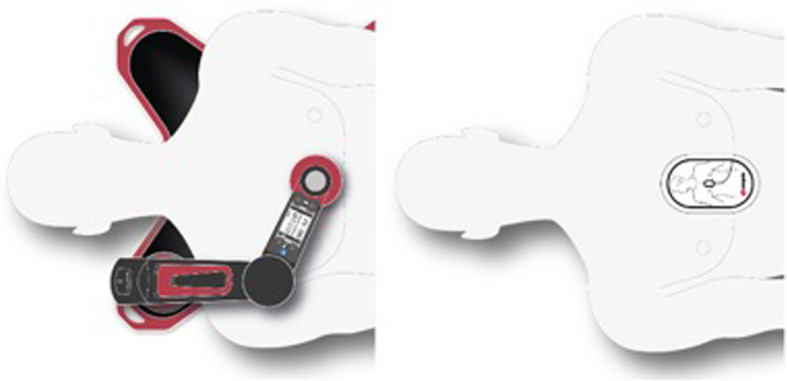
The effect of mechanical CPR is diversely described in the literature. Different mechanical CPR devices are available. The corpuls cpr is a new generation of piston-driven devices and was launched in 2015. The COMPRESS-trial analyzes quality of chest compression and CPR-related injuries in cases of mechanical CPR by the corpuls cpr and manual CPR.
This article describes the design and study protocol of the COMPRESS-trial. This observational multi-center study includes all patients who suffered an out-of-hospital cardiac arrest (OHCA) where CPR is attempted in four German emergency medical systems (EMS) between January 2020 and December 2022. EMS treatment, in-hospital-treatment and outcome are anonymously reported to the German Resuscitation Registry (GRR). This information is linked with data from the defibrillator, the feedback system and the mechanical CPR device for a complete dataset. Primary endpoint is chest compression quality (complete release, compression rate, compression depth, chest compression fraction, CPR-related injuries). Secondary endpoint is survival (return of spontaneous circulation (ROSC), admission to hospital and survival to hospital discharge). The trial is sponsored by GS Elektromedizinische Geräte G. Stemple GmbH.
This observational multi-center study will contribute to the evaluation of mechanical chest compression devices and to the efficacy and safety of the corpuls cpr.
DRKS, DRKS-ID DRKS00020819 . Registered 31 July 2020.
机械心肺复苏术的效果在文献中有不同的描述。不同的机械心肺复苏术设备可供选择。Corpuls cpr 是新一代活塞驱动设备,于 2015 年推出。COMPRESS 试验分析了 Corpuls cpr 和手动心肺复苏术在机械心肺复苏术中的胸外按压质量和与心肺复苏相关的损伤。
本文描述了 COMPRESS 试验的设计和研究方案。这是一项观察性多中心研究,包括 2020 年 1 月至 2022 年 12 月期间在四个德国紧急医疗服务系统(EMS)中尝试心肺复苏术的所有院外心脏骤停(OHCA)患者。EMS 治疗、院内治疗和结局将匿名报告给德国复苏登记处(GRR)。这些信息与除颤器、反馈系统和机械心肺复苏术设备的数据相关联,以获得完整的数据集。主要终点是胸外按压质量(完全释放、按压频率、按压深度、胸外按压分数、与心肺复苏相关的损伤)。次要终点是生存(自主循环恢复(ROSC)、住院和存活至出院)。该试验由 GS Elektromedizinische Geräte G. Stemple GmbH 赞助。
这项观察性多中心研究将有助于评估机械胸外按压设备的效果,以及 Corpuls cpr 的疗效和安全性。
DRKS,DRKS-ID DRKS00020819。于 2020 年 7 月 31 日注册。