Institute for Emergency Medicine and Department of Anaesthesiology and Intensive Care Medicine, Schleswig-Holstein University Hospital, Campus Kiel, Kiel, Germany.
Department of Anaesthesiology, Heidelberg University Hospital, Heidelberg, Germany.
PLoS One. 2019 Jan 2;14(1):e0208113. doi: 10.1371/journal.pone.0208113. eCollection 2019.
Cardiac arrest is an event with a limited prognosis which has not substantially changed since the first description of cardiopulmonary resuscitation (CPR) in 1960. A promising new treatment approach may be mechanical CPR devices (mechanical CPR).
In a retrospective analysis of the German Resuscitation Registry between 2007-2014, we examined the outcome after using mechanical CPR on return of spontaneous circulation (ROSC) in adults with out-of-hospital cardiac arrest (OHCA). We compared mechanical CPR to manual CPR. According to preclinical risk factors, we calculated the predicted ROSC-after-cardiac-arrest (RACA) score for each group and compared it to the rate of ROSC observed. Using multivariate analysis, we adjusted the influence of the devices' application on ROSC for epidemiological factors and therapeutic measures.
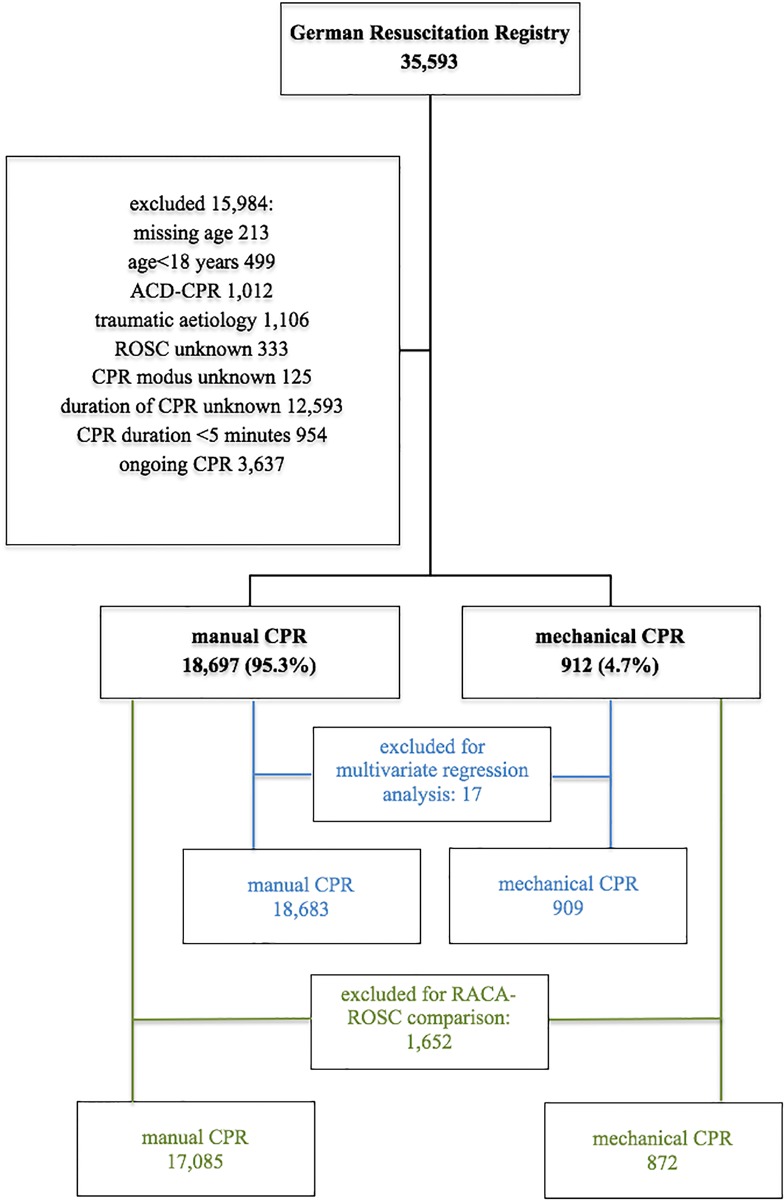
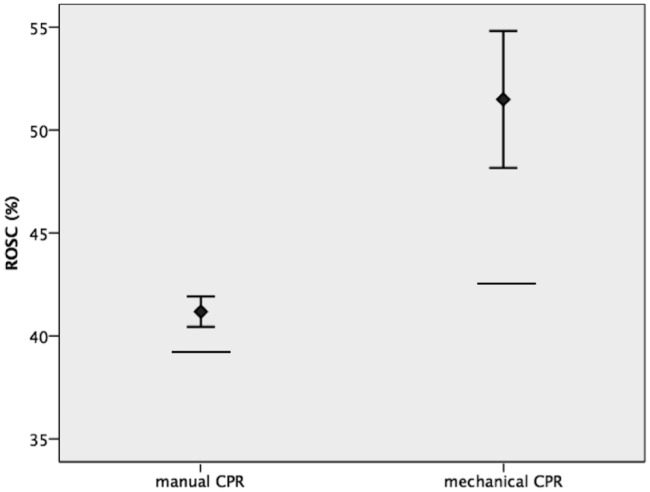
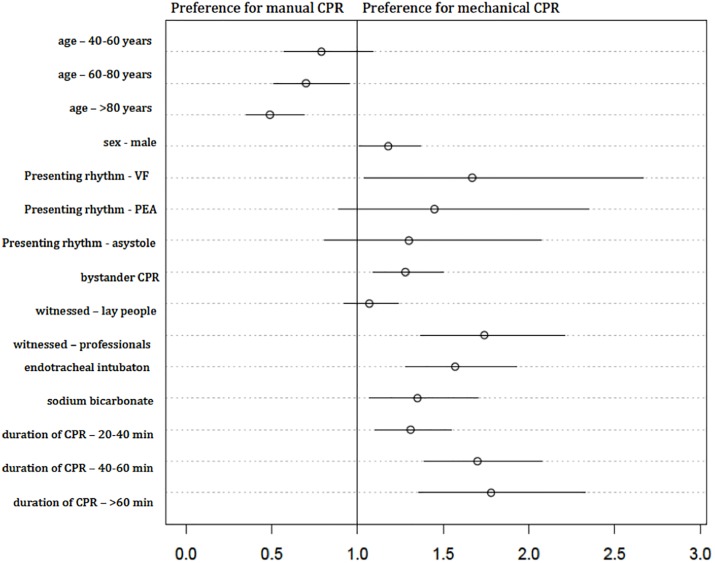
We included 19,609 patients in the study. ROSC was achieved in 51.5% of the mechanical CPR group (95%-CI 48.2-54.8%, ROSC expected 42.5%) and in 41.2% in the manual CPR group (95%-CI 40.4-41.9%, ROSC expected 39.2%). After multivariate adjustment, mechanical CPR was found to be an independent predictor of ROSC (OR 1.77; 95%-CI 1.48-2.12). Duration of CPR is a key determinant for achieving ROSC.
Mechanical CPR was associated with an increased rate of ROSC and when adjusted for risk factors appeared advantageous over manual CPR. Mechanical CPR devices may increase survival and should be considered in particular circumstances according to a physicians' decision, especially during prolonged resuscitation.
自 1960 年心肺复苏(CPR)首次描述以来,心脏骤停是一种预后有限的事件,并没有实质性改变。一种有前途的新治疗方法可能是机械心肺复苏(机械 CPR)。
在 2007 年至 2014 年德国复苏登记处的回顾性分析中,我们检查了在院外心脏骤停(OHCA)成人中使用机械 CPR 恢复自主循环(ROSC)后的结果。我们将机械 CPR 与手动 CPR 进行了比较。根据临床前危险因素,我们为每个组计算了预测的 ROSC 后心脏骤停(RACA)评分,并将其与观察到的 ROSC 率进行了比较。使用多变量分析,我们调整了设备应用对 ROSC 的影响,以适应流行病学因素和治疗措施。
我们纳入了 19609 例患者。机械 CPR 组 ROSC 发生率为 51.5%(95%CI 48.2-54.8%,预计 ROSC 为 42.5%),手动 CPR 组为 41.2%(95%CI 40.4-41.9%,预计 ROSC 为 39.2%)。经过多变量调整,机械 CPR 是 ROSC 的独立预测因素(OR 1.77;95%CI 1.48-2.12)。CPR 的持续时间是实现 ROSC 的关键决定因素。
机械 CPR 与 ROSC 发生率的增加相关,并且在调整危险因素后,似乎优于手动 CPR。机械 CPR 设备可能会提高生存率,应根据医生的决定在特定情况下考虑使用,尤其是在长时间复苏期间。