• 文献检索
  • 文档翻译
  • 深度研究
  • 学术资讯
  • Suppr Zotero 插件Zotero 插件
  • 邀请有礼
  • 套餐&价格
  • 历史记录
应用&插件
Suppr Zotero 插件Zotero 插件浏览器插件Mac 客户端Windows 客户端微信小程序
定价
高级版会员购买积分包购买API积分包
服务
文献检索文档翻译深度研究API 文档MCP 服务
关于我们
关于 Suppr公司介绍联系我们用户协议隐私条款
关注我们

Suppr 超能文献

核心技术专利:CN118964589B侵权必究
粤ICP备2023148730 号-1Suppr @ 2026

文献检索

告别复杂PubMed语法,用中文像聊天一样搜索,搜遍4000万医学文献。AI智能推荐,让科研检索更轻松。

立即免费搜索

文件翻译

保留排版,准确专业,支持PDF/Word/PPT等文件格式,支持 12+语言互译。

免费翻译文档

深度研究

AI帮你快速写综述,25分钟生成高质量综述,智能提取关键信息,辅助科研写作。

立即免费体验

基于机器学习的 COVID-19 疾病严重程度预测器。

Machine learning based predictors for COVID-19 disease severity.

机构信息

Viterbi School of Engineering, University of Southern California, Los Angeles, CA, USA.

Keck School of Medicine, University of Southern California, Los Angeles, CA, USA.

出版信息

Sci Rep. 2021 Feb 25;11(1):4673. doi: 10.1038/s41598-021-83967-7.

DOI:10.1038/s41598-021-83967-7
PMID:33633145
原文链接:https://pmc.ncbi.nlm.nih.gov/articles/PMC7907061/
Abstract

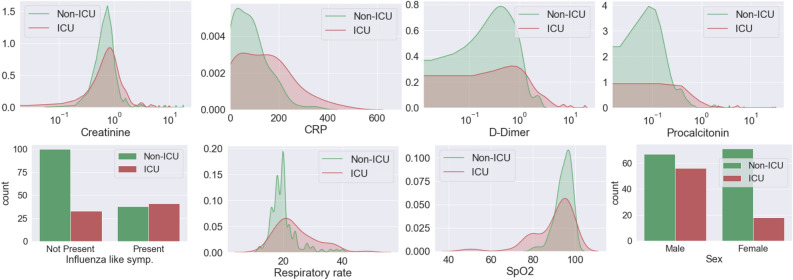
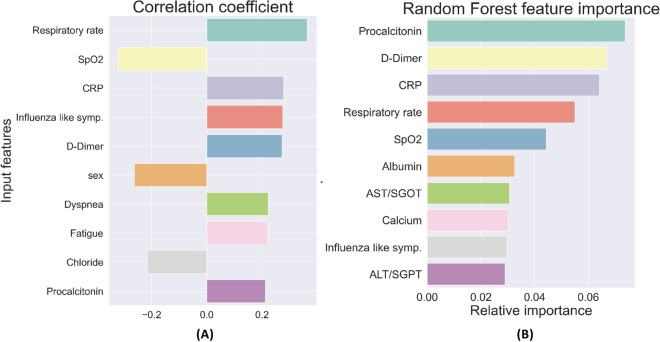
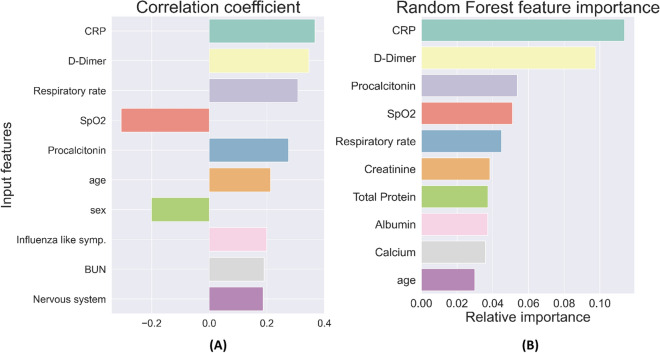
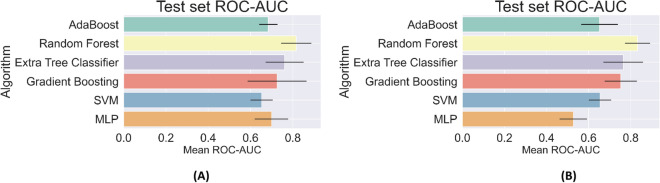
Predictors of the need for intensive care and mechanical ventilation can help healthcare systems in planning for surge capacity for COVID-19. We used socio-demographic data, clinical data, and blood panel profile data at the time of initial presentation to develop machine learning algorithms for predicting the need for intensive care and mechanical ventilation. Among the algorithms considered, the Random Forest classifier performed the best with [Formula: see text] for predicting ICU need and [Formula: see text] for predicting the need for mechanical ventilation. We also determined the most influential features in making this prediction, and concluded that all three categories of data are important. We determined the relative importance of blood panel profile data and noted that the AUC dropped by 0.12 units when this data was not included, thus indicating that it provided valuable information in predicting disease severity. Finally, we generated RF predictors with a reduced set of five features that retained the performance of the predictors trained on all features. These predictors, which rely only on quantitative data, are less prone to errors and subjectivity.

摘要

预测需要重症监护和机械通气的因素可以帮助医疗保健系统规划 COVID-19 的应对能力。我们使用初始表现时的社会人口统计学数据、临床数据和血液面板特征数据来开发用于预测重症监护和机械通气需求的机器学习算法。在所考虑的算法中,随机森林分类器在预测 ICU 需求方面表现最佳,[Formula: see text],在预测机械通气需求方面表现最佳,[Formula: see text]。我们还确定了在进行此预测时最具影响力的特征,并得出结论,这三类数据都很重要。我们确定了血液面板特征数据的相对重要性,并注意到当不包括此数据时,AUC 下降了 0.12 个单位,这表明它在预测疾病严重程度方面提供了有价值的信息。最后,我们生成了具有减少的五个特征集的 RF 预测器,这些特征集保留了在所有特征上训练的预测器的性能。这些预测器仅依赖于定量数据,因此不太容易出错和主观。
https://cdn.ncbi.nlm.nih.gov/pmc/blobs/3ed7/7907061/f7c677fe18a7/41598_2021_83967_Fig4_HTML.jpg
https://cdn.ncbi.nlm.nih.gov/pmc/blobs/3ed7/7907061/5606a0ef4548/41598_2021_83967_Fig1_HTML.jpg
https://cdn.ncbi.nlm.nih.gov/pmc/blobs/3ed7/7907061/ed86a4f6fb12/41598_2021_83967_Fig2_HTML.jpg
https://cdn.ncbi.nlm.nih.gov/pmc/blobs/3ed7/7907061/7e2ea1151f52/41598_2021_83967_Fig3_HTML.jpg
https://cdn.ncbi.nlm.nih.gov/pmc/blobs/3ed7/7907061/f7c677fe18a7/41598_2021_83967_Fig4_HTML.jpg
https://cdn.ncbi.nlm.nih.gov/pmc/blobs/3ed7/7907061/5606a0ef4548/41598_2021_83967_Fig1_HTML.jpg
https://cdn.ncbi.nlm.nih.gov/pmc/blobs/3ed7/7907061/ed86a4f6fb12/41598_2021_83967_Fig2_HTML.jpg
https://cdn.ncbi.nlm.nih.gov/pmc/blobs/3ed7/7907061/7e2ea1151f52/41598_2021_83967_Fig3_HTML.jpg
https://cdn.ncbi.nlm.nih.gov/pmc/blobs/3ed7/7907061/f7c677fe18a7/41598_2021_83967_Fig4_HTML.jpg

相似文献

1
Machine learning based predictors for COVID-19 disease severity.基于机器学习的 COVID-19 疾病严重程度预测器。
Sci Rep. 2021 Feb 25;11(1):4673. doi: 10.1038/s41598-021-83967-7.
2
Individualized prediction of COVID-19 adverse outcomes with MLHO.用 MLHO 对 COVID-19 不良结局进行个体化预测。
Sci Rep. 2021 Mar 5;11(1):5322. doi: 10.1038/s41598-021-84781-x.
3
A multipurpose machine learning approach to predict COVID-19 negative prognosis in São Paulo, Brazil.一种多用途机器学习方法,用于预测巴西圣保罗的 COVID-19 不良预后。
Sci Rep. 2021 Feb 8;11(1):3343. doi: 10.1038/s41598-021-82885-y.
4
An Easy-to-Use Machine Learning Model to Predict the Prognosis of Patients With COVID-19: Retrospective Cohort Study.一种用于预测COVID-19患者预后的易于使用的机器学习模型:回顾性队列研究
J Med Internet Res. 2020 Nov 9;22(11):e24225. doi: 10.2196/24225.
5
Developing and validating COVID-19 adverse outcome risk prediction models from a bi-national European cohort of 5594 patients.从一个包含 5594 名患者的欧洲多中心队列中开发和验证 COVID-19 不良结局风险预测模型。
Sci Rep. 2021 Feb 5;11(1):3246. doi: 10.1038/s41598-021-81844-x.
6
Use of machine learning to identify protective factors for death from COVID-19 in the ICU: a retrospective study.利用机器学习识别 ICU 中 COVID-19 死亡的保护因素:一项回顾性研究。
PeerJ. 2024 Jun 12;12:e17428. doi: 10.7717/peerj.17428. eCollection 2024.
7
Early hospital mortality prediction of intensive care unit patients using an ensemble learning approach.基于集成学习方法的重症监护病房患者早期住院病死率预测。
Int J Med Inform. 2017 Dec;108:185-195. doi: 10.1016/j.ijmedinf.2017.10.002. Epub 2017 Oct 5.
8
Cohort of Four Thousand Four Hundred Four Persons Under Investigation for COVID-19 in a New York Hospital and Predictors of ICU Care and Ventilation.在纽约一家医院中对 4404 人进行的 COVID-19 调查队列研究,以及 ICU 护理和通气的预测因素。
Ann Emerg Med. 2020 Oct;76(4):394-404. doi: 10.1016/j.annemergmed.2020.05.011. Epub 2020 May 11.
9
Prognosis of COVID-19 severity using DERGA, a novel machine learning algorithm.使用新型机器学习算法 DERGA 预测 COVID-19 严重程度。
Eur J Intern Med. 2024 Jul;125:67-73. doi: 10.1016/j.ejim.2024.02.037. Epub 2024 Mar 8.
10
Clinically applicable approach for predicting mechanical ventilation in patients with COVID-19.预测 COVID-19 患者机械通气的临床适用方法。
Br J Anaesth. 2021 Mar;126(3):578-589. doi: 10.1016/j.bja.2020.11.034. Epub 2020 Dec 4.

引用本文的文献

1
Calculating the Risk of Admission to Intensive Care Units in COVID-19 Patients Using Machine Learning.使用机器学习计算COVID-19患者入住重症监护病房的风险
J Clin Med. 2025 Jun 13;14(12):4205. doi: 10.3390/jcm14124205.
2
Classification of the ICU Admission for COVID-19 Patients with Transfer Learning Models Using Chest X-Ray Images.使用胸部X光图像的迁移学习模型对COVID-19患者的重症监护病房入院情况进行分类
Diagnostics (Basel). 2025 Mar 26;15(7):845. doi: 10.3390/diagnostics15070845.
3
Machine learning-based model for predicting all-cause mortality in severe pneumonia.

本文引用的文献

1
Model-based Prediction of Critical Illness in Hospitalized Patients with COVID-19.基于模型的 COVID-19 住院患者危重症预测。
Radiology. 2021 Jan;298(1):E46-E54. doi: 10.1148/radiol.2020202723. Epub 2020 Aug 13.
2
Clinical features and risk factors for ICU admission in COVID-19 patients with cardiovascular diseases.患有心血管疾病的COVID-19患者入住重症监护病房的临床特征及危险因素
Aging Dis. 2020 Jul 23;11(4):763-769. doi: 10.14336/AD.2020.0622. eCollection 2020 Jul.
3
Early triage of critically ill COVID-19 patients using deep learning.
基于机器学习的重症肺炎全因死亡率预测模型。
BMJ Open Respir Res. 2025 Mar 22;12(1):e001983. doi: 10.1136/bmjresp-2023-001983.
4
Finding Consensus on Trust in AI in Health Care: Recommendations From a Panel of International Experts.在医疗保健领域对人工智能信任达成共识:国际专家小组的建议。
J Med Internet Res. 2025 Feb 19;27:e56306. doi: 10.2196/56306.
5
Application of machine learning algorithms to identify serological predictors of COVID-19 severity and outcomes.应用机器学习算法识别新冠病毒疾病严重程度和预后的血清学预测指标。
Commun Med (Lond). 2024 Nov 26;4(1):249. doi: 10.1038/s43856-024-00658-w.
6
Multiclass classification of Autism Spectrum Disorder, attention deficit hyperactivity disorder, and typically developed individuals using fMRI functional connectivity analysis.使用 fMRI 功能连接分析对自闭症谱系障碍、注意缺陷多动障碍和典型发育个体进行多类分类。
PLoS One. 2024 Oct 17;19(10):e0305630. doi: 10.1371/journal.pone.0305630. eCollection 2024.
7
Feature Identification Using Interpretability Machine Learning Predicting Risk Factors for Disease Severity of In-Patients with COVID-19 in South Florida.利用可解释性机器学习识别南佛罗里达州新冠肺炎住院患者疾病严重程度风险因素的特征
Diagnostics (Basel). 2024 Aug 26;14(17):1866. doi: 10.3390/diagnostics14171866.
8
Revolutionary Point-of-Care Wearable Diagnostics for Early Disease Detection and Biomarker Discovery through Intelligent Technologies.革命性的即时穿戴诊断技术,通过智能技术实现早期疾病检测和生物标志物发现。
Adv Sci (Weinh). 2024 Sep;11(36):e2400595. doi: 10.1002/advs.202400595. Epub 2024 Jul 3.
9
Machine Learning-Based Prediction of COVID-19 Prognosis Using Clinical and Hematologic Data.基于临床和血液学数据的机器学习对COVID-19预后的预测
Cureus. 2023 Dec 9;15(12):e50212. doi: 10.7759/cureus.50212. eCollection 2023 Dec.
10
Analysis of computational intelligence approaches for predicting disease severity in humans: Challenges and research guidelines.用于预测人类疾病严重程度的计算智能方法分析:挑战与研究指南
J Educ Health Promot. 2023 Sep 29;12:334. doi: 10.4103/jehp.jehp_298_23. eCollection 2023.
使用深度学习对危重症 COVID-19 患者进行早期分诊。
Nat Commun. 2020 Jul 15;11(1):3543. doi: 10.1038/s41467-020-17280-8.
4
Laboratory characteristics of patients infected with the novel SARS-CoV-2 virus.新型 SARS-CoV-2 病毒感染者的实验室特征。
J Infect. 2020 Aug;81(2):205-212. doi: 10.1016/j.jinf.2020.06.039. Epub 2020 Jun 21.
5
Using Machine Learning to Predict ICU Transfer in Hospitalized COVID-19 Patients.使用机器学习预测住院COVID-19患者的重症监护病房(ICU)转运情况。
J Clin Med. 2020 Jun 1;9(6):1668. doi: 10.3390/jcm9061668.
6
Development and Validation of a Clinical Risk Score to Predict the Occurrence of Critical Illness in Hospitalized Patients With COVID-19.开发和验证一种临床风险评分,以预测 COVID-19 住院患者发生危重症的情况。
JAMA Intern Med. 2020 Aug 1;180(8):1081-1089. doi: 10.1001/jamainternmed.2020.2033.
7
Association Between Hypoxemia and Mortality in Patients With COVID-19.低氧血症与 COVID-19 患者死亡率的关系。
Mayo Clin Proc. 2020 Jun;95(6):1138-1147. doi: 10.1016/j.mayocp.2020.04.006. Epub 2020 Apr 11.
8
Prognostic value of interleukin-6, C-reactive protein, and procalcitonin in patients with COVID-19.白细胞介素-6、C 反应蛋白和降钙素原对 COVID-19 患者的预后价值。
J Clin Virol. 2020 Jun;127:104370. doi: 10.1016/j.jcv.2020.104370. Epub 2020 Apr 14.
9
Risk factors associated with disease severity and length of hospital stay in COVID-19 patients.与新冠病毒肺炎患者疾病严重程度及住院时间相关的危险因素。
J Infect. 2020 Jul;81(1):e95-e97. doi: 10.1016/j.jinf.2020.04.008. Epub 2020 Apr 17.
10
Risk factors for disease severity, unimprovement, and mortality in COVID-19 patients in Wuhan, China.中国武汉 COVID-19 患者疾病严重程度、无改善和死亡率的危险因素。
Clin Microbiol Infect. 2020 Jun;26(6):767-772. doi: 10.1016/j.cmi.2020.04.012. Epub 2020 Apr 15.