Yan Zhen, Mansor Zuraina Dato, Choo Wei Chong, Abdullah Abdul Rashid
Faculty of Hotel Management, Qingdao Vocational and Technical College of Hotel Management, Qingdao, Shandong, People's Republic of China.
School of Business and Economics, Universiti Putra Malaysia, Serdang, Selangor, Malaysia.
Psychol Res Behav Manag. 2021 Feb 18;14:185-197. doi: 10.2147/PRBM.S293839. eCollection 2021.
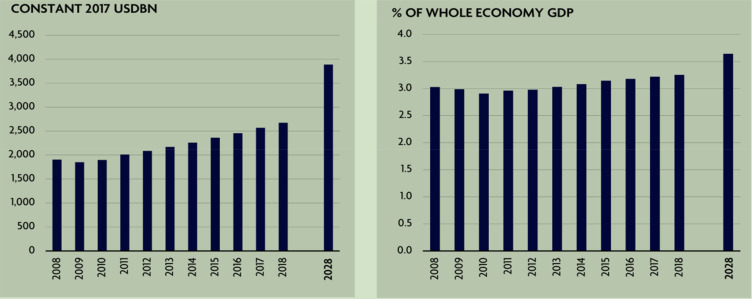
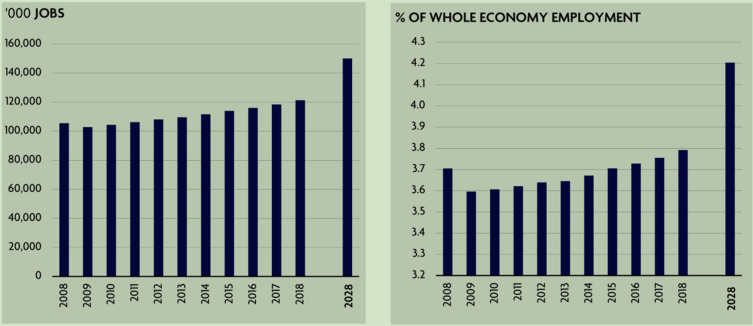
The hospitality industry is deemed a great generator of global GDP and employment. However, high rates of voluntary turnover have gradually undermined global service organizations and brought huge losses to them. Nowadays, the hotel sector continues to be plagued by high turnover rates.
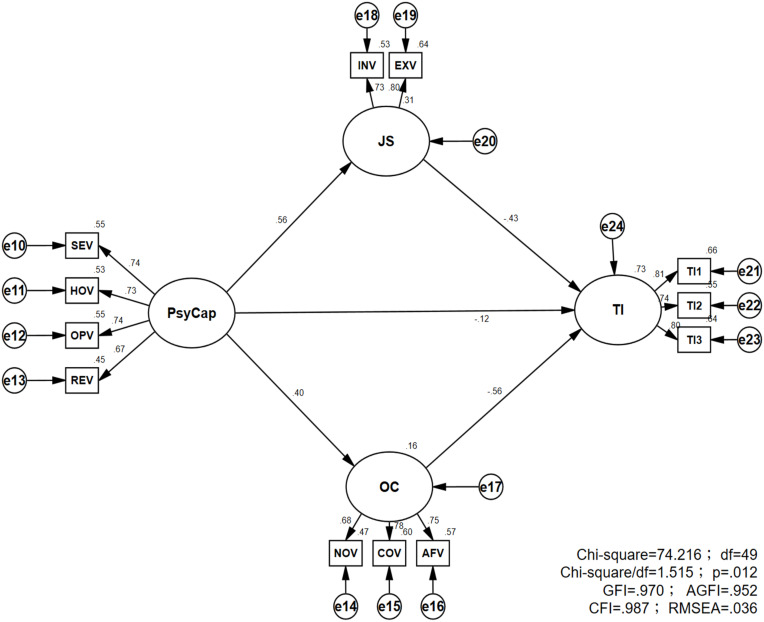
A research model investigating job attitudes (job satisfaction and organizational commitment) as mediators of the impact of psychological capital (PsyCap) on turnover intention and also examining position as a moderator between job attitudes and turnover intention was proposed and tested.
This study collected data from 406 employees selected from four-star and five-star hotels in the southwest region of China. Online survey questionnaires and a purposive sampling technique were employed in this study. Structural equation modeling was utilized to evaluate the direct, mediating, and moderating effects.
The results showed that organizational commitment and job satisfaction fully mediated the association between PsyCap and turnover intention. Moreover, position played a moderating role on the effect of the aforementioned two job attitudes on turnover intention.
The findings implied that hoteliers should focus on employees' PsyCap and job attitudes in order to mitigate serious turnover issues in the hotel sector in China. Besides, the fact that position resulted in disparity impacts in the formation of turnover intention was evidenced.
酒店业被视为全球国内生产总值和就业的重要创造者。然而,高自愿离职率逐渐削弱了全球服务组织,并给它们带来了巨大损失。如今,酒店行业仍然受到高离职率的困扰。
提出并检验了一个研究模型,该模型将工作态度(工作满意度和组织承诺)作为心理资本(PsyCap)对离职意向影响的中介变量,并将职位作为工作态度和离职意向之间的调节变量进行检验。
本研究收集了来自中国西南地区四星级和五星级酒店的406名员工的数据。本研究采用在线调查问卷和立意抽样技术。利用结构方程模型评估直接、中介和调节效应。
结果表明,组织承诺和工作满意度完全中介了心理资本与离职意向之间的关联。此外,职位对上述两种工作态度对离职意向的影响起到了调节作用。
研究结果表明,酒店经营者应关注员工的心理资本和工作态度,以缓解中国酒店业严重的人员流动问题。此外,有证据表明职位在离职意向形成过程中产生了不同的影响。