Salaheen Serajus, Kim Seon Woo, Hovingh Ernest, Van Kessel Jo Ann S, Haley Bradd J
Environmental Microbial and Food Safety Laboratory, Beltsville Agricultural Research Center, Agricultural Research Service, United States Department of Agriculture, Beltsville, MD, United States.
Department of Veterinary and Biomedical Sciences, Pennsylvania State University, University Park, PA, United States.
Front Microbiol. 2021 Feb 9;11:609950. doi: 10.3389/fmicb.2020.609950. eCollection 2020.
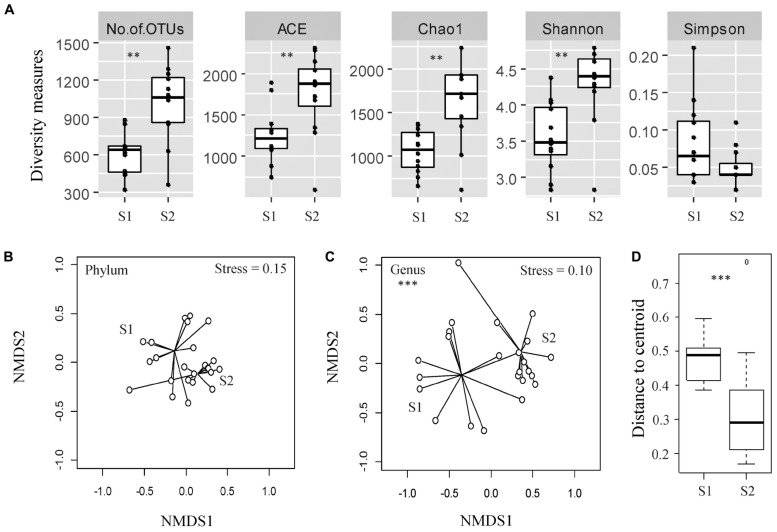
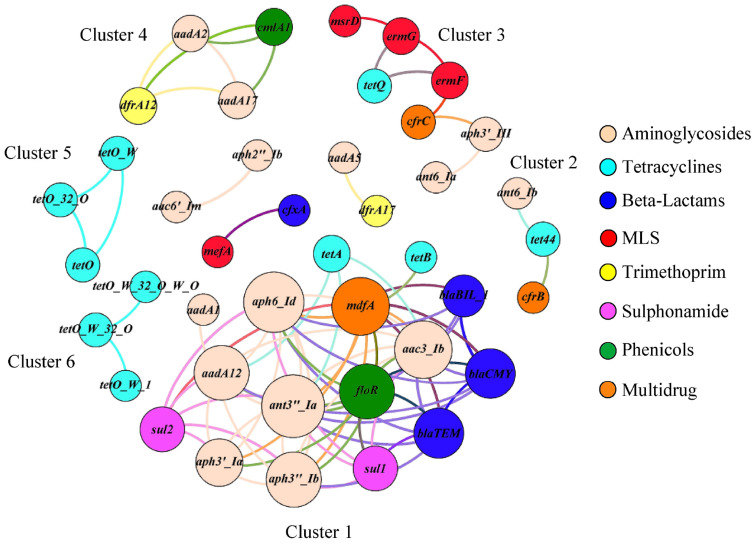
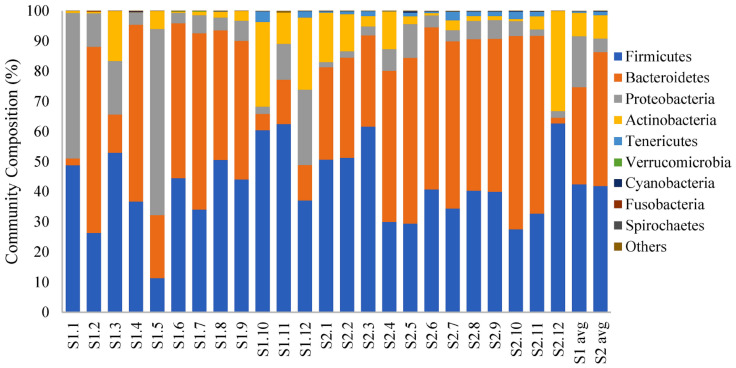
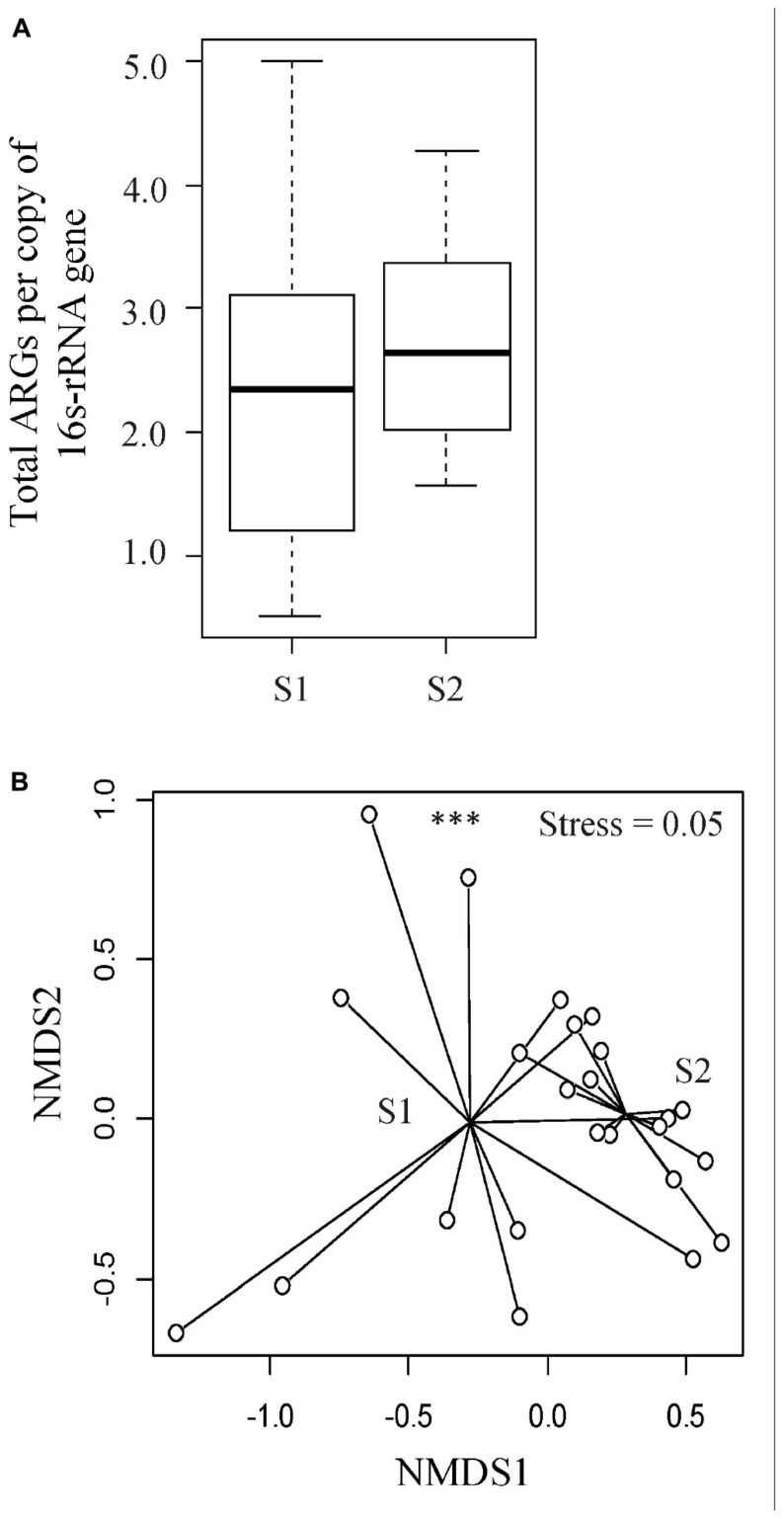
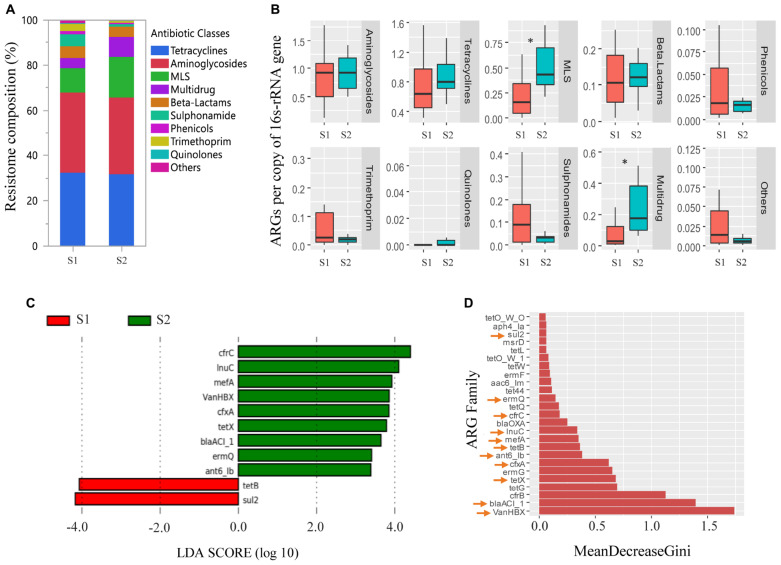
Antimicrobial resistance (AMR) is a major public health concern, and dairy calves, including veal calves, are known reservoirs of resistant bacteria. To investigate AMR in the fecal microbial communities of veal calves, we conducted metagenomic sequencing of feces collected from individual animals on four commercial veal operations in Pennsylvania. Fecal samples from three randomly selected calves on each farm were collected soon after the calves were brought onto the farms ( = 12), and again, just before the calves from the same cohorts were ready for slaughter ( = 12). Results indicated that the most frequently identified phyla were Firmicutes, Bacteroidetes, Proteobacteria, and Actinobacteria. Fecal microbial communities in samples collected from the calves at the early and late stages of production were significantly different at the genus level (analysis of similarities [ANOSIM] on Bray-Curtis distances, = 0.37, < 0.05), but not at the phylum level. Variances among microbial communities in the feces of the younger calves were significantly higher than those from the feces of calves at the late stage of production (betadisper = 8.25, < 0.05). Additionally, our analyses identified a diverse set of mobile antimicrobial resistance genes (ARGs) in the veal calf feces. The fecal resistomes mostly consisted of ARGs that confer resistance to aminoglycosides, tetracyclines, and macrolide-lincosamide-streptogramin B (MLS), and these ARGs represented more than 70% of the fecal resistomes. Factors that are responsible for selection and persistence of resistant bacteria in the veal calf gut need to be identified to implement novel control points and interrupt detrimental AMR occurrence and shedding.
抗菌药物耐药性(AMR)是一个重大的公共卫生问题,包括犊牛在内的乳用犊牛是已知的耐药菌宿主。为了调查犊牛粪便微生物群落中的AMR情况,我们对从宾夕法尼亚州四个商业犊牛养殖场的个体动物采集的粪便进行了宏基因组测序。每个养殖场随机选取三头犊牛,在它们被引入养殖场后不久采集粪便样本(n = 12),并且在同一批次的犊牛准备屠宰前再次采集(n = 12)。结果表明,最常鉴定出的门是厚壁菌门、拟杆菌门、变形菌门和放线菌门。在生产早期和晚期从犊牛采集的样本中的粪便微生物群落在属水平上有显著差异(基于Bray-Curtis距离的相似性分析[ANOSIM],R = 0.37,P < 0.05),但在门水平上没有差异。较年幼犊牛粪便中的微生物群落差异显著高于生产后期犊牛粪便中的差异(β-分散度 = 8.25,P < 0.05)。此外,我们的分析在犊牛粪便中鉴定出了多种移动抗菌药物耐药基因(ARGs)。粪便耐药组主要由赋予对氨基糖苷类、四环素类和大环内酯-林可酰胺-链阳霉素B(MLS)耐药性的ARGs组成,这些ARGs占粪便耐药组的70%以上。需要确定导致犊牛肠道中耐药菌选择和持续存在的因素,以实施新的控制点并中断有害的AMR发生和传播。