Rocha Vanézia, Duarte Maria C, Catarino Silvia, Duarte Ivani, Romeiras Maria M
Linking Landscape, Environment, Agriculture and Food (LEAF), Instituto Superior de Agronomia (ISA), Universidade de Lisboa, Lisbon, Portugal.
Centre for Ecology, Evolution and Environmental Changes (cE3c), Faculdade de Ciências, Universidade de Lisboa, Lisbon, Portugal.
Front Plant Sci. 2021 Feb 1;12:630217. doi: 10.3389/fpls.2021.630217. eCollection 2021.
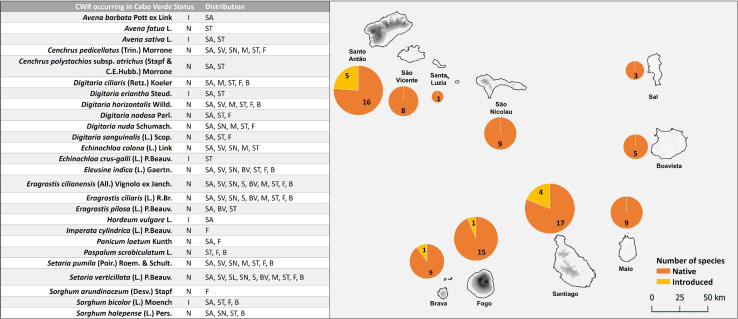
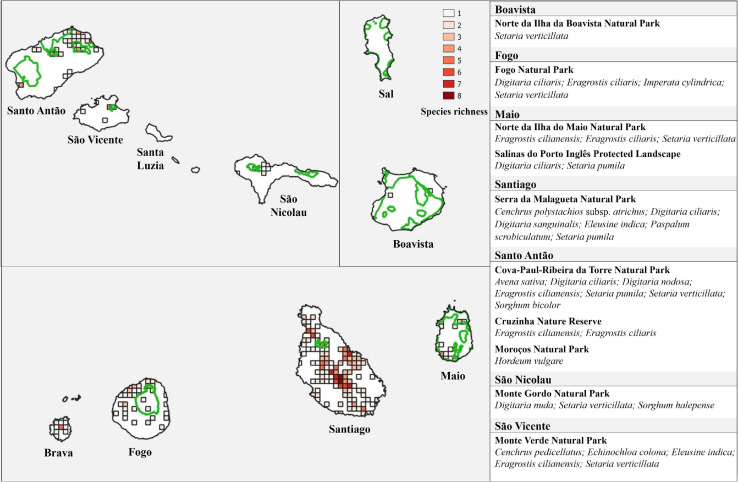
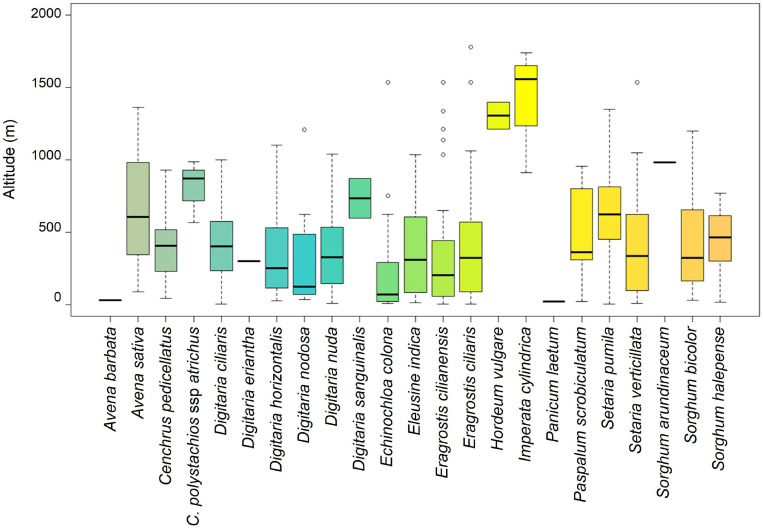
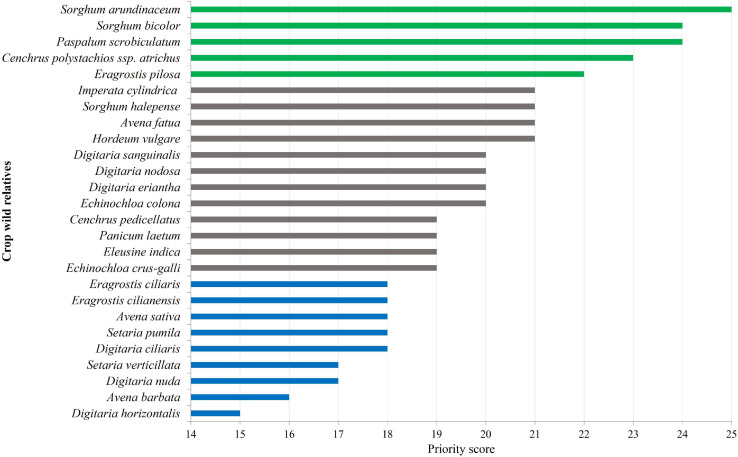
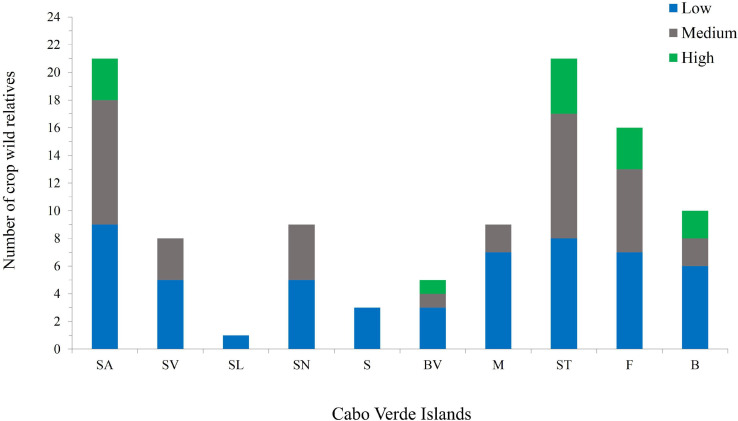
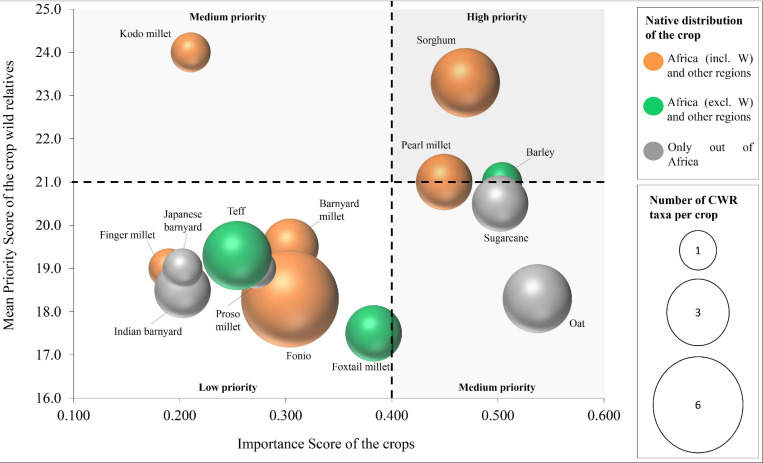
Africa is home to important centers of origin and diversity of crop wild relatives (CWR), including many species adapted to adverse agroecological conditions, namely drought and poor soils. Plant genetic resources from Cabo Verde Islands have been poorly explored for their potential to supplement the genetic pool of cultivated species. In this paper we identify Cabo Verde's CWR from the Poaceae family and provide a checklist of priority CWR , highlighting those of particular conservation concern and the areas which should be the focus of the most intensive conservation efforts in these islands. Our results revealed that Cabo Verde archipelago is an important center of CWR diversity of West African crop millets, namely fonio (e.g., white fonio, , and black fonio, ) and other African millets [e.g., pearl millet ( = ), teff millet (), finger millet (), barnyard millet (), proso millet (), and foxtail millet ()], which represent a diverse group of cereal crops, and important components in agriculture and food security of this country. Also, hotspot areas of diversity for conservation were identified in Cabo Verde, as well as several populations occurring under extreme habitats conditions that are well adapted to drylands and poor soils. The evaluation of their potential for new ecologically important adaptive characteristics associated with tolerance to abiotic stresses is discussed. The survey of international Germplasm Banks revealed that very few accessions from Cabo Verde are conserved, contributing to the loss of genetic diversity of plant genetic resources in this archipelago. Particularly, the diversity of millets and the associated indigenous knowledge are critical for the food security and cultural identity of many poor farmers in Cabo Verde.
非洲是作物野生近缘种(CWR)重要的起源中心和多样性中心,其中包括许多适应干旱和土壤贫瘠等不利农业生态条件的物种。佛得角群岛的植物遗传资源在补充栽培物种基因库方面的潜力尚未得到充分发掘。在本文中,我们鉴定了佛得角禾本科的作物野生近缘种,并提供了一份优先作物野生近缘种清单,突出了那些特别值得关注的保护物种以及这些岛屿上应成为最密集保护工作重点的区域。我们的研究结果表明,佛得角群岛是西非作物黍类,即富尼奥(例如白富尼奥和黑富尼奥)以及其他非洲黍类[例如珍珠粟(=)、画眉草、龙爪稷、稗、黍和粟]的重要作物野生近缘种多样性中心,这些黍类代表了多种谷类作物,是该国农业和粮食安全的重要组成部分。此外,还确定了佛得角的保护多样性热点地区,以及一些生长在极端生境条件下、非常适应旱地和贫瘠土壤的种群。文中还讨论了对它们与非生物胁迫耐受性相关的新的生态重要适应性特征潜力的评估。对国际种质库的调查显示,佛得角保存的种质资源极少,这导致了该群岛植物遗传资源遗传多样性的丧失。特别是,黍类的多样性以及相关的本土知识对佛得角许多贫困农民的粮食安全和文化认同至关重要。