Center for Desert Agriculture, Biological and Environmental Science & Engineering Division (BESE), King Abdullah University of Science and Technology (KAUST), Thuwal, Saudi Arabia.
DIADE, Univ Montpellier, IRD, Montpellier, France.
Nat Commun. 2020 Sep 8;11(1):4488. doi: 10.1038/s41467-020-18329-4.
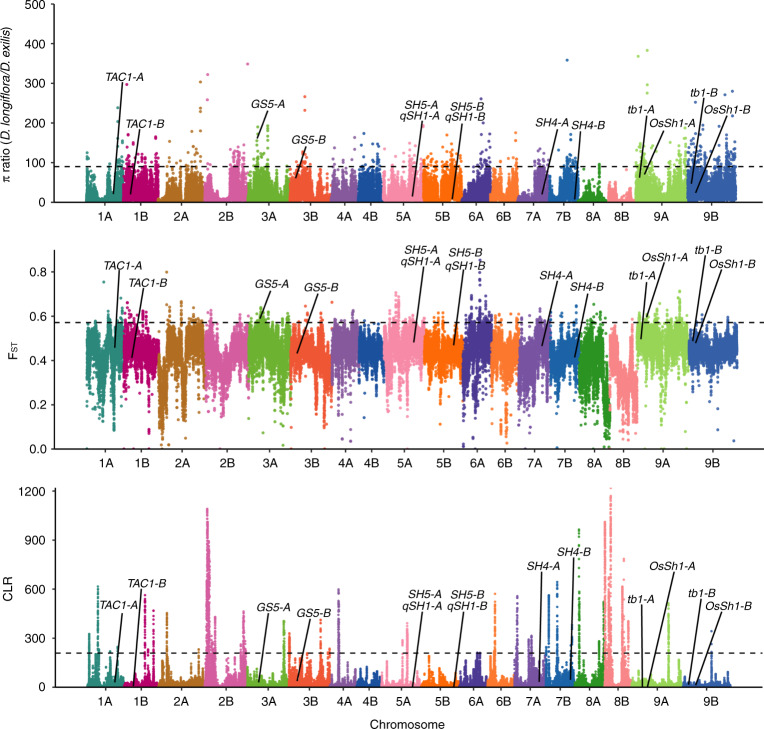
Sustainable food production in the context of climate change necessitates diversification of agriculture and a more efficient utilization of plant genetic resources. Fonio millet (Digitaria exilis) is an orphan African cereal crop with a great potential for dryland agriculture. Here, we establish high-quality genomic resources to facilitate fonio improvement through molecular breeding. These include a chromosome-scale reference assembly and deep re-sequencing of 183 cultivated and wild Digitaria accessions, enabling insights into genetic diversity, population structure, and domestication. Fonio diversity is shaped by climatic, geographic, and ethnolinguistic factors. Two genes associated with seed size and shattering showed signatures of selection. Most known domestication genes from other cereal models however have not experienced strong selection in fonio, providing direct targets to rapidly improve this crop for agriculture in hot and dry environments.
在气候变化的背景下,可持续的粮食生产需要农业的多样化和更有效地利用植物遗传资源。非洲小米(Digitaria exilis)是一种孤儿非洲谷物,具有旱地农业的巨大潜力。在这里,我们建立了高质量的基因组资源,以通过分子育种促进非洲小米的改良。这些资源包括一个染色体级别的参考组装和 183 个栽培和野生 Digitaria 品系的深度重测序,使我们能够深入了解遗传多样性、种群结构和驯化。非洲小米的多样性受到气候、地理和民族语言因素的影响。与种子大小和破碎性相关的两个基因表现出选择的特征。然而,大多数来自其他谷物模型的已知驯化基因在非洲小米中没有经历强烈的选择,为在炎热和干燥的环境中快速改良这种作物提供了直接的目标。