College of Public Health, Medical and Veterinary Sciences, James Cook University, Townsville, Queensland, Australia.
ARC Centre of Excellence for Coral Reef Studies, James Cook University, Townsville, Queensland, Australia.
Conserv Biol. 2022 Feb;36(1):e13724. doi: 10.1111/cobi.13724. Epub 2021 May 11.
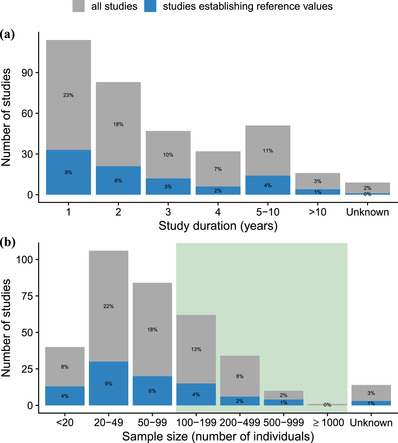
Wildlife health assessments help identify populations at risk of starvation, disease, and decline from anthropogenic impacts on natural habitats. We conducted an overview of available health assessment studies in noncaptive vertebrates and devised a framework to strategically integrate health assessments in population monitoring. Using a systematic approach, we performed a thorough assessment of studies examining multiple health parameters of noncaptive vertebrate species from 1982 to 2020 (n = 261 studies). We quantified trends in study design and diagnostic methods across taxa with generalized linear models, bibliometric analyses, and visual representations of study location versus biodiversity hotspots. Only 35% of studies involved international or cross-border collaboration. Countries with both high and threatened biodiversity were greatly underrepresented. Species that were not listed as threatened on the International Union for Conservation of Nature Red List represented 49% of assessed species, a trend likely associated with the regional focus of most studies. We strongly suggest following wildlife health assessment protocols when planning a study and using statistically adequate sample sizes for studies establishing reference ranges. Across all taxa blood analysis (89%), body composition assessments (81%), physical examination (72%), and fecal analyses (24% of studies) were the most common methods. A conceptual framework to improve design and standardize wildlife health assessments includes guidelines on the experimental design, data acquisition and analysis, and species conservation planning and management implications. Integrating a physiological and ecological understanding of species resilience toward threatening processes will enable informed decision making regarding the conservation of threatened species.
野生动物健康评估有助于确定因人类对自然栖息地的影响而面临饥饿、疾病和减少的风险的种群。我们对非圈养脊椎动物的现有健康评估研究进行了综述,并设计了一个框架,以便在种群监测中战略性地整合健康评估。我们采用系统的方法,对 1982 年至 2020 年期间研究非圈养脊椎动物物种的多种健康参数的 261 项研究进行了彻底评估。我们使用广义线性模型、文献计量分析和研究地点与生物多样性热点的视觉表示,量化了跨分类群的研究设计和诊断方法的趋势。只有 35%的研究涉及国际或跨境合作。高生物多样性和受威胁的国家严重代表性不足。在国际自然保护联盟红色名录中未被列为受威胁物种的物种占评估物种的 49%,这种趋势可能与大多数研究的区域重点有关。我们强烈建议在规划研究时遵循野生动物健康评估协议,并为建立参考范围的研究使用统计学上足够的样本量。在所有分类群中,血液分析(89%)、身体成分评估(81%)、体检(72%)和粪便分析(24%的研究)是最常见的方法。一个改进野生动物健康评估设计和标准化的概念框架包括关于实验设计、数据获取和分析以及物种保护规划和管理影响的指南。整合对物种对威胁过程的恢复能力的生理和生态理解,将使我们能够就受威胁物种的保护做出明智的决策。