Wu Hong, Yao Hongyu, Sun Menglin, Wang Ran, Zhang Zeming, Wu Nan, Zhao Dapeng
College of Life Sciences, Tianjin Normal University, Tianjin, China.
Front Microbiol. 2024 Dec 9;15:1490413. doi: 10.3389/fmicb.2024.1490413. eCollection 2024.
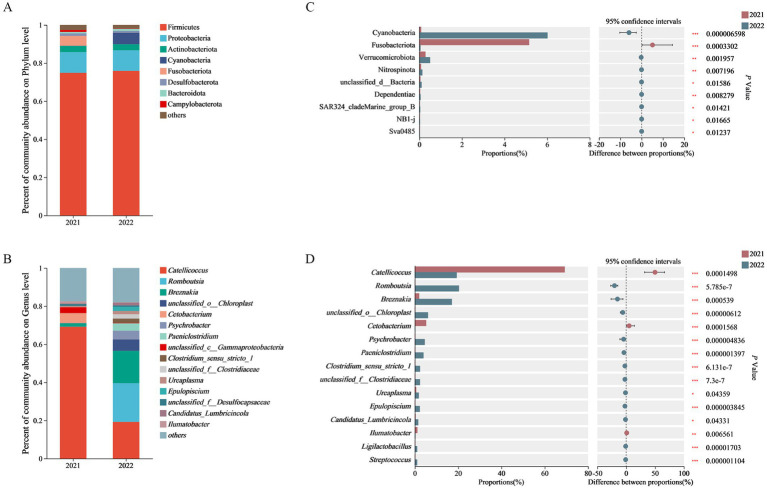
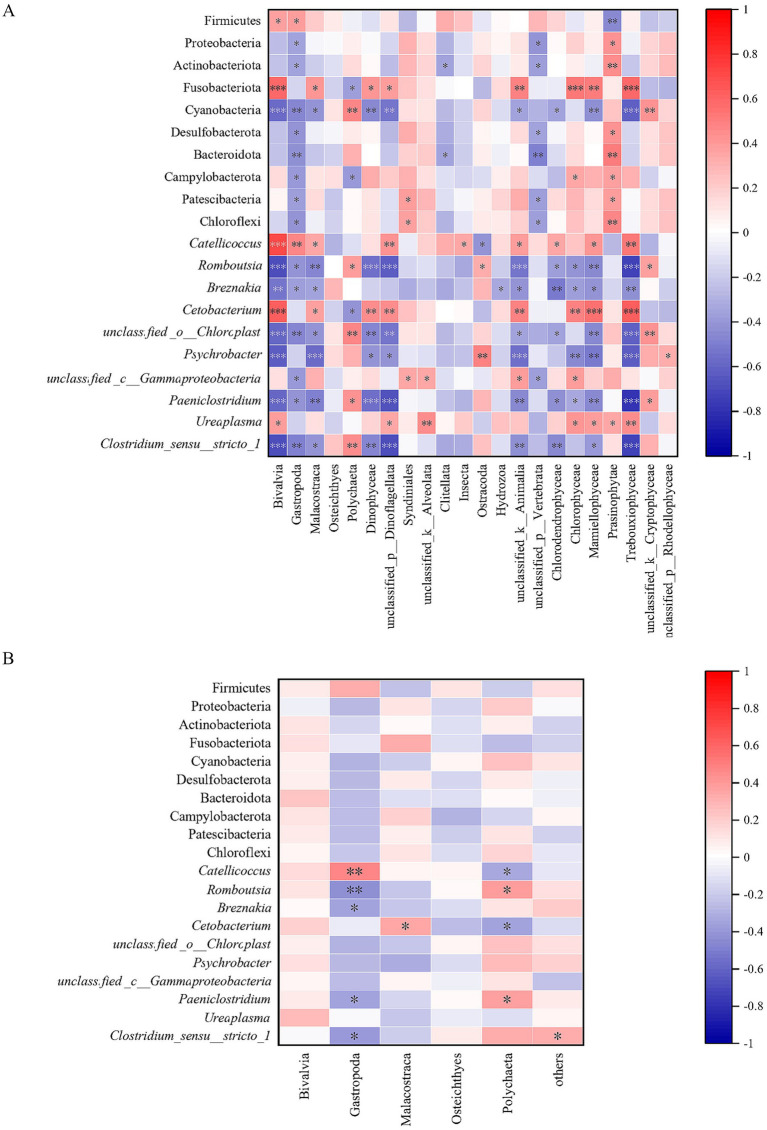
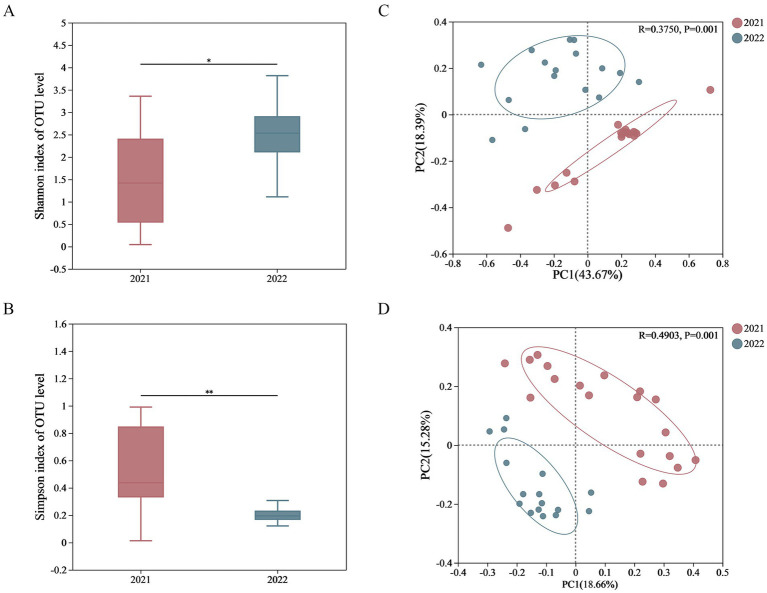
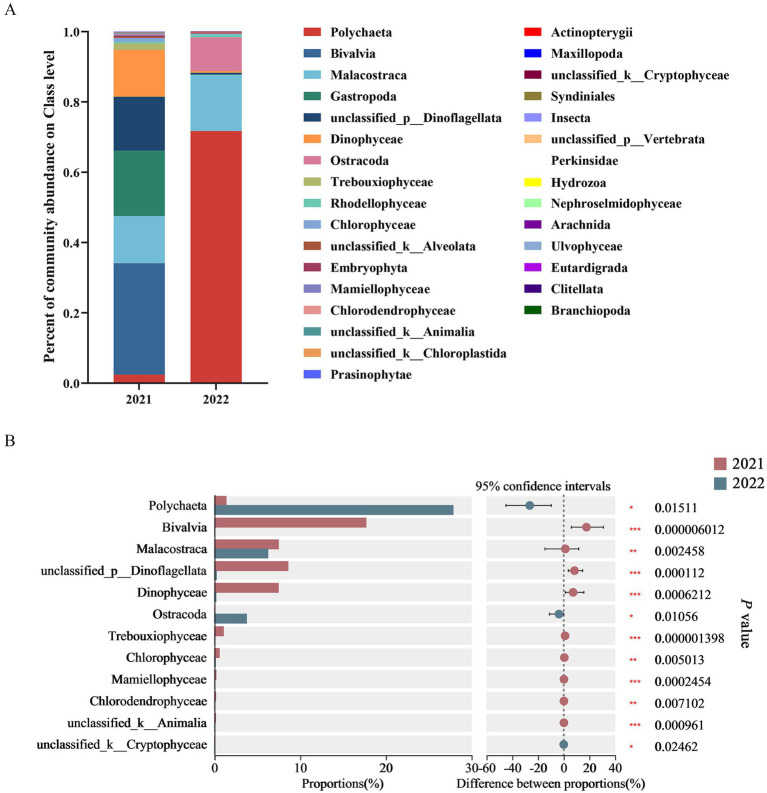
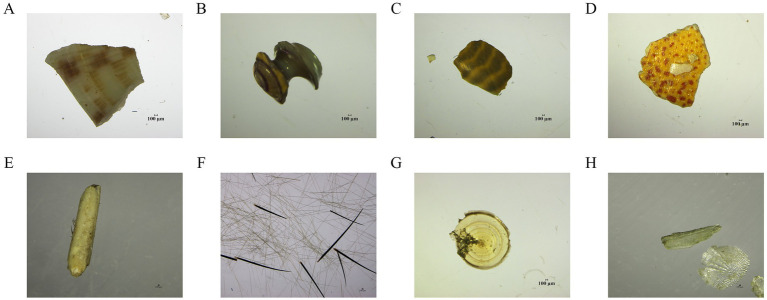
The gut microbiota of migratory birds is influenced by their food choices, and exploring the potential relationship between diet composition and gut microbiota can help better protect related species. By integrating non-invasive sampling techniques, high-throughput sequencing technology, and microscopic examination technology, this study presents the first evidence on diet composition during overwintering periods as well as the potential relationship between diet composition and gut microbiota in wild relict gulls (). Thirty-five fecal samples from two consecutive overwintering periods (2021 and 2022 overwintering periods) in Tianjin coastal wetland were used to investigate inter-year consistencies and discrepancies on diet composition and gut microbiota in wild It was found that the common dominant phyla of both 2021 and 2022 group included Firmicutes, Proteobacteria, Chloroflexi and Actinobacteriota. The common dominant genera were and . The diversity of gut microbiome in 2022 group was higher, while the richness was not significantly different. Based on the high-throughput sequencing technology of 18S rDNA, the study found that the dominant classes within the diet components of included Polychaeta, Bivalvia, Malacostraca, Gastropoda, unclassified_p__Dinoflagellata, Dinophyceae, and Ostracoda. Among them, Bivalvia, Malacostraca, and Gastropoda were also found with microscopic examination technology from the same samples. The abundance of Fusobacteriota and were positively correlated with the abundance of Bivalvia and Malacostraca; while the abundance of and were negatively correlated with the abundance of Malacostraca and Gastropoda. Findings from this study could provide scientific references for health monitoring and conservation of relict gulls.
候鸟的肠道微生物群受其食物选择的影响,探索饮食组成与肠道微生物群之间的潜在关系有助于更好地保护相关物种。通过整合非侵入性采样技术、高通量测序技术和显微镜检查技术,本研究首次给出了野生遗鸥越冬期间饮食组成以及饮食组成与肠道微生物群之间潜在关系的证据。利用天津沿海湿地连续两个越冬期(2021年和2022年越冬期)的35份粪便样本,研究了野生遗鸥饮食组成和肠道微生物群的年际一致性和差异。结果发现,2021年和2022年组的常见优势菌门包括厚壁菌门、变形菌门、绿弯菌门和放线菌门。常见优势属为 和 。2022年组肠道微生物群的多样性较高,而丰富度无显著差异。基于18S rDNA的高通量测序技术,研究发现遗鸥饮食成分中的优势类群包括多毛纲、双壳纲、软甲纲、腹足纲、未分类的p__甲藻纲、甲藻门和介形纲。其中,通过对同一样本的显微镜检查技术也发现了双壳纲、软甲纲和腹足纲。梭杆菌门和 的丰度与双壳纲和软甲纲的丰度呈正相关;而 和 的丰度与软甲纲和腹足纲的丰度呈负相关。本研究结果可为遗鸥的健康监测和保护提供科学参考。