Department of Avian Diseases, Shanghai Veterinary Research Institute, Chinese Academy of Agricultural Sciences, Shanghai, P. R. China.
Cell Biology and Immunology Group, Department of Animal Sciences, Wageningen University, Wageningen, The Netherlands.
PLoS Pathog. 2021 Feb 26;17(2):e1008690. doi: 10.1371/journal.ppat.1008690. eCollection 2021 Feb.
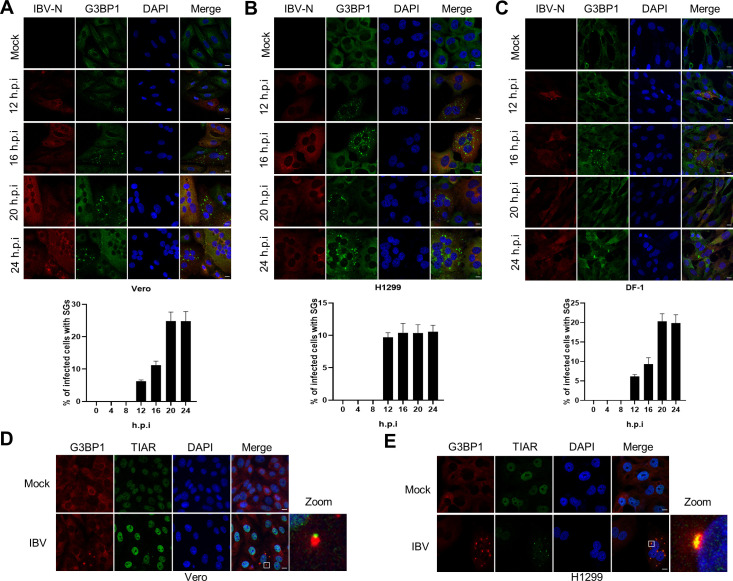
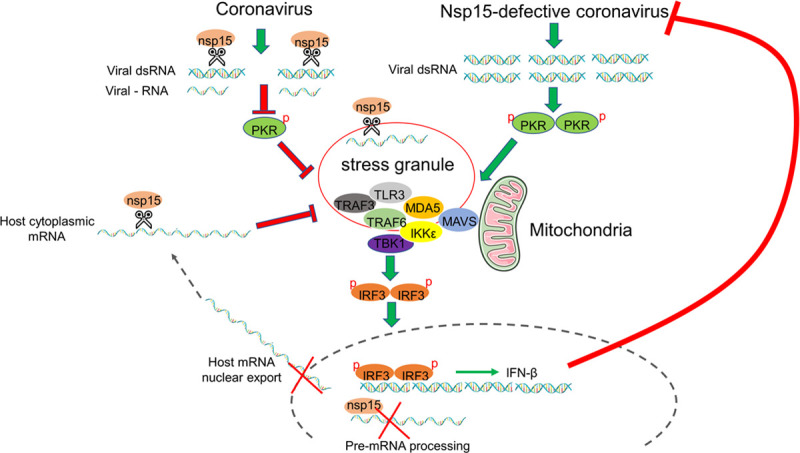
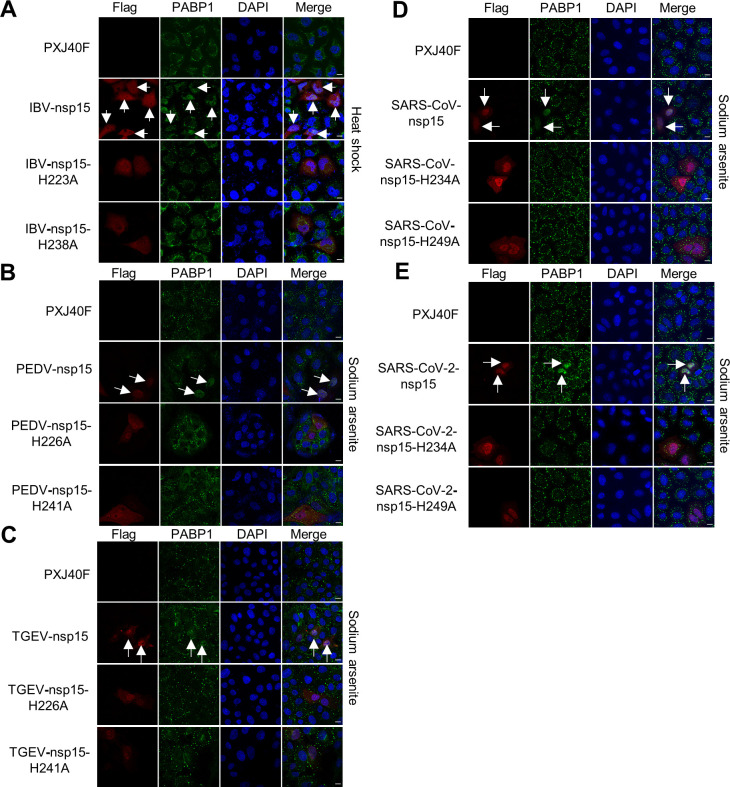
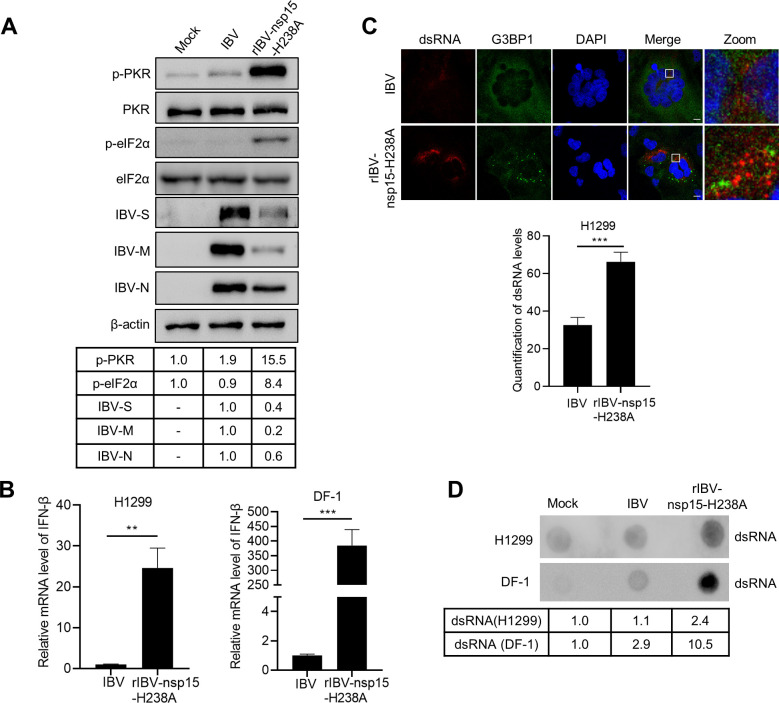
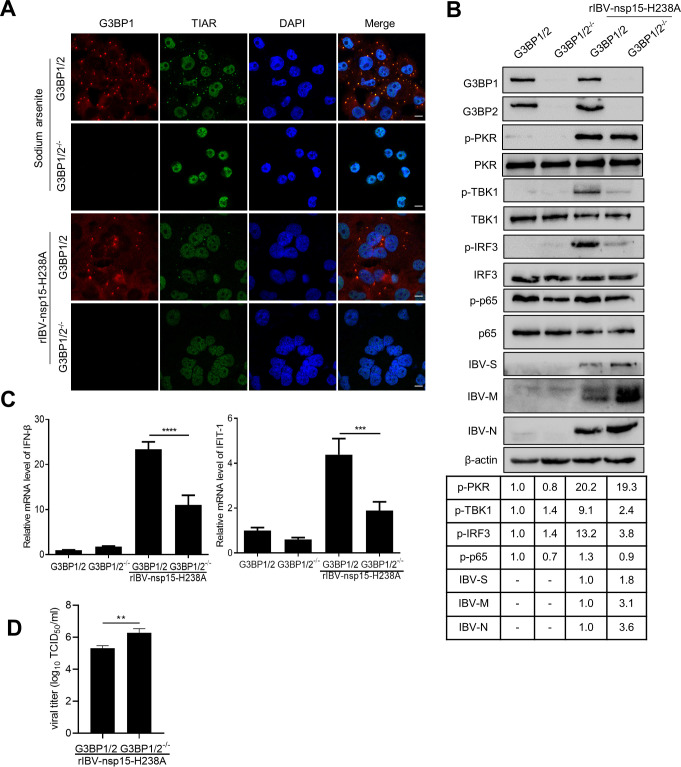
Cytoplasmic stress granules (SGs) are generally triggered by stress-induced translation arrest for storing mRNAs. Recently, it has been shown that SGs exert anti-viral functions due to their involvement in protein synthesis shut off and recruitment of innate immune signaling intermediates. The largest RNA viruses, coronaviruses, impose great threat to public safety and animal health; however, the significance of SGs in coronavirus infection is largely unknown. Infectious Bronchitis Virus (IBV) is the first identified coronavirus in 1930s and has been prevalent in poultry farm for many years. In this study, we provided evidence that IBV overcomes the host antiviral response by inhibiting SGs formation via the virus-encoded endoribonuclease nsp15. By immunofluorescence analysis, we observed that IBV infection not only did not trigger SGs formation in approximately 80% of the infected cells, but also impaired the formation of SGs triggered by heat shock, sodium arsenite, or NaCl stimuli. We further demonstrated that the intrinsic endoribonuclease activity of nsp15 was responsible for the interference of SGs formation. In fact, nsp15-defective recombinant IBV (rIBV-nsp15-H238A) greatly induced the formation of SGs, along with accumulation of dsRNA and activation of PKR, whereas wild type IBV failed to do so. Consequently, infection with rIBV-nsp15-H238A strongly triggered transcription of IFN-β which in turn greatly affected rIBV-nsp15-H238A replication. Further analysis showed that SGs function as an antiviral hub, as demonstrated by the attenuated IRF3-IFN response and increased production of IBV in SG-defective cells. Additional evidence includes the aggregation of pattern recognition receptors (PRRs) and signaling intermediates to the IBV-induced SGs. Collectively, our data demonstrate that the endoribonuclease nsp15 of IBV interferes with the formation of antiviral hub SGs by regulating the accumulation of viral dsRNA and by antagonizing the activation of PKR, eventually ensuring productive virus replication. We further demonstrated that nsp15s from PEDV, TGEV, SARS-CoV, and SARS-CoV-2 harbor the conserved function to interfere with the formation of chemically-induced SGs. Thus, we speculate that coronaviruses employ similar nsp15-mediated mechanisms to antagonize the host anti-viral SGs formation to ensure efficient virus replication.
细胞质应激颗粒 (SGs) 通常是由应激诱导的翻译阻断引起的,用于储存 mRNA。最近,已经证明 SGs 通过参与蛋白质合成关闭和招募先天免疫信号中间物发挥抗病毒作用。最大的 RNA 病毒冠状病毒对公共安全和动物健康构成了巨大威胁;然而,SGs 在冠状病毒感染中的意义在很大程度上尚不清楚。传染性支气管炎病毒 (IBV) 是 1930 年代首次发现的冠状病毒,多年来一直存在于家禽养殖场。在这项研究中,我们提供了证据表明,IBV 通过病毒编码的内切核酸酶 nsp15 抑制 SGs 的形成来克服宿主抗病毒反应。通过免疫荧光分析,我们观察到 IBV 感染不仅在大约 80%的感染细胞中没有触发 SGs 的形成,而且还损害了热休克、亚砷酸钠或 NaCl 刺激触发的 SGs 的形成。我们进一步证明,nsp15 的内在内切核酸酶活性负责干扰 SGs 的形成。事实上,nsp15 缺陷型重组 IBV (rIBV-nsp15-H238A) 极大地诱导了 SGs 的形成,同时积累了 dsRNA 并激活了 PKR,而野生型 IBV 则不能。因此,rIBV-nsp15-H238A 的感染强烈触发了 IFN-β 的转录,进而极大地影响了 rIBV-nsp15-H238A 的复制。进一步的分析表明,SGs 作为抗病毒中心发挥作用,这是通过削弱 IRF3-IFN 反应和减少 SG 缺陷细胞中 IBV 的产生来证明的。额外的证据包括模式识别受体 (PRRs) 和信号中间物聚集到 IBV 诱导的 SGs 中。总的来说,我们的数据表明,IBV 的内切核酸酶 nsp15 通过调节病毒 dsRNA 的积累和拮抗 PKR 的激活来干扰抗病毒中心 SGs 的形成,从而确保病毒的有效复制。我们进一步证明,PEDV、TGEV、SARS-CoV 和 SARS-CoV-2 的 nsp15 具有干扰化学诱导的 SGs 形成的保守功能。因此,我们推测冠状病毒利用类似的 nsp15 介导的机制来拮抗宿主抗病毒 SGs 的形成,以确保病毒的有效复制。